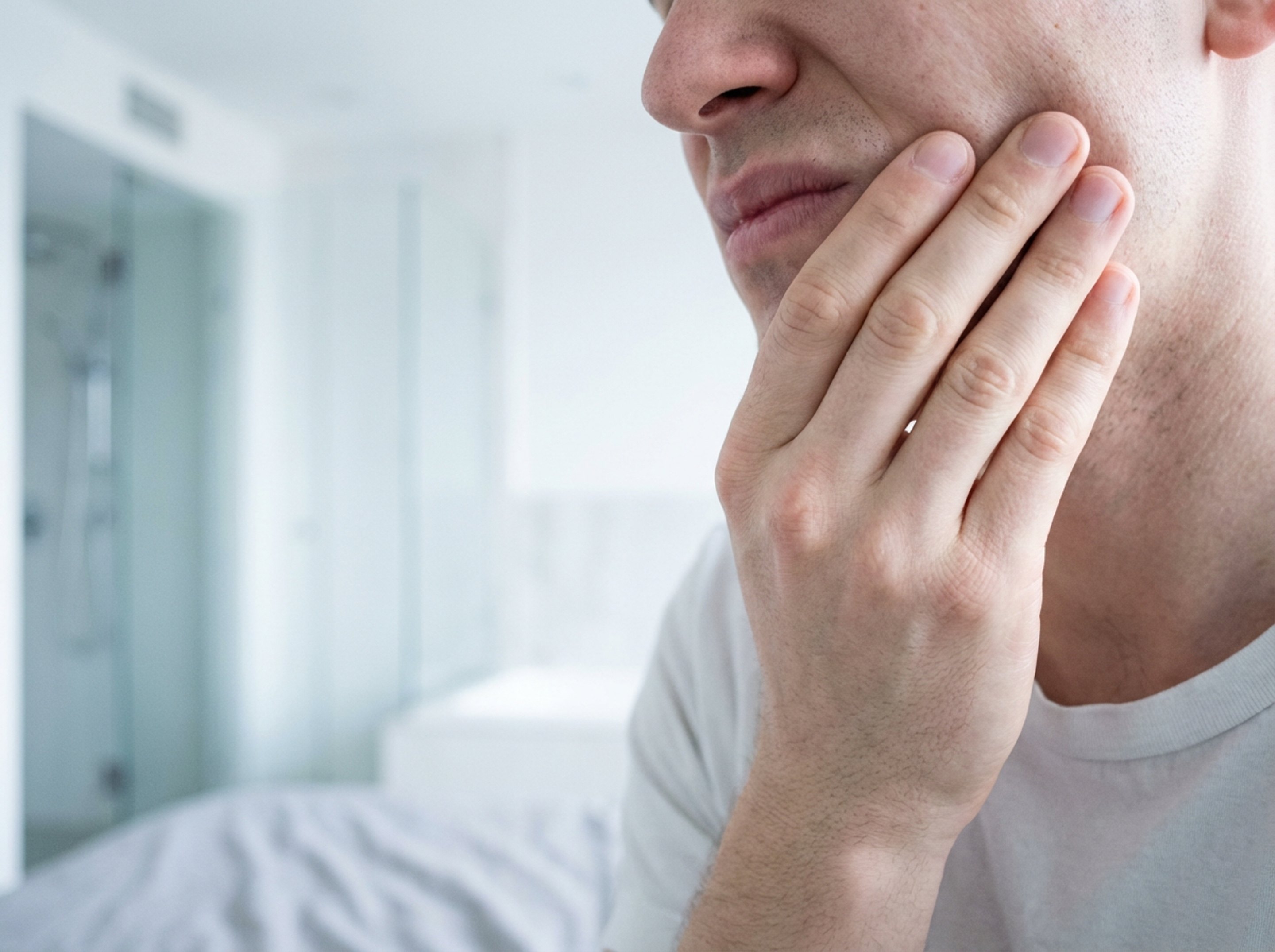
Tooth feels higher when biting down
A tooth feels higher when you bite down if it makes contact earlier than the other teeth. Common causes include a high filling, a crown or excessive strain. Inflammation of the tooth root or the supporting tissues of the tooth may also be responsible. A prompt examination will identify the cause and protect against further damage.
Über 350 Google-Bewertungen
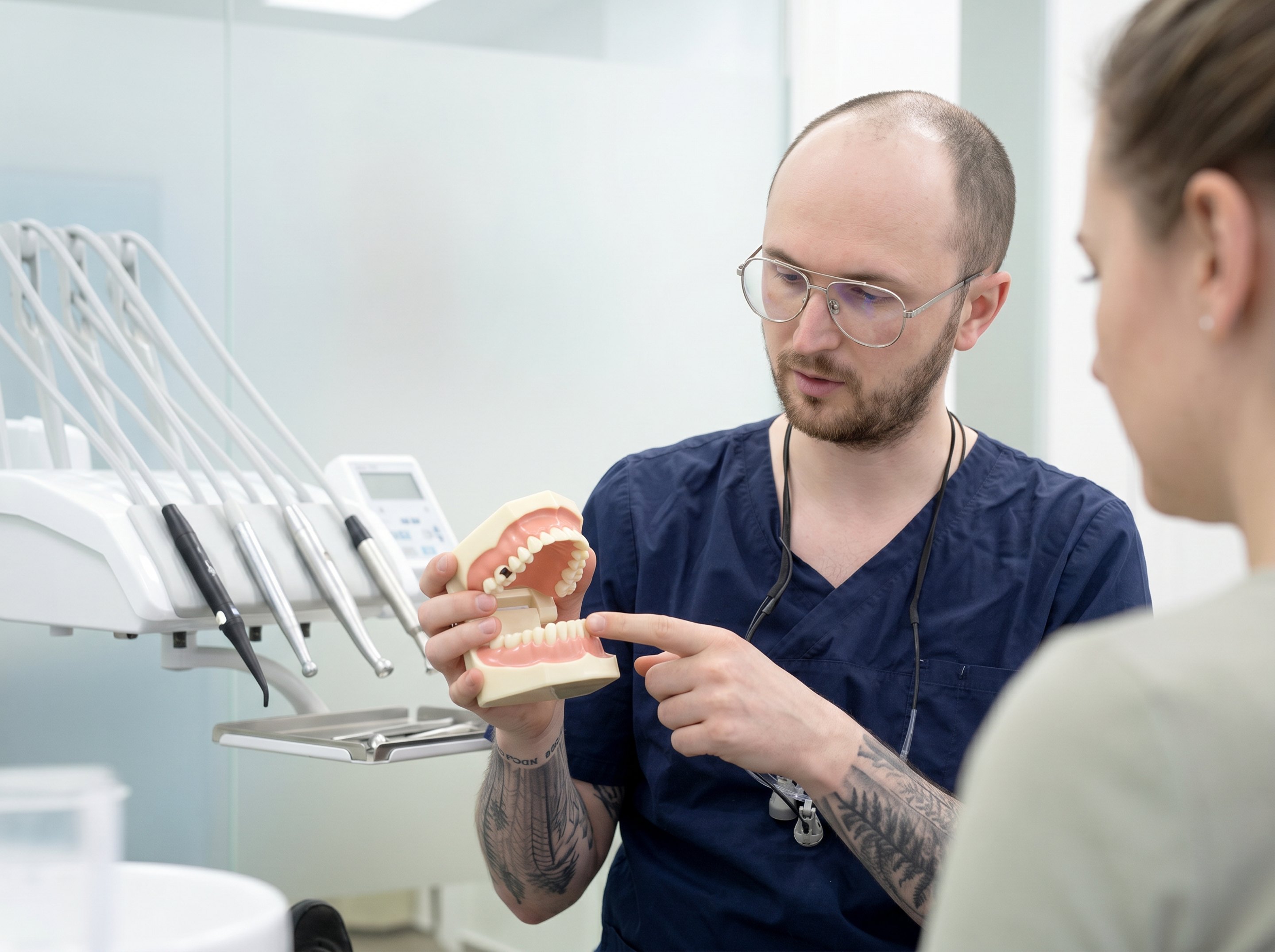
Why does a tooth feel higher when biting down?
Many people describe the tooth as longer or as having grown out. In most cases, however, its actual length has not changed. The unfamiliar sensation is caused by altered contact when biting together.
Even small discrepancies can noticeably alter your bite. The affected tooth then makes contact before the other teeth. This can cause pressure, sensitivity or discomfort when chewing.
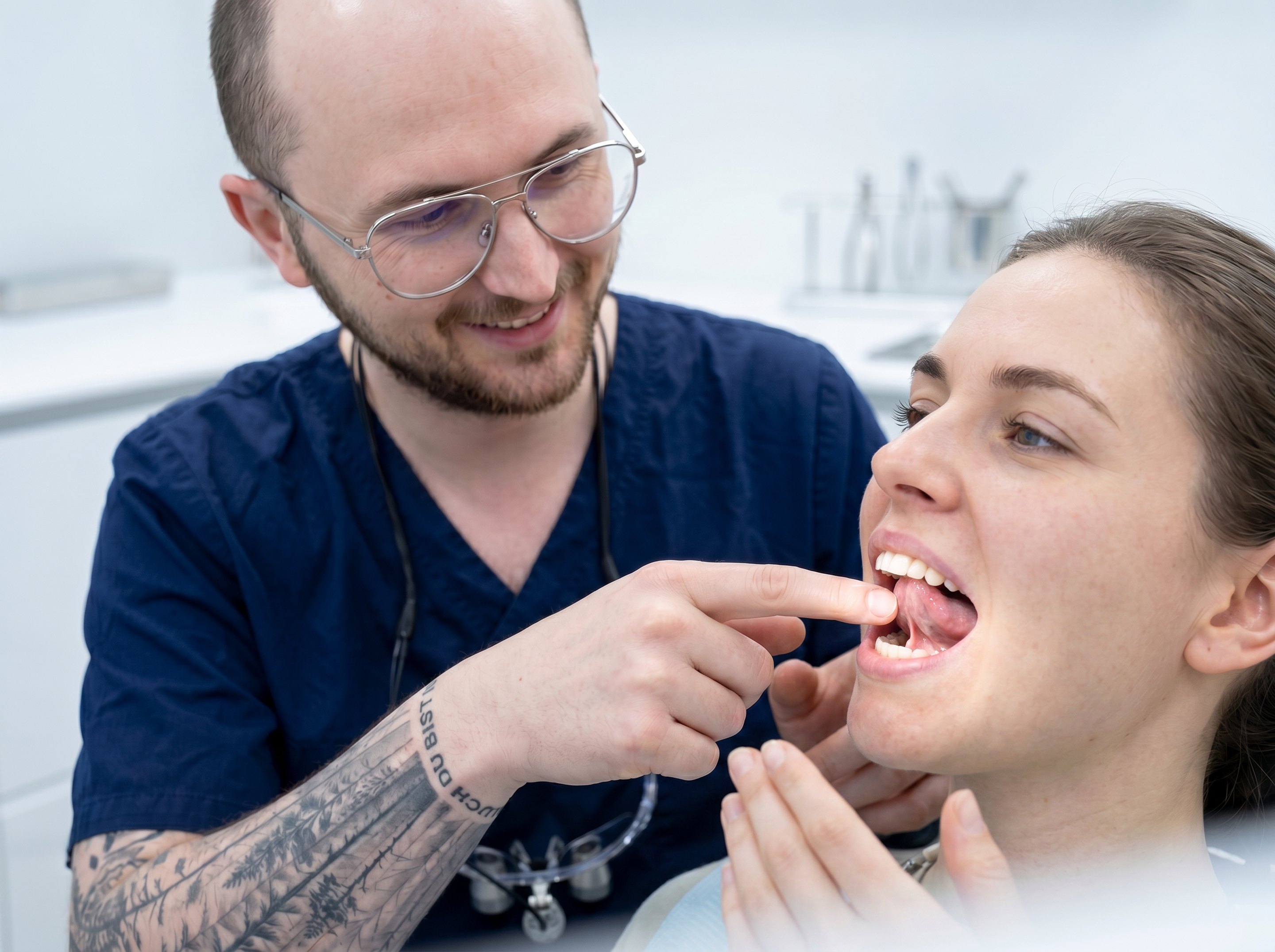
Common causes of a seemingly high tooth
Several changes can cause this sensation. Only an examination can reliably determine the exact cause.
• filling or crown that is too high • inflammation of the tooth root • irritation of the supporting tissues of the tooth • teeth grinding and severe clenching • crack or damaged tooth structure
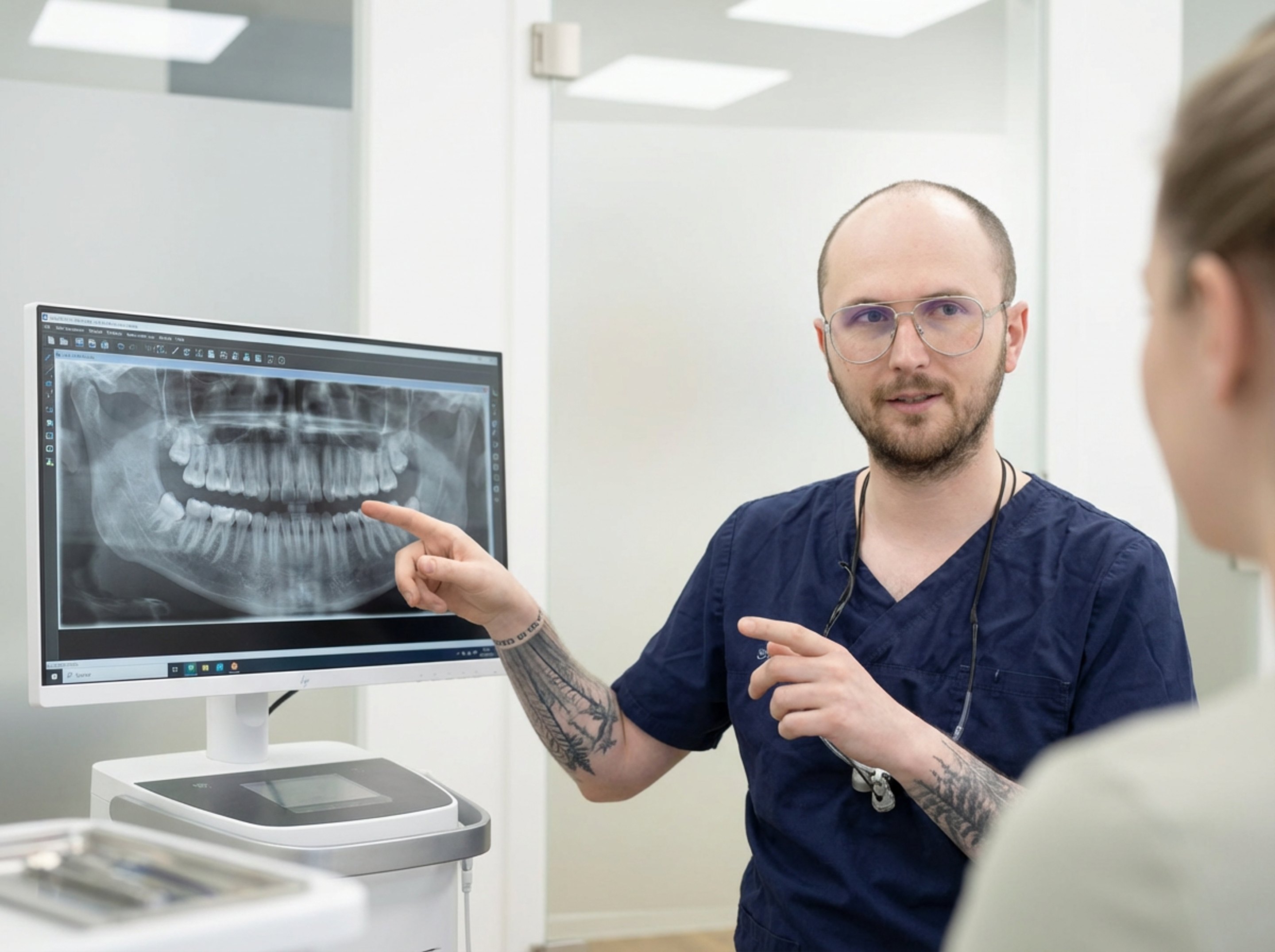
How does the dentist examine the high tooth?
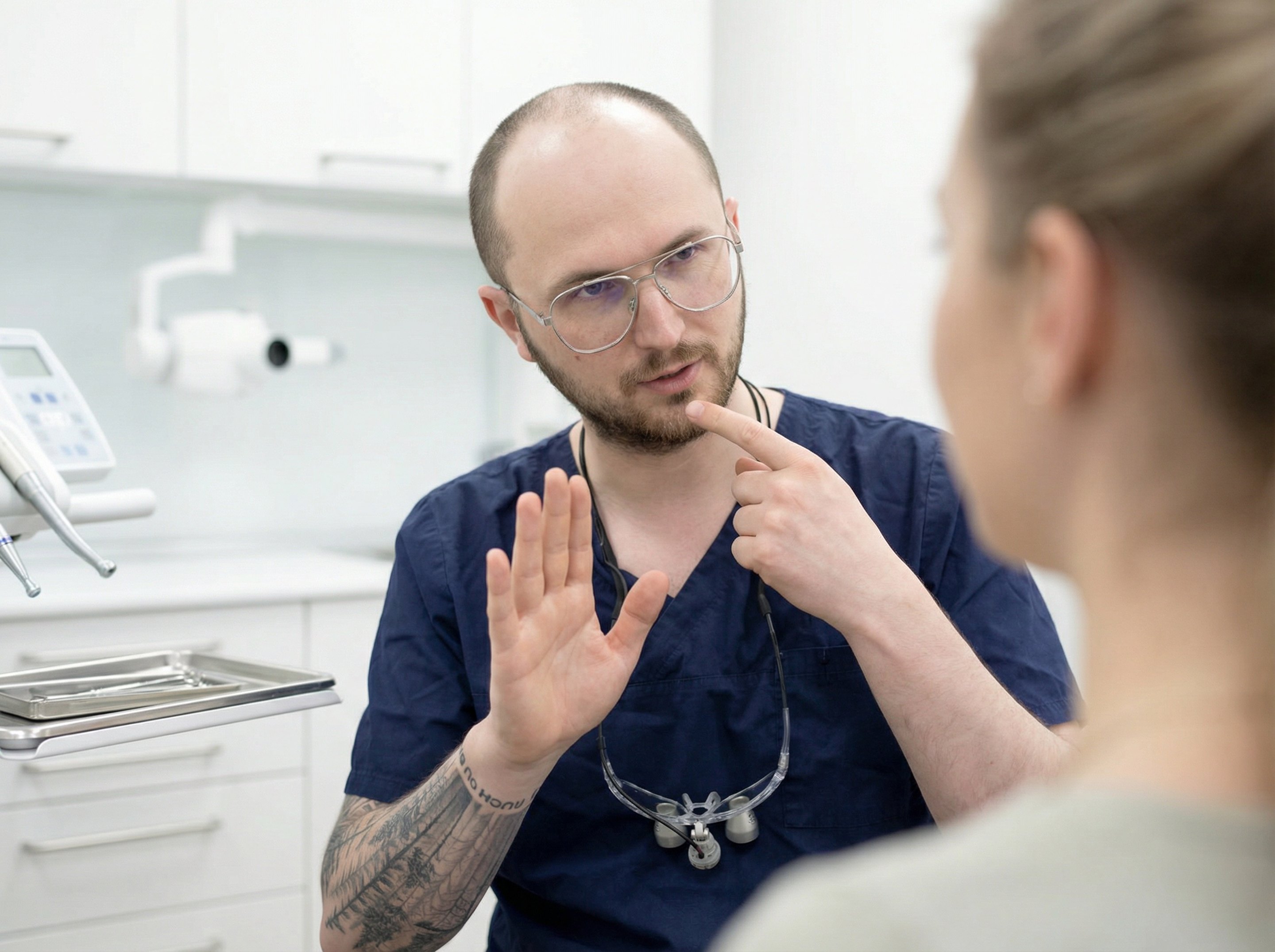
First, the onset, progression and triggers of the symptoms are discussed. The dentist then checks the gums, tooth mobility and any existing dental restorations. Cold and percussion tests can also provide important information.
Thin occlusal foil makes the contact points visible. This allows the dentist to identify premature contact. X-rays may be necessary if inflammation or a crack is suspected.
What treatment is available?
If a filling is too high, only the problematic contact is adjusted. Crowns and inlays can also be corrected selectively. The bite is then checked again.
For inflammation, treatment depends on the cause. Options include treatment for tooth decay, root canal treatment or periodontal therapy. Depending on its extent, a crack may require a partial crown, a crown or further measures.
If excessive strain is caused by grinding, a bite splint may be helpful. Exercises to relieve muscle tension can also help. The specific recommendation always depends on the individual findings.
What should you do before your appointment?
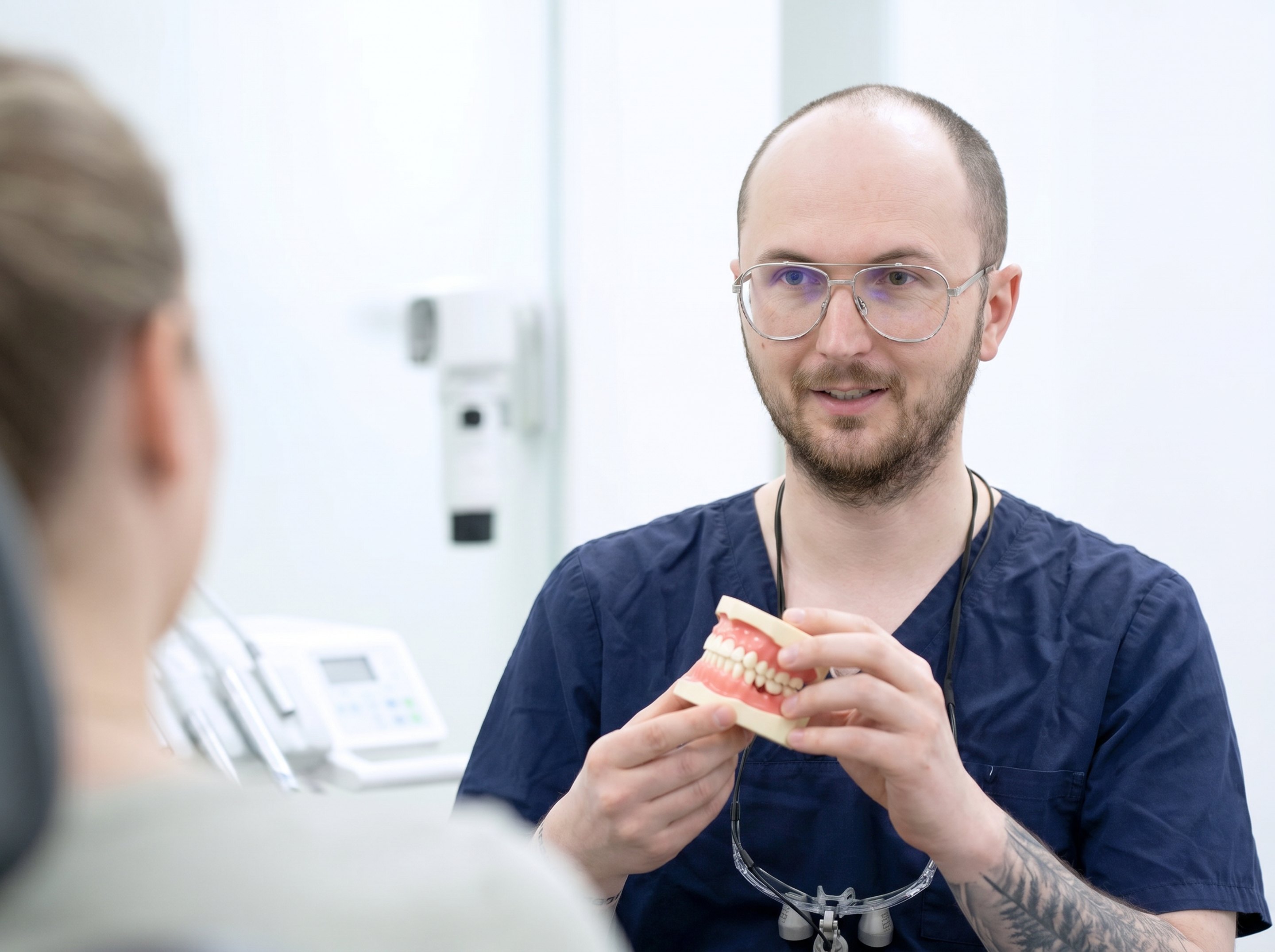
Try not to chew on the affected side. Hard or sticky foods increase the strain. Nevertheless, normal, careful oral hygiene remains important.
Never grind down a tooth or dental prosthesis yourself. Only take medication on professional advice. Swelling, fever or rapidly worsening symptoms require prompt medical attention.
When is a prompt examination important?
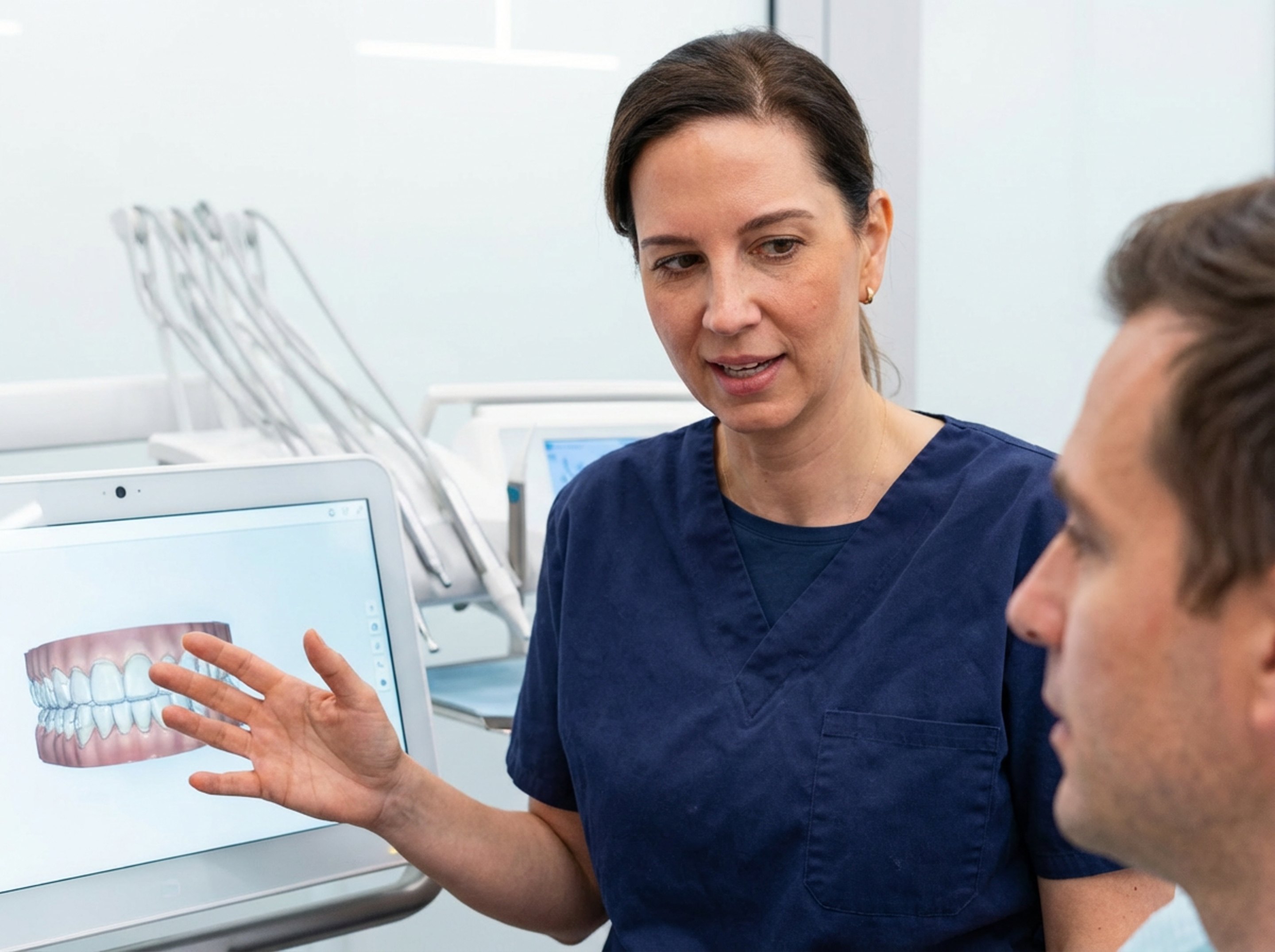
An examination is advisable if the sensation persists for more than one or two days. After a new filling or crown, any troublesome premature contact should be checked. The same applies to pain when biting with no apparent treatment-related cause.
Swelling, fever or difficulty opening your mouth are warning signs. A loose tooth also requires a prompt examination. Wunschlachen dental practice in Berlin will investigate the cause systematically.

Conclusion: Have a high tooth checked early
A seemingly higher tooth is usually not a coincidence. It is often caused by premature contact, inflammation or excessive strain. A precise bite check often quickly reveals the crucial clue. Even small discrepancies in contact can cause lasting discomfort during everyday chewing.
The earlier the cause is identified, the more targeted the treatment can be. This helps prevent persistent incorrect loading and subsequent damage. If your symptoms persist, book an appointment for an examination.