White and swollen gums: causes
White and swollen gums can indicate irritation, pressure, inflammation or an infection. The symptoms often seem harmless, but should be assessed by a dentist. Early investigation is particularly advisable if there is bleeding, a feeling of pressure, bad breath or persistent swelling.
Über 350 Google-Bewertungen
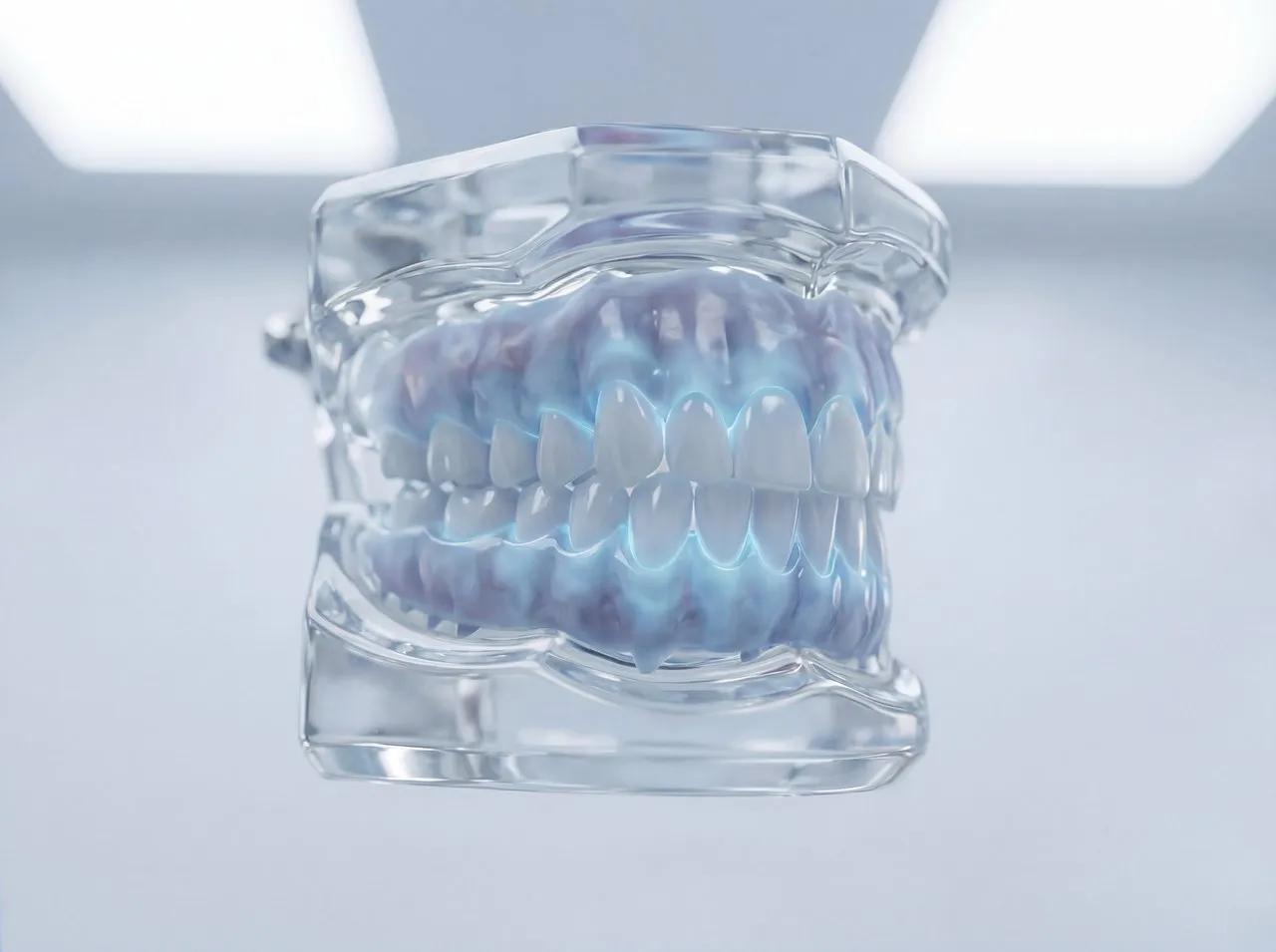
What do white and swollen gums mean?
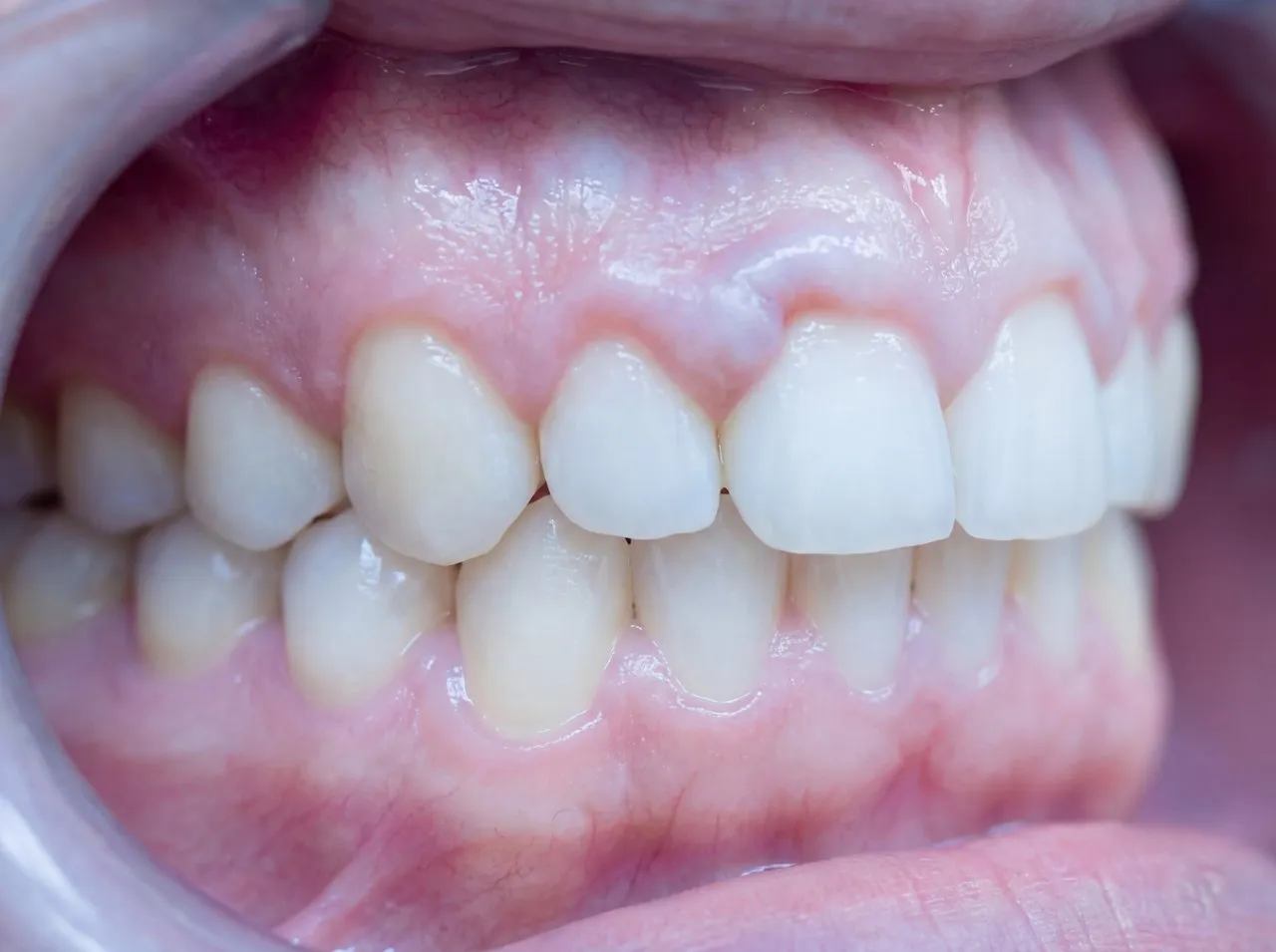
Changes to the soft tissue in the mouth are quickly noticed by many patients. It appears paler, tense or slightly thickened. A feeling of pressure often develops in the affected area.
White areas can have various causes. Sometimes there is only local irritation. In other cases, inflammation of the gums is the underlying cause.
The location also matters. Changes at the gum margin are assessed differently from extensive white coatings. A thorough examination is therefore important.

Why do gums swell?
Swelling is usually caused by an inflammatory reaction. Blood flow to the tissue increases and fluid accumulates. This makes it appear thicker and more sensitive.
Bacterial plaque is often the trigger in the mouth. If it is not removed thoroughly, it irritates the gum margin. This can cause the surrounding tissue to become inflamed.
Hormonal changes also play a role. This applies during pregnancy and at certain stages of life, for example. The tissue then reacts more sensitively to existing irritants.

Typical symptoms at a glance
White and swollen gums rarely occur on their own. Many patients report other symptoms. These signs help with the assessment.
Possible symptoms include:
• A feeling of pressure at the gum margin
• Bleeding when brushing teeth
• Bad breath
• Sensitivity to touch
• A feeling of tightness in the affected area
• White coatings or pale patches
• Localised warmth
• Discomfort when chewing
If pus, severe loosening or fever also occur, prompt action is important. This may indicate advanced inflammation. An abscess must also be ruled out.

White and swollen gums after eating or brushing
Some changes are only short-lived. The tissue may react with irritation after spicy food, very hot food or vigorous brushing. It then appears paler and slightly thickened.
Such reactions often disappear within a short time, provided there is no deeper inflammation. If the symptoms persist, a check-up is advisable.
New toothpastes or mouthwashes can also be triggers. Sensitive mucous membranes react to individual ingredients. The product should then be reviewed.

When should you see a dentist?
Not every change in colour requires urgent treatment. Nevertheless, there are clear warning signs. At the latest, a dental practice should then assess the findings.
An examination is advisable if:
• the swelling lasts longer than a few days
• the gums bleed repeatedly
• pain or pressure increases
• white patches do not disappear
• bad breath persists
• chewing or speaking is impaired
An assessment is also recommended for recurring symptoms. Early findings can usually be treated in a targeted manner. This reduces the risk of subsequent damage to the supporting structures of the teeth.
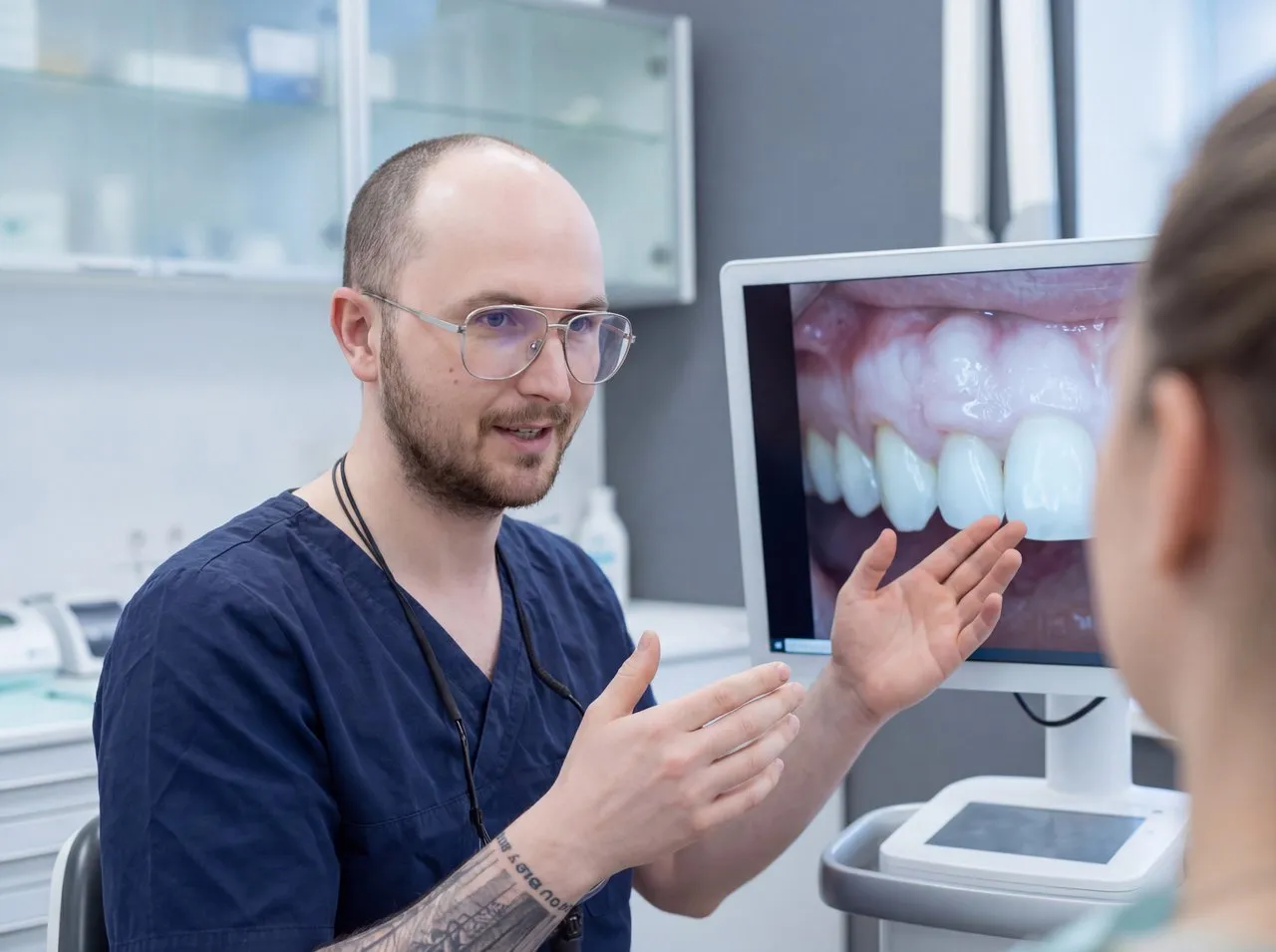
How is the diagnosis made?
The first step is a clinical examination. The dentist assesses the colour, shape and firmness of the tissue. Plaque, tartar and possible pressure points are also checked.
The depth of the gum pockets is often measured as well. This makes it possible to determine whether there is only superficial irritation or whether deeper structures are already affected.
Further steps may follow if the findings are unclear. These include X-rays or a swab. In this way, the cause can be narrowed down more precisely.
Treatment for white and swollen gums
Treatment depends on the trigger. Where bacterial plaque is present, professional cleaning is the main focus. It reduces germs and relieves the tissue.
Home oral hygiene is also adjusted. A soft brush and a gentle technique are often advisable. Interdental care can also be important.
If there are pressure points, dentures or splints must be checked. If a fungal infection is present, suitable medicines may be considered. Inflammatory processes should always be treated specifically.
An early response is crucial. Untreated findings can spread. This increases the risk of periodontitis and tissue loss.
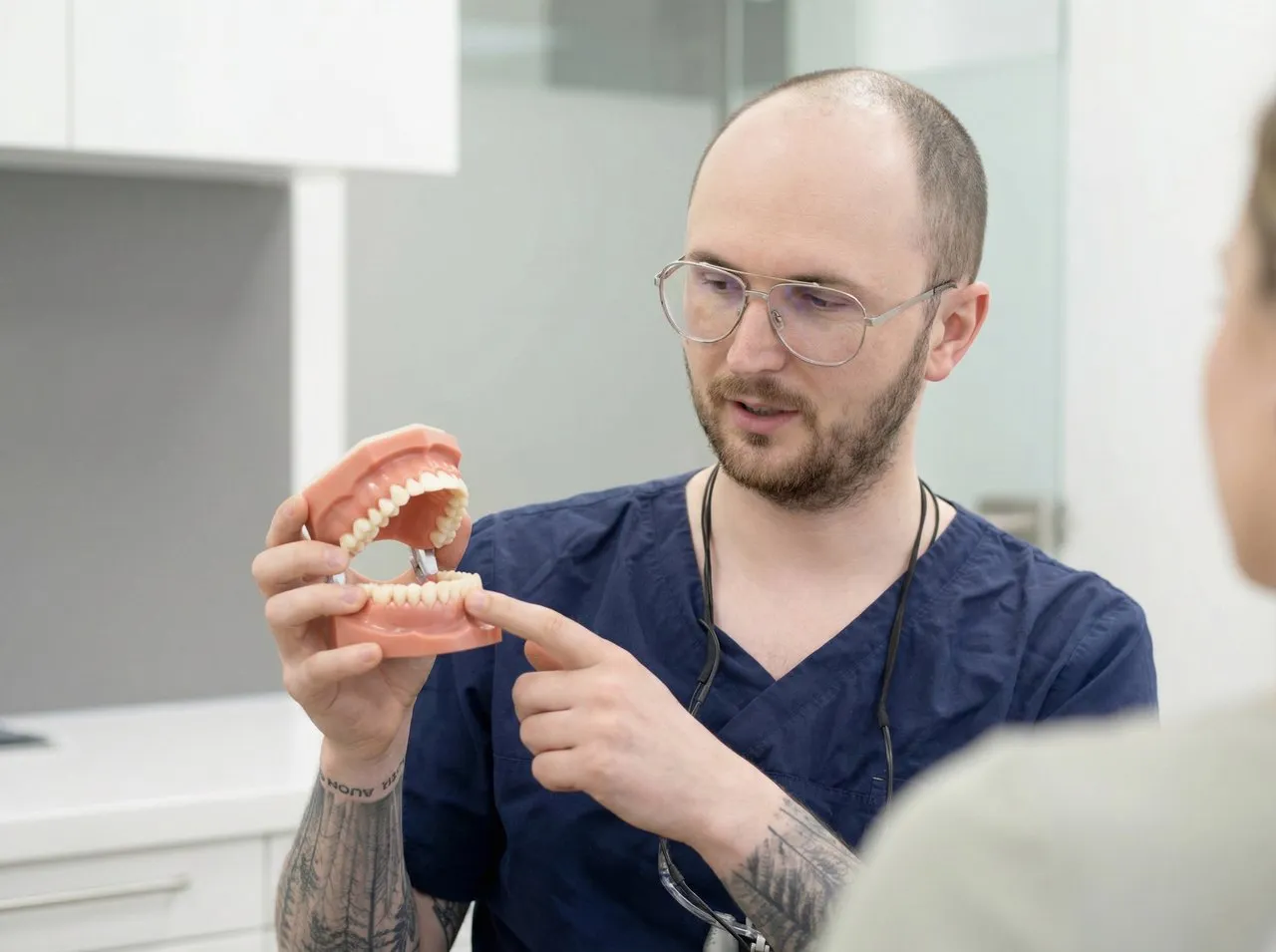
What can patients do themselves?
Good oral hygiene remains the foundation. Plaque should be removed thoroughly but gently. Excessive pressure should be avoided.
Irritating foods can be avoided temporarily. These include very spicy, hard or highly acidic foods. Nicotine also places additional strain on the oral mucosa.
It is important to monitor progress. If the condition does not improve, the dental practice should assess the findings. Home remedies are no substitute for a dental diagnosis.