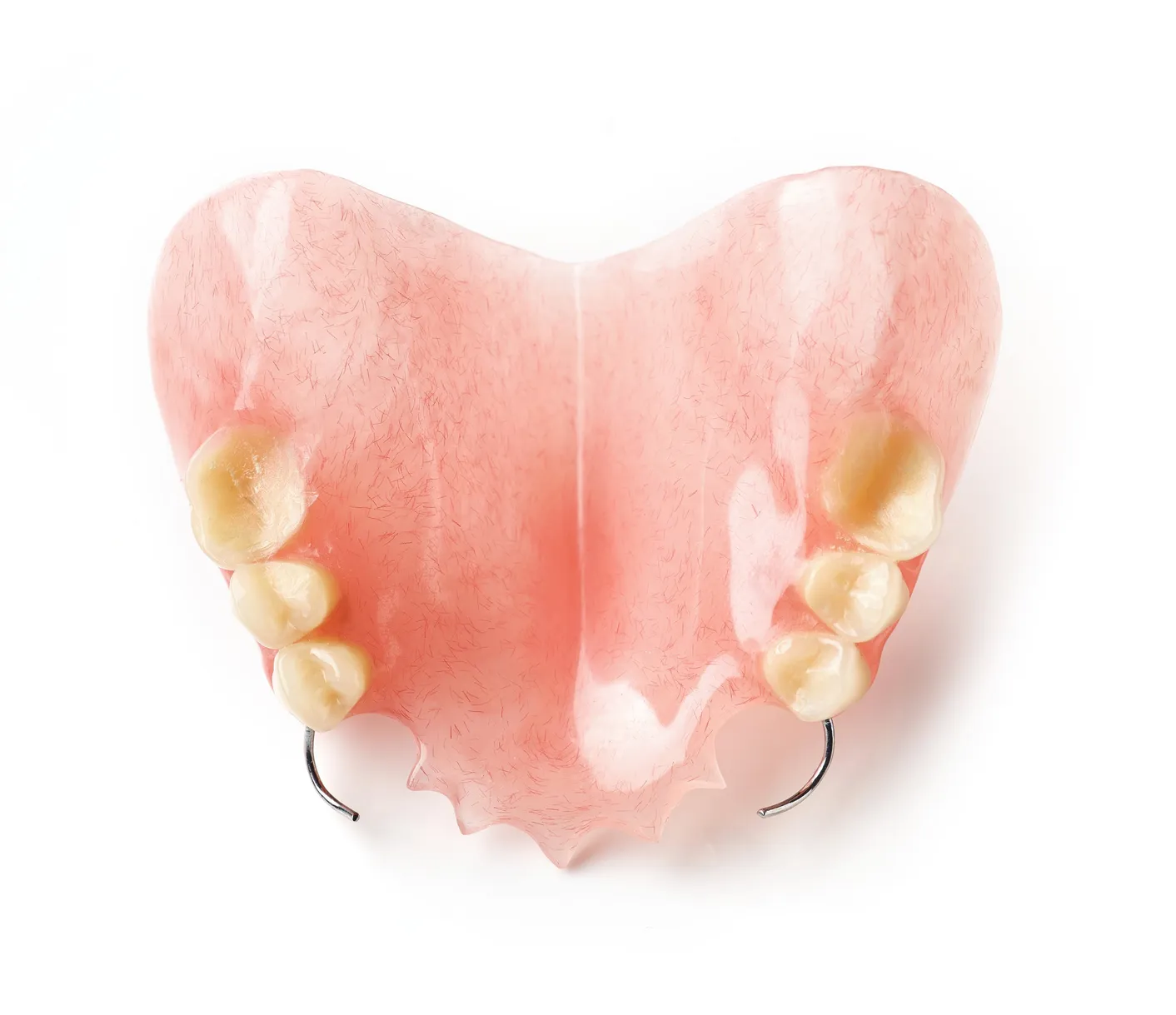
Clasp dentures: retention, requirements and everyday life
A clasp denture replaces missing teeth and is secured to your own teeth with retaining elements. It is a type of removable dental prosthesis: it can be taken out of the mouth for cleaning. Whether this treatment is suitable depends on the remaining teeth, the gap and other findings. This overview explains how clasps work and helps you discuss questions about planning and use in a focused way.
The short answer
A clasp denture is a removable dental prosthesis that is secured to existing teeth. The condition of these teeth and the design of the denture are important for planning.
- What does a clasp denture mean?
- The term mainly describes how the denture is secured. Clasps engage suitable areas of existing teeth and help hold the denture in place. The replacement teeth sit on a base; depending on the design, a plastic or metal framework is also used. Clasps can be used with various partial dentures.
- What role do the remaining teeth play?
- The existing teeth are an important part of planning. Their position, substance and support within the tooth-supporting tissues influence where retaining elements can be placed. Any diseases affecting these teeth must be taken into account. A tooth is not suitable as an abutment simply because it is next to a gap.
- What matters when inserting and removing the denture?
- Practise handling the denture with guidance at first. Do not force it into place or bite it into what you think is the correct position. If it catches anywhere, a clasp feels different or insertion suddenly becomes more difficult, have the fit checked.
- Care for the denture and your own teeth separately
- The removable prosthesis can be cleaned outside the mouth. Use a method suitable for its materials and follow the instructions from the practice and manufacturer. Metal components in particular can react to unsuitable products. Heat and household bleach are not suitable improvised solutions.
What does a clasp denture mean?
The term mainly describes how the denture is secured. Clasps engage suitable areas of existing teeth and help hold the denture in place. The replacement teeth sit on a base; depending on the design, a plastic or metal framework is also used. Clasps can be used with various partial dentures.
A clasp denture is therefore not automatically the same as any plastic denture, nor is it exclusively a particular type of cast metal framework denture. Materials and design are considered separately. For example, a denture with a metal framework may have plastic components and artificial teeth without being made entirely of metal.
During planning, ask for the exact name of your prosthesis and which parts hold it in place. This will also make it easier to understand repairs or adjustments later. A picture of another denture tells you little about how a prosthesis needs to be designed for your own mouth.

What role do the remaining teeth play?
The existing teeth are an important part of planning. Their position, substance and support within the tooth-supporting tissues influence where retaining elements can be placed. Any diseases affecting these teeth must be taken into account. A tooth is not suitable as an abutment simply because it is next to a gap.
The denture and its clasps transmit forces during use. The design and loading therefore need to be coordinated. At the same time, caring for and checking your own teeth remains important. If these teeth become diseased or are lost, the starting conditions for the denture may change.
Discuss which teeth are particularly important for the prosthesis. Also ask whether tooth decay or gum problems need to be treated beforehand. A clear explanation of the remaining dentition is more helpful than a comparison based solely on the number of artificial teeth. The condition of the mouth forms the basis for the decision.
Are the clasps visible?
Depending on their position, metal clasps may be visible when you smile or speak. How noticeable they are depends on the planned retention and your individual circumstances. It is therefore not possible to promise that a clasp denture will always be invisible. Raise this point before the denture is made.
Appearance also depends on the shape, colour and design of the replaced gum area. Ask which parts can be assessed at a try-in. Be as specific as possible about the area that concerns you, rather than simply asking for ‘more aesthetic clasps’.
Other retention methods may be an alternative where conditions are suitable. However, they have their own requirements and treatment steps. The article on telescopic dentures explains one such option. Less visible retaining elements do not automatically mean that additional changes to teeth or other work can be avoided.

How is the prosthesis planned and fitted?
The process begins with an examination and a discussion of the treatment goal. The condition of the teeth, gums and toothless areas is assessed. Impressions or other suitable records capture the required shapes. The denture can then be designed and made.
During fitting and insertion, the fit, contacts and handling are checked. Ask to be shown how to remove and insert the denture. The correct direction of movement depends on the specific design; general instructions on the internet cannot specify every detail.
Clarify which follow-up checks are planned after insertion and who to contact if you experience problems. The type and extent of treatment must be established before individual costs can be planned. A standard online price explains neither your starting situation nor any preliminary treatment that may be needed. Ask for a clear explanation of the proposed process and the alternatives.
What matters when inserting and removing the denture?
Practise handling the denture with guidance at first. Do not force it into place or bite it into what you think is the correct position. If it catches anywhere, a clasp feels different or insertion suddenly becomes more difficult, have the fit checked.
Do not bend the clasps yourself. Even a small change can alter the fit and loading. Grinding plastic or metal is also not part of home care. Do not use pliers or homemade tools to loosen or tighten anything.
If removal is difficult, describe to the practice when and where it catches. Ask for another demonstration. A denture should be manageable using the technique intended for it. Trying to force it yourself is not an appropriate solution, especially if a supporting tooth is painful.
Distinguishing between adjustment and problems
A new denture may feel unfamiliar at first. Speaking and chewing sometimes take practice. Smaller bites and less hard or sticky foods can make it easier to get started. The adjustment period varies from person to person; a fixed timescale for everyone is not very helpful.
Painful pressure points or sore areas should be checked. You do not have to endure them as an unavoidable part of getting used to the denture. Discuss by phone whether and for how long you should wear the denture before the examination so that the cause can be assessed. General recommendations must not replace an assessment of your specific findings.
A tooth that has recently become loose or a damaged clasp should also be examined. For further information on changes to a dental restoration, see Denture repair. The examination will determine whether an adjustment, repair or another approach is necessary.
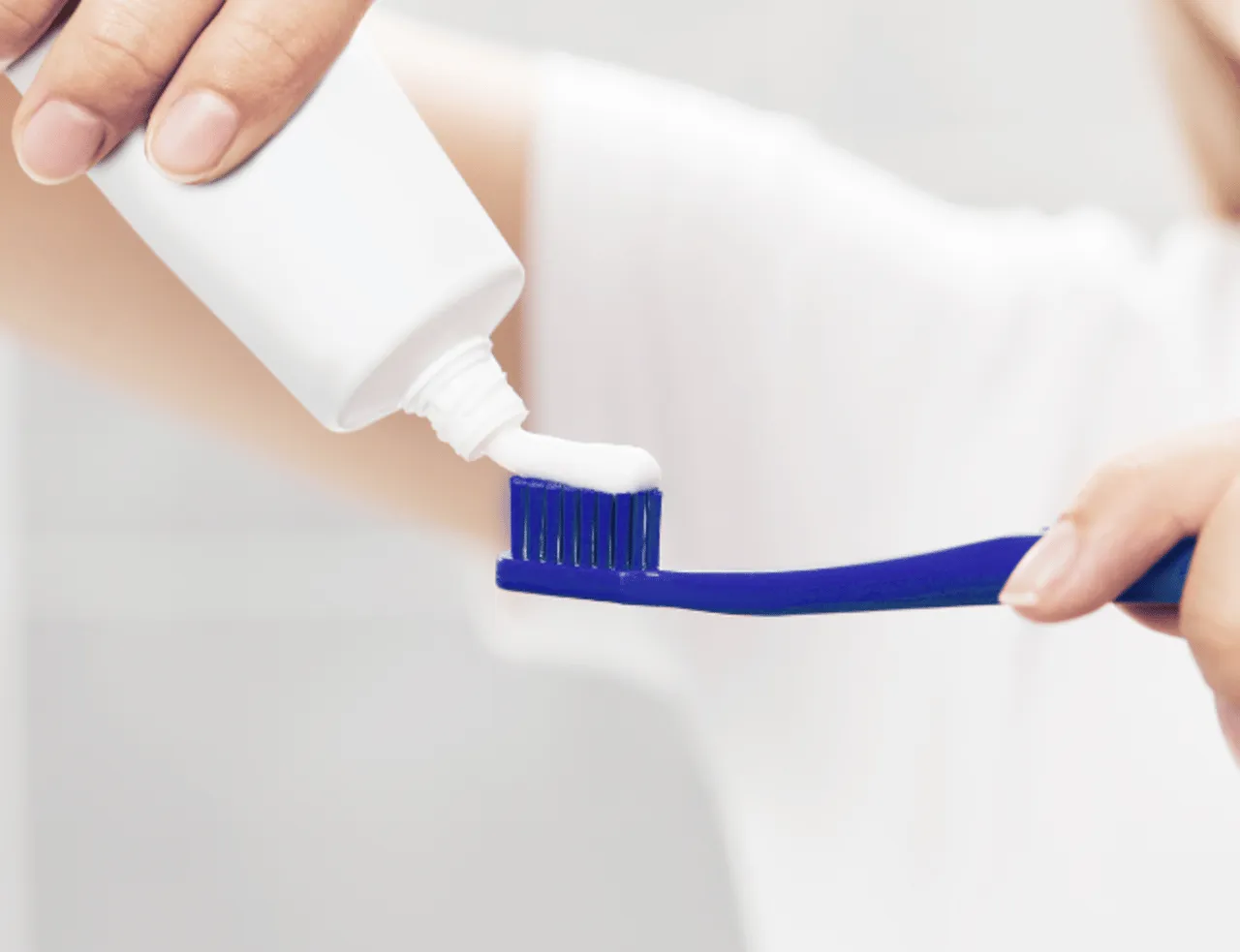
Care for the denture and your own teeth separately
The removable prosthesis can be cleaned outside the mouth. Use a method suitable for its materials and follow the instructions from the practice and manufacturer. Metal components in particular can react to unsuitable products. Heat and household bleach are not suitable improvised solutions.
Your own teeth still need their usual care with fluoride toothpaste and suitable interdental cleaning. Clean the areas where retaining elements rest particularly carefully. Cleaning the denture and caring for your teeth are two complementary tasks. A clean denture does not automatically prevent disease in the remaining teeth.
Also ask about wearing the denture at night and suitable storage. This advice must be appropriate for the material and treatment situation. A detailed overview of care is available under cleaning dentures. A cleaning product is not automatically suitable for every type of denture.
Compare alternatives objectively
Depending on the remaining dentition, other removable prostheses, bridges or implant-supported solutions may be options. These procedures have different requirements. Compare what changes would need to be made to your own teeth, how the prosthesis should be cleaned and what follow-up care it requires.
A clasp-retained denture is not unsuitable simply because it is removable, but nor is it automatically the right choice for every gap. Ask about the specific reason for a recommendation. To help you weigh up the options, read Partial denture or implant.
Before your appointment, make a note of what matters most to you: handling, visible retaining elements, preserving your own teeth or a particular everyday situation. This turns general product differences into a discussion about your personal requirements and actual clinical findings.
Frequently asked questions
No. Partial dentures can use different retention methods. The term clasp denture refers to retention by clasps on your own teeth.
This may be the case depending on their position and the design. Discuss the visible area during planning; it is not possible to guarantee that they will always be invisible.
No. Have the fit checked. Bending it yourself can alter the fit and loading and damage the prosthesis.
Yes. The denture and your own teeth each need care. The areas around retaining elements and the spaces between teeth in particular should be cleaned thoroughly and accessibly.
Sore or painful areas should be checked. Ask about an adjustment and about wearing the denture until your appointment, rather than simply putting up with the discomfort.
Depending on the findings, other removable prostheses, bridges or implant-supported solutions may be options. Their suitability must be assessed based on the teeth and jaw.
Sources and further information
- KZBV: Partial dentures
- Leeds Teaching Hospitals: Removable partial dentures, 2025
- Rhein-Neckar Dental Health Working Group: Partial dentures
- NHS: Dentures
- American Dental Association: Removable partial dentures – insertion without force
- University of Bristol: Denture care – materials and care
- FDI World Dental Federation: Removable partial denture – remaining teeth and treatment