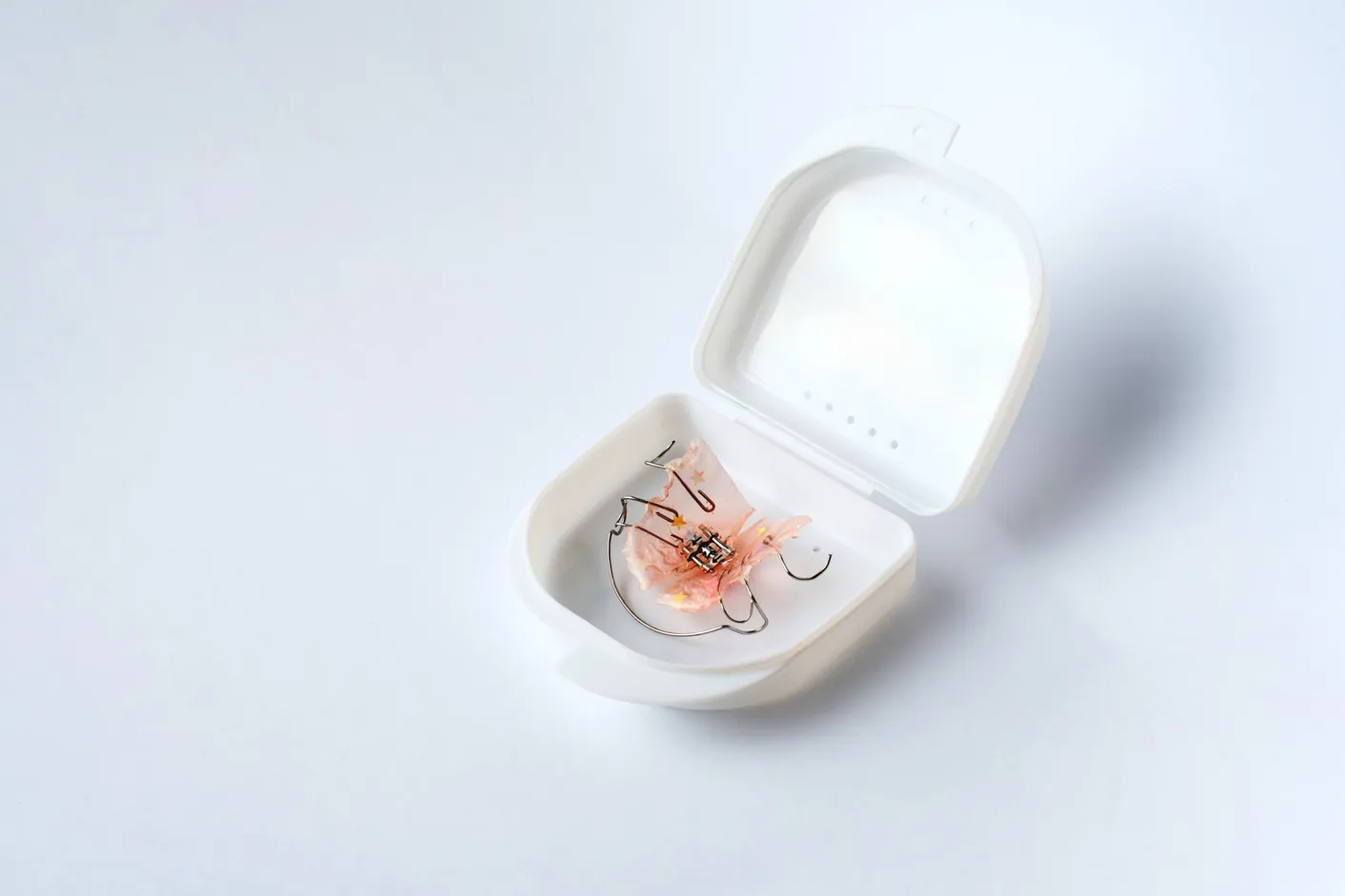
Cleaning a removable brace: a routine for plastic and metal
A removable brace is cleaned outside the mouth. The methods and products used should suit its plastic, metal parts and construction. Ask to be shown how to care for it when you receive it, and ask questions if the instructions are unclear. Hot water, household bleach and harsh scrubbing are not suitable improvised solutions. Your own dental care and prescribed wearing times remain part of the treatment.
The short answer
The plastic plate, clasps and screws each have different requirements. A demonstrated cleaning routine is more helpful than home remedies.
- First, establish which appliance you wear
- Removable appliances can be constructed in different ways: with a plastic plate, retaining clasps, screws, springs or several parts that work together. Day-to-day life with an active brace is not the same as with a denture or a clear aligner. A cleaning product for another product is therefore not necessarily suitable simply because it looks similar.
- Which care products are recommended?
- The recommendation should take the specific material into account. Patient information from King's College Hospital recommends gentle brushing with soap and water or a suitable cleaning solution. It warns against abrasive or whitening products, household bleach and hot water. These can damage surfaces or metal parts and alter the shape.
- Do not bend metal parts or screws
- Hold the brace while cleaning it in the way you were shown. Pressure on a thin spring or clasp can change its position. If an area appears bent or the brace feels different after cleaning, do not try to bend it back with pliers.
- Stubborn deposits, odour and a change in fit
- If a deposit cannot be removed using the recommended routine, take the appliance to your appointment. Have it assessed to determine whether deposits, changes to the material or other causes are responsible. Whitish areas prove neither the presence of mould nor a particular infection. Pictures on the internet are not a reliable self-test for this.

First, establish which appliance you wear
Removable appliances can be constructed in different ways: with a plastic plate, retaining clasps, screws, springs or several parts that work together. Day-to-day life with an active brace is not the same as with a denture or a clear aligner. A cleaning product for another product is therefore not necessarily suitable simply because it looks similar.
Make a note of the name and the instructions you receive when the appliance is fitted. If several parts are used, it should be clear how each one is to be cleaned. A short written guide is particularly useful for parents if their child moves between households or carers help out.
The article on the removable brace explains its role in treatment. This article focuses on day-to-day care. Questions about activating a screw belong to the separate treatment plan; cleaning is not an occasion to change its settings.

Which care products are recommended?
The recommendation should take the specific material into account. Patient information from King's College Hospital recommends gentle brushing with soap and water or a suitable cleaning solution. It warns against abrasive or whitening products, household bleach and hot water. These can damage surfaces or metal parts and alter the shape.
Other hospital instructions describe cleaning certain acrylic appliances with toothpaste. The Royal Berkshire Hospital makes this recommendation explicitly in its information for an appliance containing hard acrylic. This does not mean that every toothpaste is generally approved for every removable brace. Ask which product is intended for your appliance.
A short care sheet should include the product or cleaning agent, the type of brush and, where applicable, the contact time. If a cleaning tablet is recommended, read its label: is it suitable for this material and this use? More tablets, a longer contact time or hotter water do not automatically make cleaning more suitable.
A daily routine, step by step
Get everything you need ready before removing the brace. Work somewhere where the brace cannot fall far. A towel or another suitable surface helps to catch it when you change your grip. Make sure that small parts do not disappear down the drain.
You can establish a consistent routine with your treatment team as follows:
Remove the brace using the gripping points you were shown, without pulling on delicate springs.
Rinse off loose food debris with water at the recommended temperature.
Clean the accessible surfaces with the recommended soft brush and suitable product.
Rinse off any remaining product thoroughly and inspect the brace's condition.
Care for your own teeth and insert or store the appliance according to the agreed plan.
Ask to be shown the underside and hard-to-reach areas in particular. ‘Cleaning your brace’ is not a very specific instruction if it is unclear where deposits remain. Children can help themselves at first; adults check whether they are managing. The responsibility should match the child's dexterity.
Do not bend metal parts or screws
Hold the brace while cleaning it in the way you were shown. Pressure on a thin spring or clasp can change its position. If an area appears bent or the brace feels different after cleaning, do not try to bend it back with pliers.
The screw should only be activated in accordance with the agreed instructions. If a deposit builds up there or a supplied key does not fit as demonstrated, ask for advice. Drilling, scratching with needles or opening components are not part of cleaning at home.
Also check that the plastic edges look unchanged. Do not use a household file on a rough or sharp area. Make a note of when you noticed the change and whether the appliance had been dropped. If it is damaged, agree on further use with the team.
What helps after meals and when you are out
A removable appliance needs a rule for mealtimes. Some treatment plans require removal, while others give different instructions on wearing it. Do not adopt another child's plan. Cleaning after eating and whether the brace is worn during meals are two separate issues.
Hospital information recommends rinsing after meals or regular cleaning of the appliance and teeth. Have your specific times written down: mornings, after meals and evenings can be organised differently depending on your daily routine. An agreed routine is easier to follow than constantly changing attempts.
For school or work, keep the protective case and agreed care aids in a fixed place. A napkin can easily be mistaken for rubbish. A labelled case is easier to find again. Establish how cleaning should work when you are out if there is no suitable place for your usual routine.

A protective case and storage are part of the routine
The case should fit the appliance without trapping it. Clean the container according to its own instructions and check for residues. A well-cared-for brace in a dirty container makes the routine unnecessarily contradictory. Check that the fastening still works and that the case is undamaged.
Whether the appliance is stored dry or in a particular medium during a break from wearing it depends on the material and instructions. Do not leave every removable brace in just any cleaning solution overnight as a precaution. Soaking replaces neither mechanical cleaning nor the prescribed wearing time.
The daily schedule should be clear before the brace is removed in the evening. Night-time wear may be required during active treatment. Ask if the storage and wearing instructions appear to contradict each other, rather than introducing your own overnight break.
Stubborn deposits, odour and a change in fit
If a deposit cannot be removed using the recommended routine, take the appliance to your appointment. Have it assessed to determine whether deposits, changes to the material or other causes are responsible. Whitish areas prove neither the presence of mould nor a particular infection. Pictures on the internet are not a reliable self-test for this.
A persistent odour can also be a reason to review the care routine and oral examination findings together. Make a note of how you clean and which product you use. This is more helpful than switching between several harsh household remedies. For information on bad breath, see bad breath.
If you experience pain, a sore spot, breakage or a brace that no longer fits, contact your orthodontist. A request for a check-up need not wait until your next regular appointment. You can find additional guidance under Brace: help with problems. The brace should not be made to fit by forcing it into place.
Frequently asked questions
No. Hospital instructions differ depending on the material and appliance. Ask which product is suitable. Whitening or highly abrasive products are not a universal care solution.
Hot water can alter the shape. Use the recommended water temperature and avoid boiling the appliance. A deformed appliance should be examined before it is used again.
Use the combination discussed for your product. Soaking does not automatically replace cleaning accessible surfaces. Suitability, dosage and contact time must be appropriate for the appliance.
Have the brace and your care routine checked. Do not scrape it with pointed objects or use household bleach. The cause cannot be determined from the colour alone.
Cleaning does not mean taking a break from wearing it overnight. Follow your individual wearing schedule. Subsequent storage is only determined for breaks that are actually intended.
No. Report the change and have the fit checked. Bending it yourself can affect the treatment and retention; forcing the brace into place is not a solution either.