
When is a dental crown advisable, and where can I get advice in Berlin?
A full crown is primarily an option when a tooth is so extensively damaged that a smaller restoration is insufficient. Discolouration, a large filling or completed root canal treatment alone does not justify a full crown. Wunschlachen provides advice on this at Savignyplatz and in Friedrichstraße.
- What is a full crown?
- A custom-made covering for the prepared visible part of a salvageable tooth.
- When is it considered?
- Primarily for extensive loss of tooth substance, when smaller restorations are insufficient.
- What alternatives are there?
- Depending on the defect, a filling, an inlay or a partial crown. For tooth loss, an implant-supported crown may be an option.
- What does the treatment involve?
- Usually diagnostics and planning, preparation, an impression or scan, a temporary restoration if necessary, and try-in and fitting.
- Which material is suitable?
- All-ceramic, metal-ceramic or full cast metal is selected according to tooth position, biting forces, tooth substance, aesthetics and known intolerances.
A dental examination will show which restoration is suitable.
In this article
Crown treatment at Wunschlachen: our locations in Berlin
We advise you on crowns at Savignyplatz 5 in Charlottenburg and at Friedrichstraße 147 in Berlin-Mitte. You can also receive general advice on dental restorations at Gotthardstraße 27 in Reinickendorf and at Bayerischen Platz 7 in Schöneberg.
Crowns are made in our own on-site laboratory at Savignyplatz 5. Crowns are also made in our own in-house dental laboratory at Friedrichstraße 147. If your bite is causing problems, both locations can check whether further adjustments without sending the work away are possible. When and how this can be done depends on the individual case.
The practice team will discuss with you which examinations and treatment steps are required in your case and where they will be carried out. Use the overview of locations to find your practice. You can book your consultation appointment online.
What is a dental crown?
An artificial full crown is a custom-made cap that covers the prepared, visible part of a tooth that can be preserved. It is intended to restore its shape and chewing function and stabilise the remaining tooth. The key factors are the condition of the tooth, the remaining load-bearing tooth structure and the extent of the defect.
Depending on the defect, a filling, an inlay or a partial crown may be suitable. If a tooth is missing, an implant can support a crown. Our guide to dental restorations provides an overview of other treatment options.
You can find more insights in Wunschlachen's video on TikTok.
- Direct filling
If the defect is suitable and sufficient load-bearing tooth substance remains, a filling may be enough. Whether a weakened cusp can also be restored this way depends on the individual case.
- Inlay
An inlay is a custom-made filling that is inserted into the tooth. It lies within the tooth contour and does not replace any tooth cusps.
- Partial crown
A partial crown leaves suitable areas of the tooth uncovered and can also cover weakened cusps.
- Full crown
A full crown is considered when the loss of tooth substance is so extensive that a smaller restoration cannot adequately restore the tooth. The tooth must still be salvageable.
- Implant crown
For a missing tooth, the crown can be secured to an implant abutment. The implant takes on the role of the tooth root.
How is a crown fitted to a tooth?
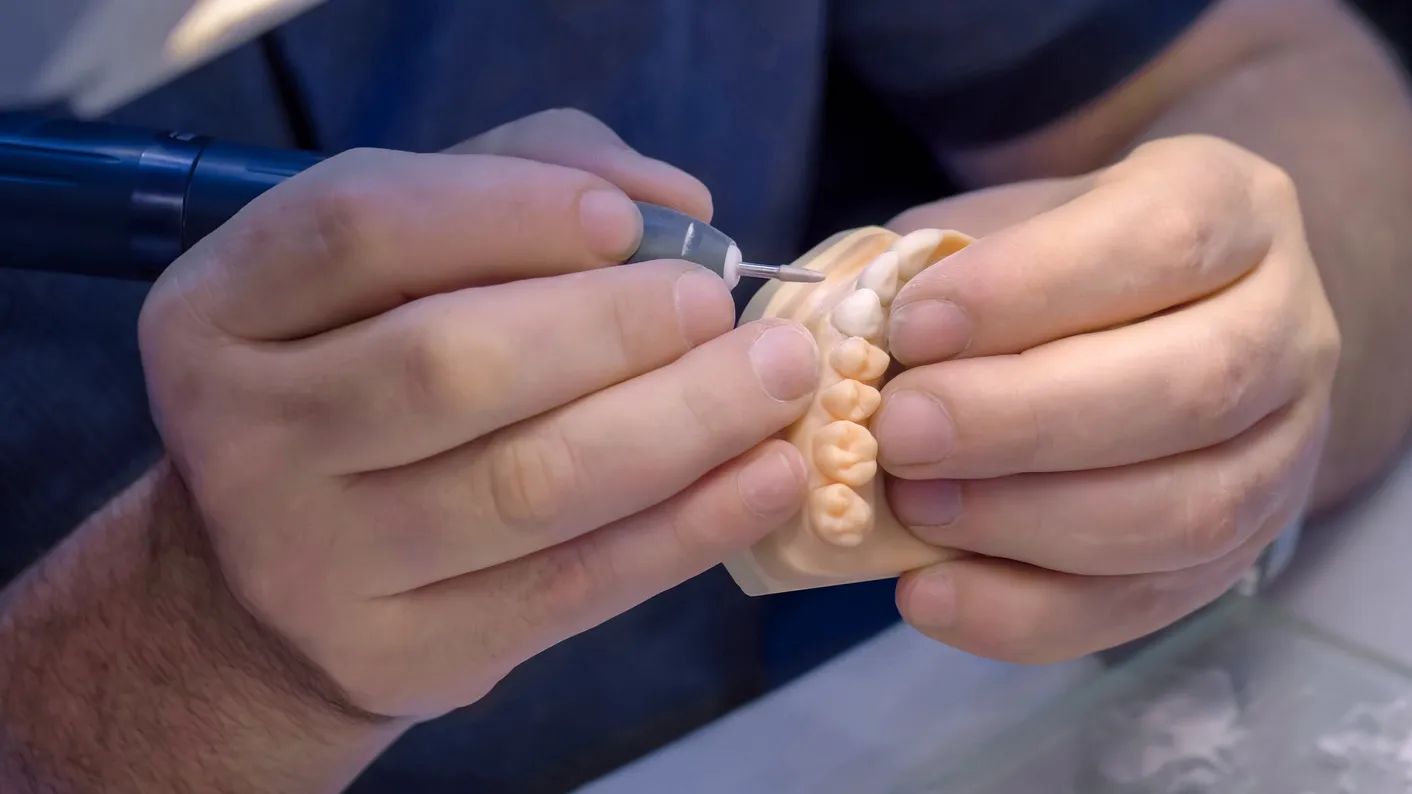
The exact procedure depends on the initial findings and the chosen method. After preparation, an impression or digital scan is taken to provide the basis for the definitive crown.
- 1. Diagnosis and planning
The tooth, surrounding area and bite are examined. The practice team discusses with you whether a full crown is suitable or whether a more tooth-conserving alternative is possible, and plans the next steps.
- 2. Preparation
If necessary, the tooth is numbed with a local anaesthetic. It is then prepared so that the planned crown fits and has sufficient retention. As much healthy tooth substance as possible is preserved in the process.
- 3. Impression or intraoral scan
After preparation, the situation is recorded using an impression or a digital scan. This serves as the template for the custom fabrication of the crown.
- 4. Temporary protection
Until the definitive crown is fitted, a temporary restoration can protect the prepared tooth. Whether it is required and how long it is worn depend on the procedure.
- 5. Try-in and attachment
Before the crown is secured, its fit, shape, colour and the bite are checked. The crown is then secured and its function is checked. The number of appointments required can vary depending on the procedure and clinical findings.
Which dental crown suits my clinical findings?
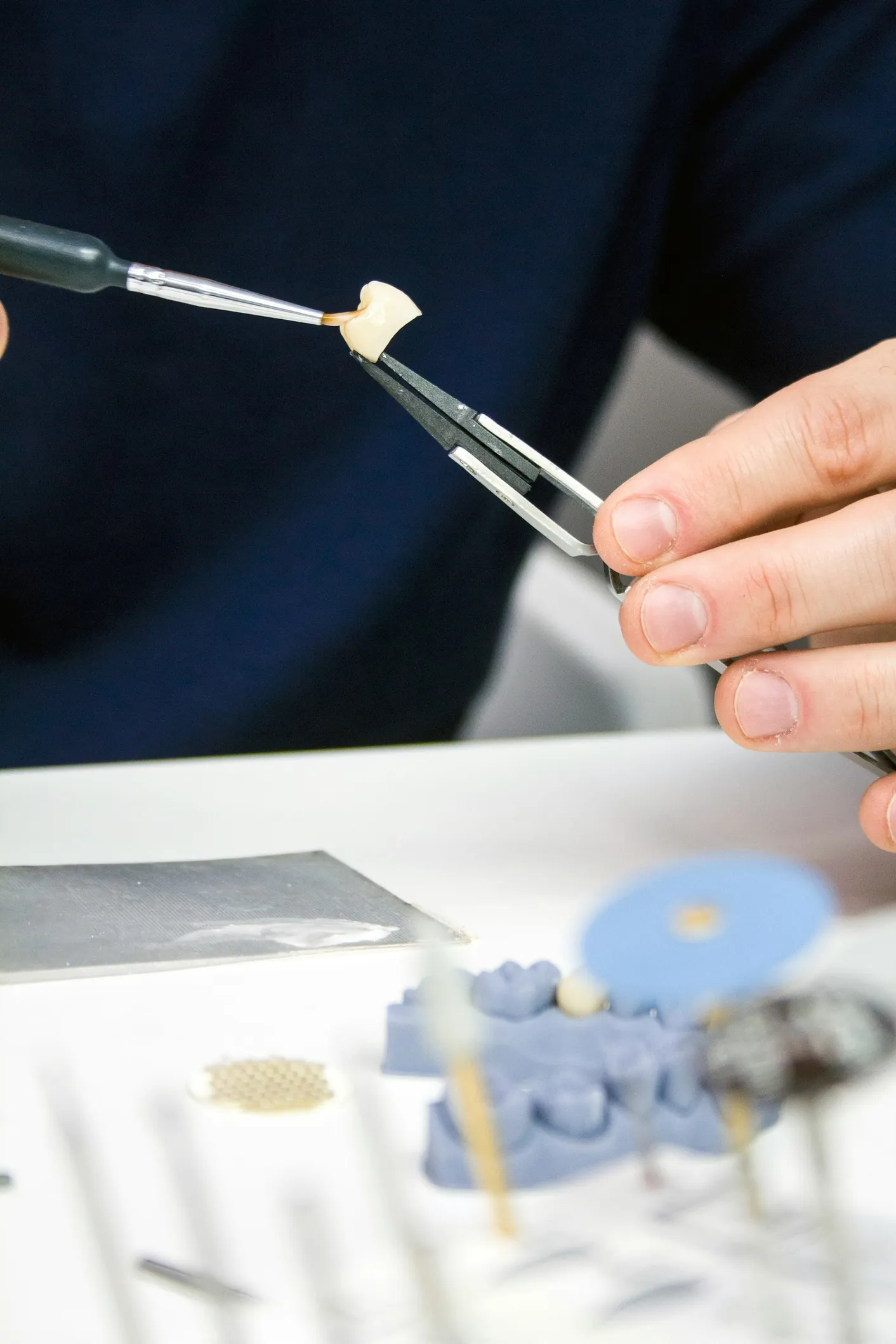
Tooth position, bite loading, remaining tooth structure, aesthetic requirements and known intolerances are all taken into account when making the selection. The required preparation and the properties of the material must be compatible. You can find out more about tooth-coloured dental restorations in the article on the ceramic crown.
- All-ceramic crowns
All-ceramic crowns have no metal framework. Their tooth-coloured appearance can be particularly advantageous in visible areas. Glass ceramic and zirconium dioxide are different ceramics. Colour, translucency and strength depend on the specific material. Known allergies and intolerances are taken into account when selecting the material.
- Metal ceramic
Metal-ceramic crowns combine a metal framework with a tooth-coloured ceramic facing. Their suitability is assessed on the basis of factors including loading, available space, aesthetic requirements and possible material intolerances.
- Full cast metal
Full cast metal crowns are made from a metal alloy and are not tooth-coloured. Depending on the clinical findings, they can be an option particularly for teeth that are not visible or barely visible. Here too, the load, tooth substance and individual requirements are decisive.
How long does a crown last, and how do I care for it?
It is not possible to reliably predict exactly how long a crown will last. The condition of the tooth, the material, oral hygiene, regular check-ups and the forces exerted during chewing all play a role. Teeth grinding can also place strain on the tooth and crown and should be taken into account during planning and aftercare.
The crown itself cannot develop caries, but the natural tooth at the crown margin can. Therefore, brush twice a day with fluoride toothpaste and clean the junction between the crown and the tooth particularly thoroughly. Also clean the spaces between your teeth using suitable aids, such as dental floss or interdental brushes. At check-up appointments, the crown margin, bite, gums and the entire restoration can be checked.
Pain, a loose crown or a damaged crown: what should you do?
Pain under or around a crown can have various causes. An altered bite, a loose fit or a visible crack should be examined by a dentist. The articles on bite problems after a new crown and inflammation under a crown explain possible causes. For urgent problems outside practice hours, contact the dental emergency service in Berlin.
- Pain or bite problems
Have worsening, persistent or recurring symptoms assessed promptly. If the tooth feels high when you bite down, your bite should be checked.
- Loose or damaged crown
Have the tooth and crown examined promptly. Bring a crown that has fallen off or any loose crown parts to your appointment. Have the crown reattached at the practice.
- Severe discomfort or swelling
Severe pain, swelling or fever requires urgent dental assessment. If you have difficulty breathing, immediate emergency medical assistance is required.
How is the appearance of the crown planned?
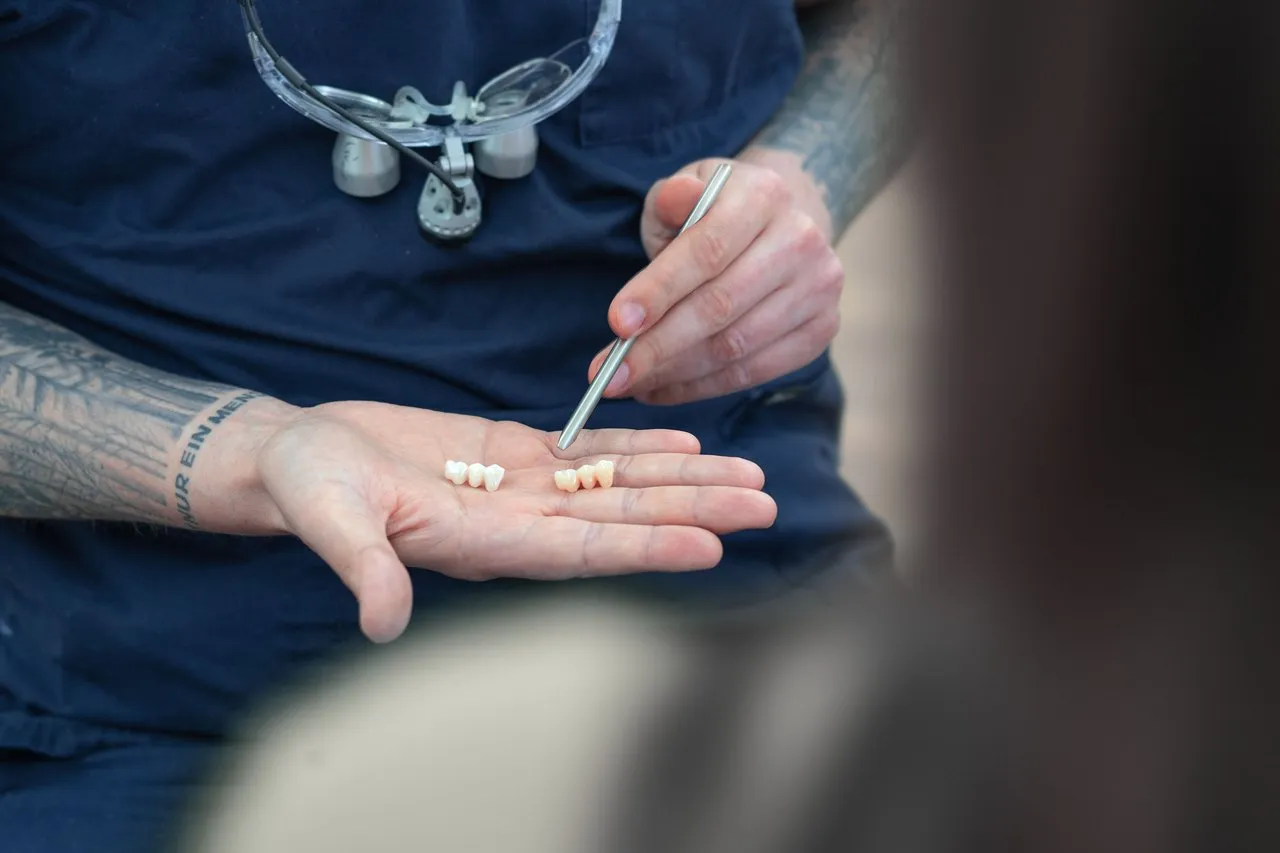
The colour, shape and surface of the crown play a role in planning. During the consultation, you discuss which tooth shade and shape suit your neighbouring teeth and what result can be achieved with the material in question.
Advice and next steps
At the first appointment, we will discuss the examination findings with you, which treatment is suitable and what happens next. Arrange a consultation about crown treatment.
Frequently asked questions
Which dental crown is best?
There is no universally best crown. All-ceramic, metal-ceramic and full cast metal crowns have different properties. Factors such as tooth position, biting forces, remaining tooth substance, aesthetic requirements and known intolerances are decisive. Materials such as glass ceramic and zirconium dioxide also differ within the all-ceramic category.
How long does a dental crown last?
This cannot be determined in general terms. The condition of the tooth, the material, daily care, regular check-ups and the load placed on the crown all influence its durability. Teeth grinding can also play a role. Careful cleaning of the crown margin and the spaces between the teeth protects the remaining natural tooth.
What is the procedure for fitting a dental crown?
After diagnosis and planning, the tooth is prepared for the crown, with local anaesthetic if necessary. This is followed by an impression or an intraoral scan and, if necessary, a temporary restoration. At a later stage, the fit, shape, colour and bite are checked before the definitive crown is secured. The number and spacing of appointments depend on the clinical findings and procedure.
When is a partial crown or filling considered instead of a full crown?
When sufficient load-bearing tooth substance remains and the defect permits a smaller restoration. Depending on the situation, a filling or an inlay may be sufficient. For weakened cusps, a partial crown can cover them while leaving other areas of the tooth exposed.
What should I do about pain under a dental crown?
Have persistent, worsening or recurring pain assessed promptly by a dentist. Severe pain, swelling or fever requires urgent assessment. If you have difficulty breathing, you need immediate emergency medical assistance.
How can you tell if a crown is damaged?
A loose fit, an altered bite, pain when chewing, visible cracks or detached parts can indicate a problem. The tooth, bite and crown can be examined at the practice.
How is a dental crown removed?
A crown must only be loosened or removed by a dentist. The procedure depends on how it is secured, the condition of the crown and the underlying tooth. Attempts to remove it yourself can damage the tooth, crown or surrounding tissue and should be avoided.
Which home remedies help with inflammation under a crown?
If you experience symptoms under a crown, a dental practice should determine the cause. Arrange an appointment promptly, even if the symptoms subside in the meantime. Severe pain, swelling or fever requires urgent dental care.
Is an all-ceramic crown suitable for people with allergies?
All-ceramic crowns do not require a metal framework. If you have a known allergy or intolerance, discuss at the practice which materials and dental cements are suitable for you.
How is the aesthetic result of a crown planned?
The colour, shape and surface are matched to the neighbouring teeth and your individual clinical findings. During the consultation, you can state your preferences and find out what result is realistically achievable with the chosen restoration.
Sources
- KZBV: Crowns
Types, preparation and fitting of crowns, as well as caries at the crown margin.
- German Society for Prosthetic Dentistry and Biomaterials: Statement on the indication for crowns and partial crowns
Clinical distinction between full crowns and partial crowns and their indications.
- AWMF 083-028: Direct composite restorations in permanent anterior and posterior teeth
Guideline on direct restorations as a possible alternative, particularly Section 6.2.
- KZBV: Inlays
Patient information on the use and limitations of inlays.
- KZBV: Implants
Basic information on implants and implant-supported dental prostheses.
- AWMF 083-049: Intraoral scanning in dentistry
Guideline on the assessment of intraoral scanning as an impression method, particularly Section 6.
- Leeds Dental Institute: Crowns
Patient information on treatment steps and the daily care of crowns.
- AWMF 083-027: Diagnosis and treatment of bruxism
Guideline on teeth grinding and dental prostheses, particularly Section 7.7.2.
- NHS England: Clinical guidance for unscheduled urgent and non-urgent dental care
Clinical guidance on the urgency of dental symptoms.
- Berlin Dental Association: Emergency Dental Service
Information on dental care outside practice hours.
- NHS Wales: Lost Filling or Crown
What to do if a crown has fallen out.