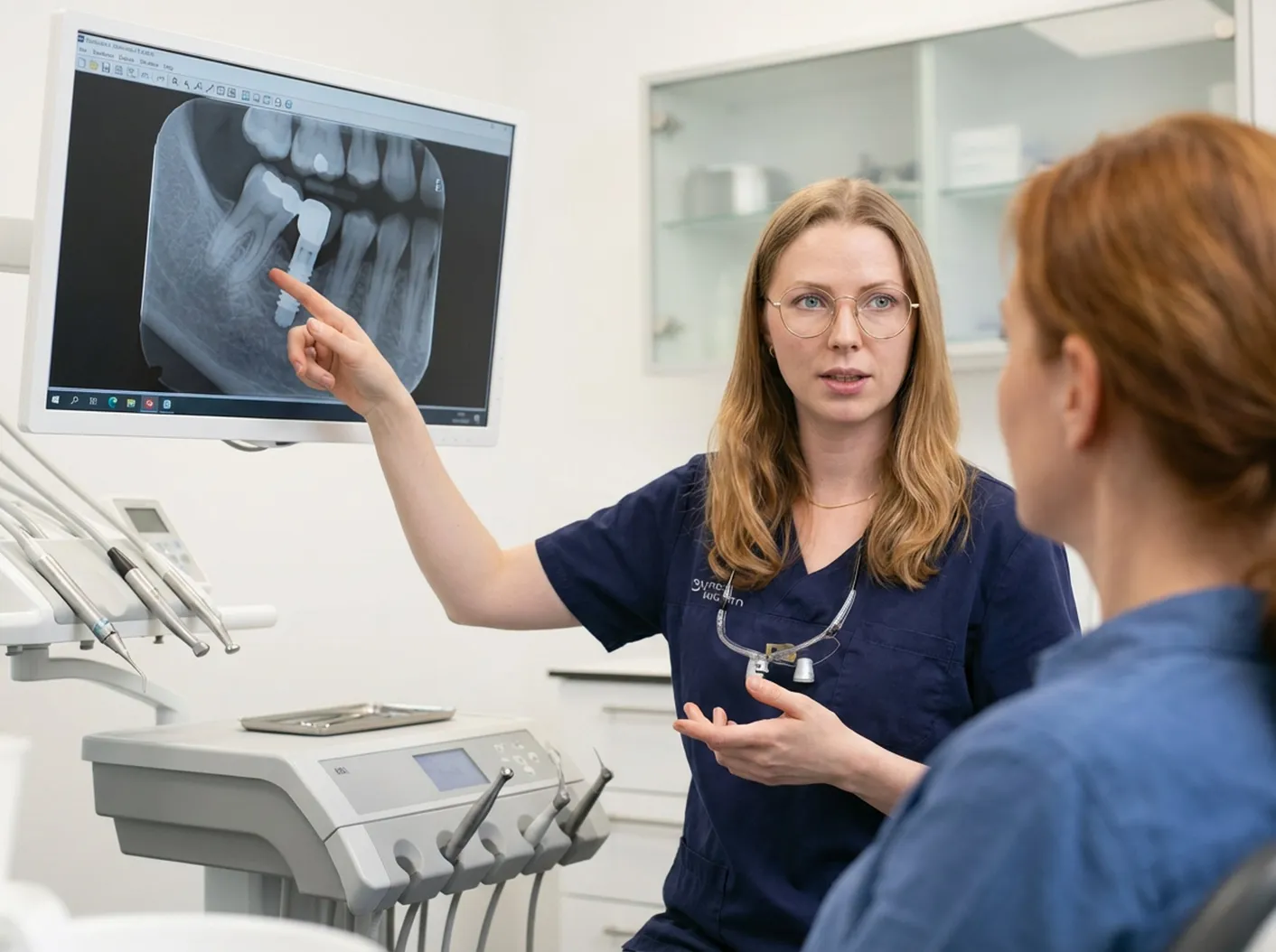
Dental implants with periodontitis: opportunities and risks
Periodontitis is a chronic inflammation of the periodontium. It causes bone loss and loose teeth. Many patients want fixed dental restorations. Dental implants are generally possible with periodontitis. However, planning is more complex. The key is stable...
Über 350 Google-Bewertungen
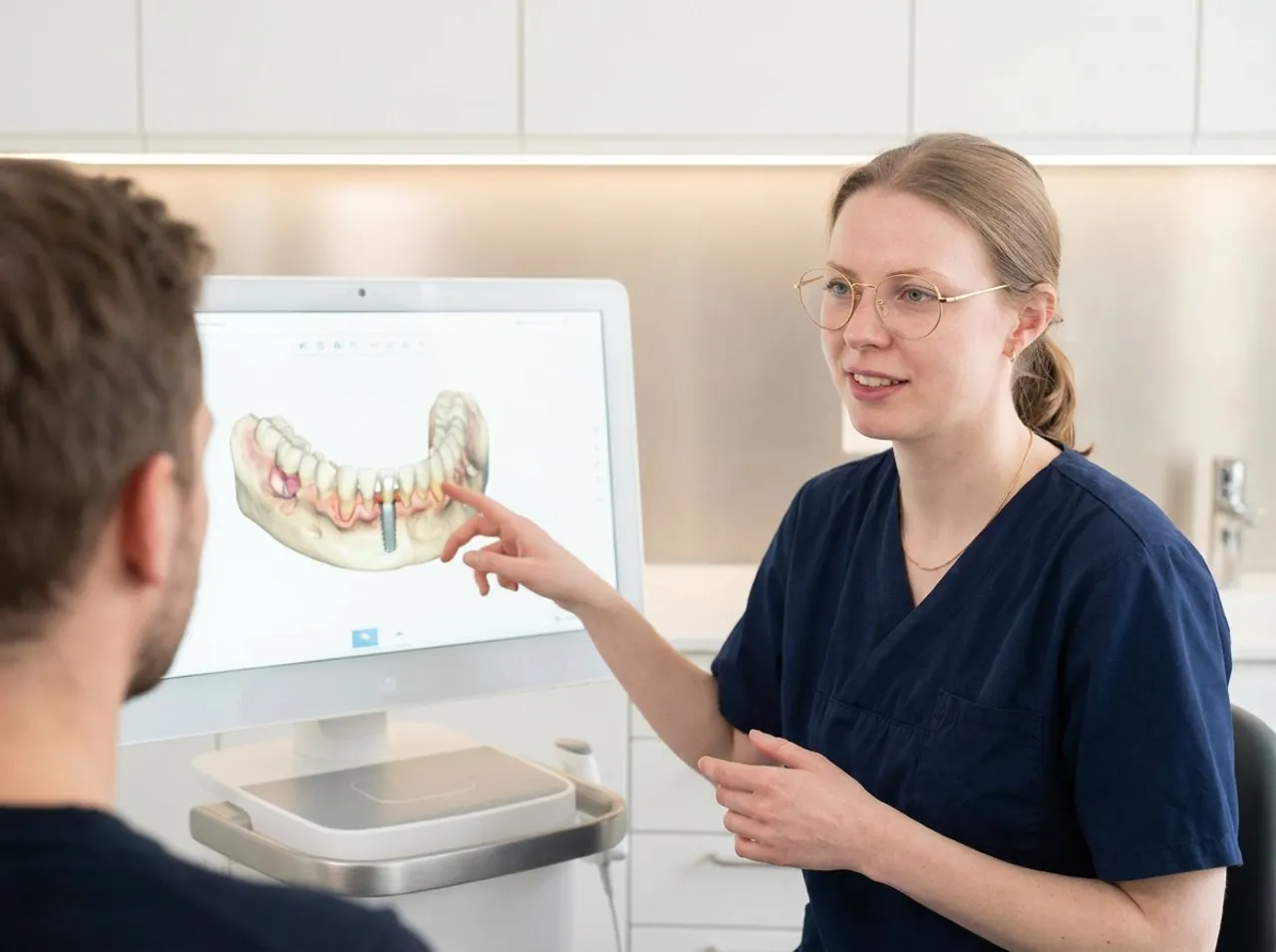
What does periodontitis mean for an implant?
With periodontitis, the bacterial load in the oral biofilm increases. This increases the risk of peri-implantitis. Both are inflammations of the hard and soft tissues. Peri-implantitis affects the mucosa and the bone around the implant. Bleeding on probing and pocket formation occur. If left untreated, peri-implant bone loss develops.
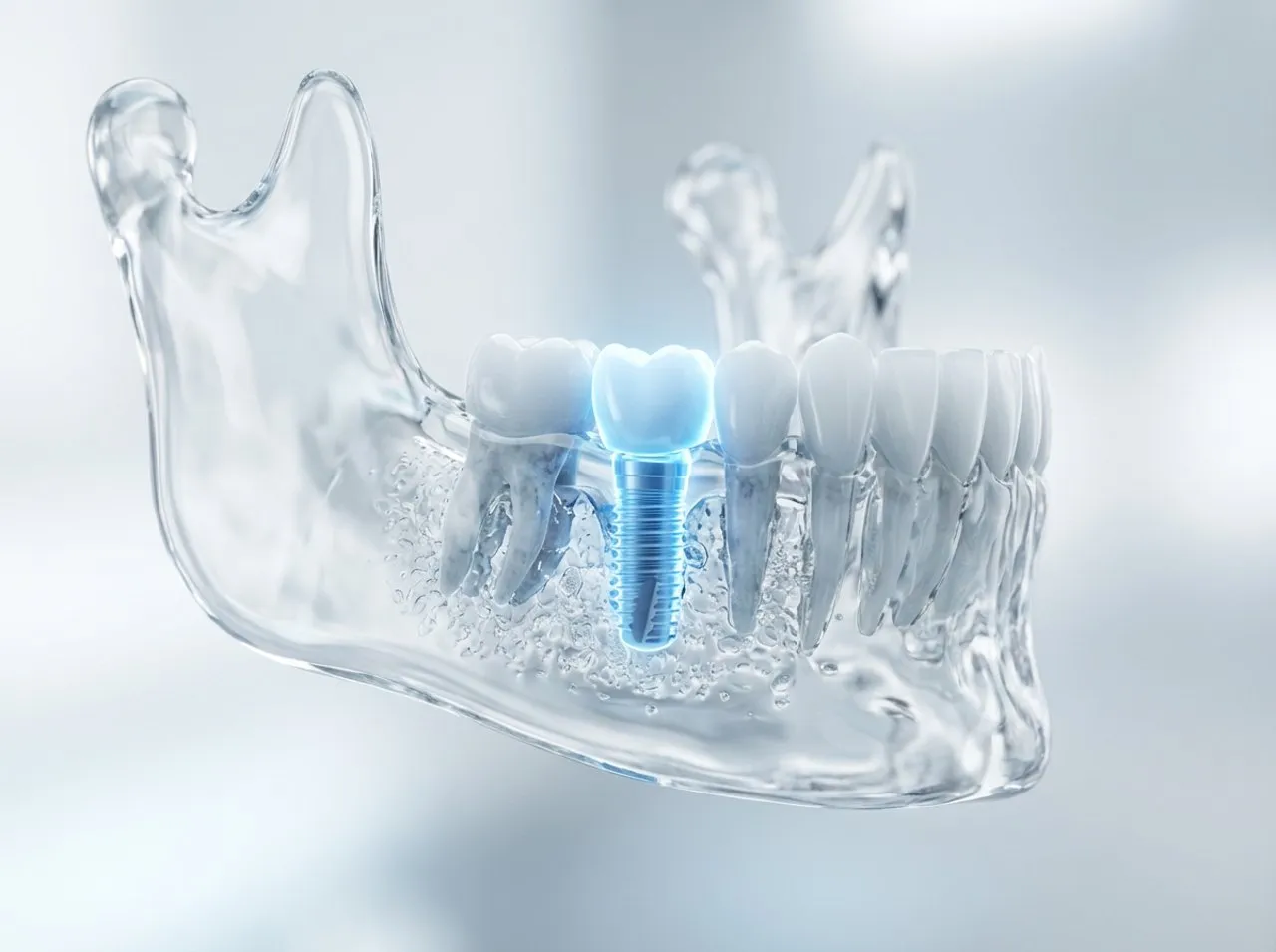
When is implant treatment advisable?
Periodontal therapy must first be completed. We then check inflammation parameters and stability. Shallow probing depths and little bleeding are important. Oral hygiene also matters greatly. We measure the plaque index and bleeding index. Only then can an implant be planned reliably. The term ‘periodontitis with implants’ describes precisely this situation. It concerns implants despite a history of periodontitis. This requires clear risk management.
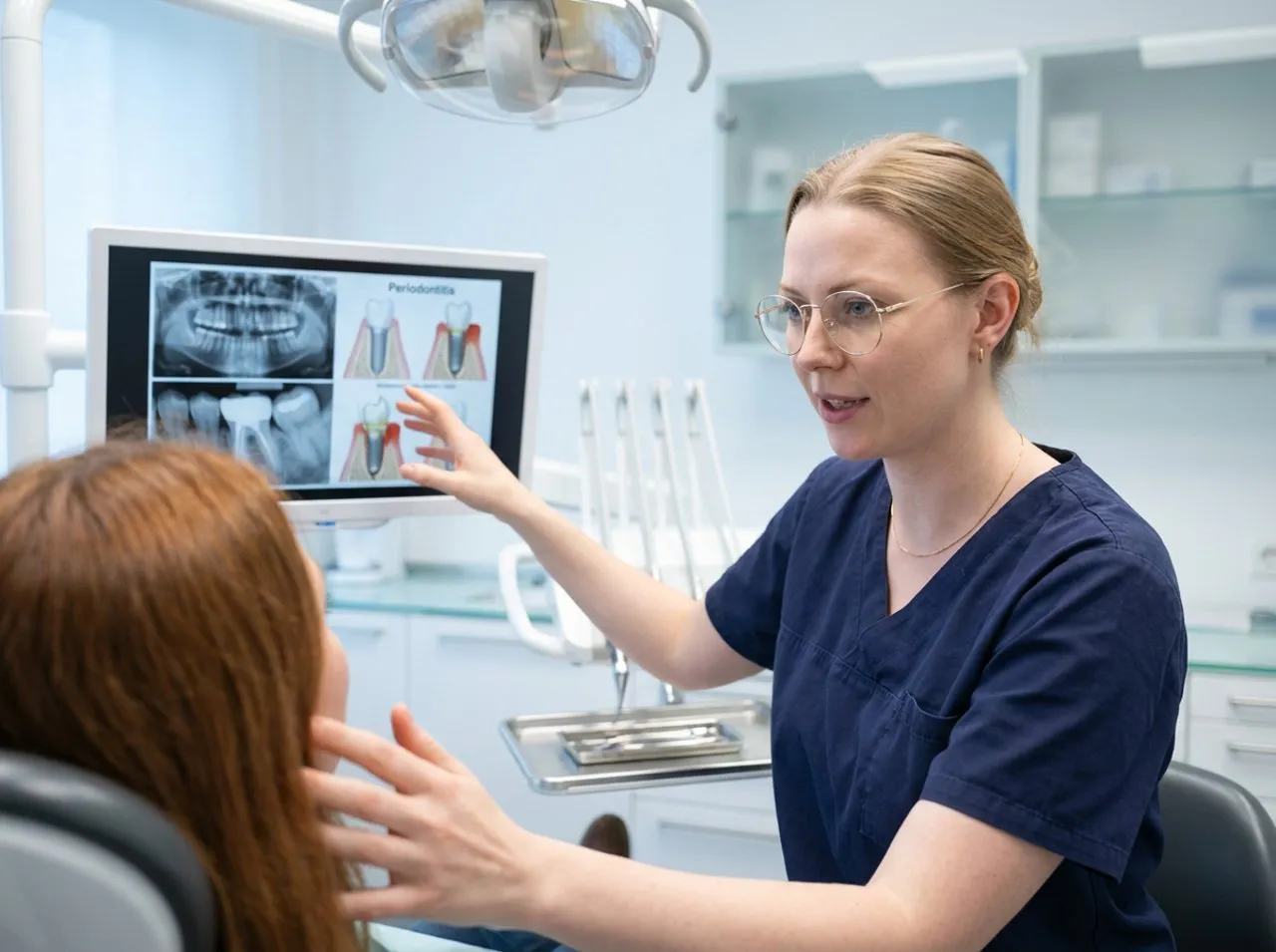
Preliminary examination at the Wunschlachen practice
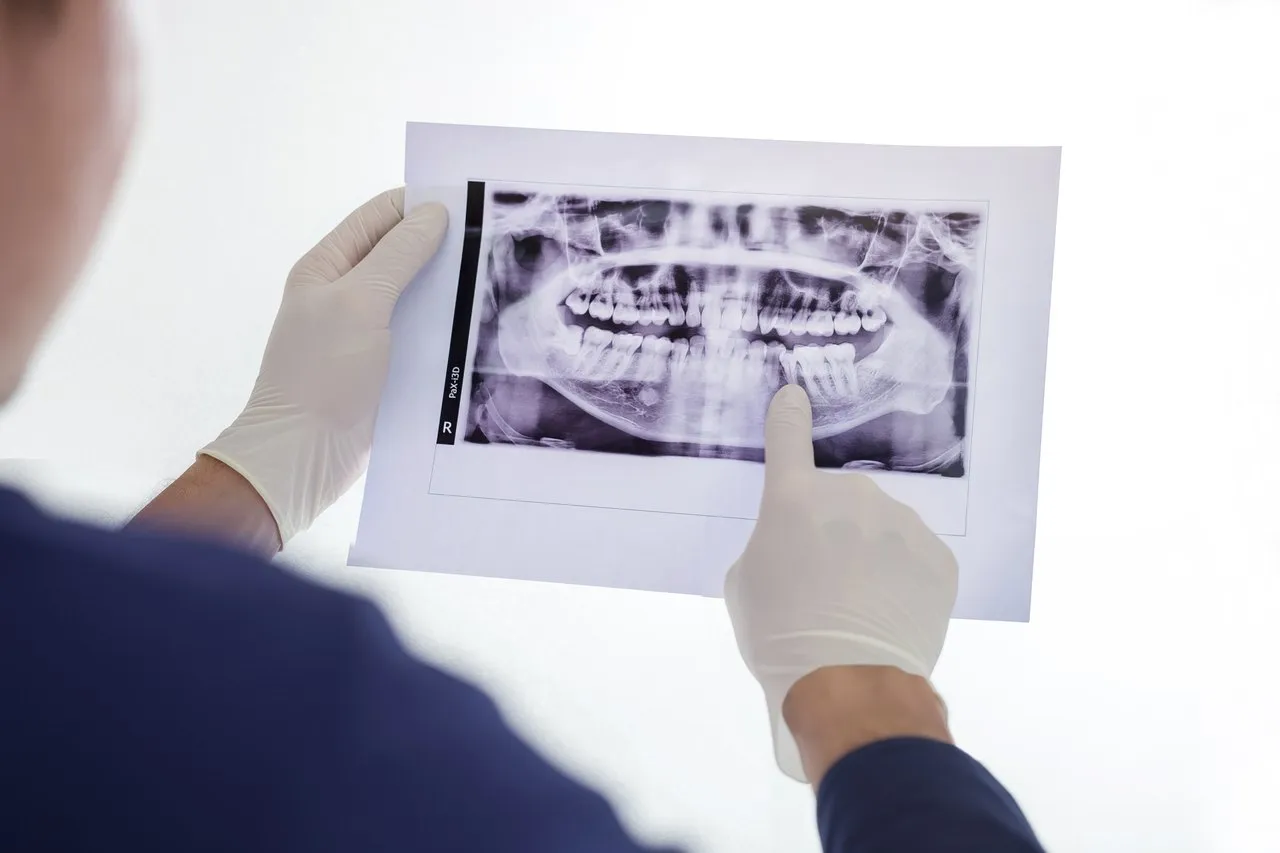
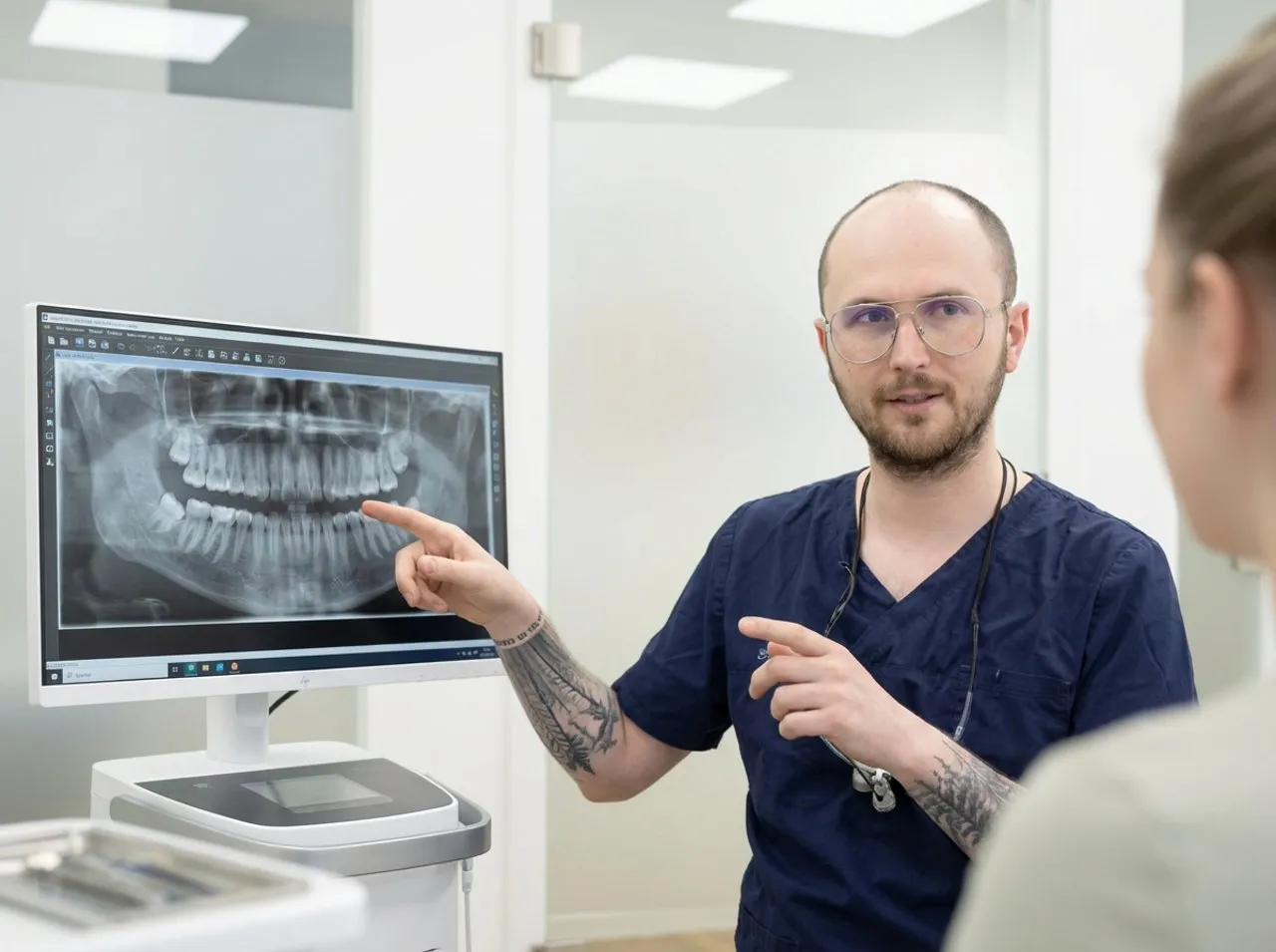
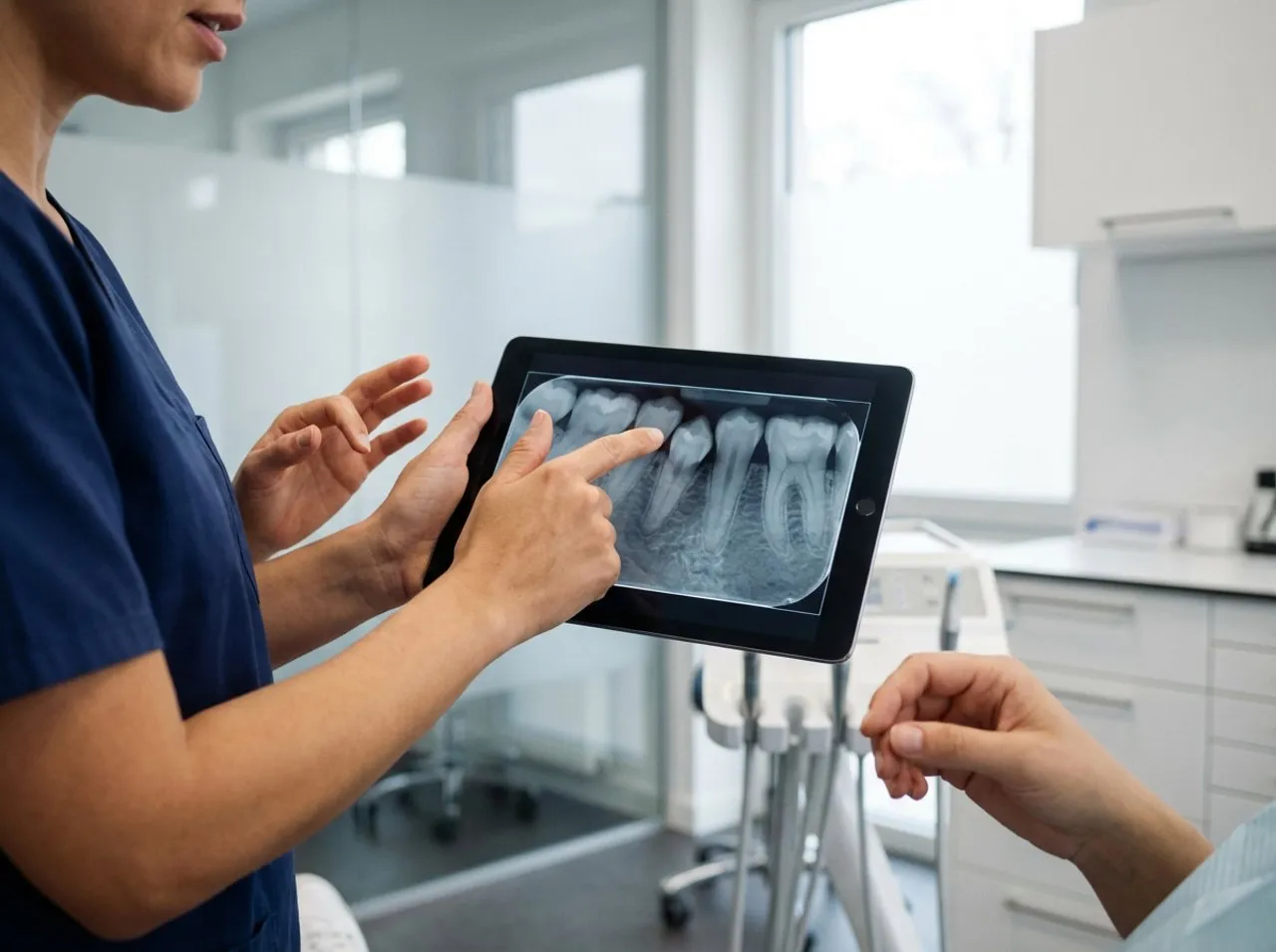
We start with a medical history and risk analysis. Smoking, diabetes and stress increase inflammatory risks. Bruxism also affects the load on implants. A clinical examination follows. We check probing depths, furcations and loose teeth. We also record gum recession and soft tissue quality. Imaging is the next step. A digital X-ray shows bone height and defects. Where necessary, we use 3D diagnostics to plan the operation.
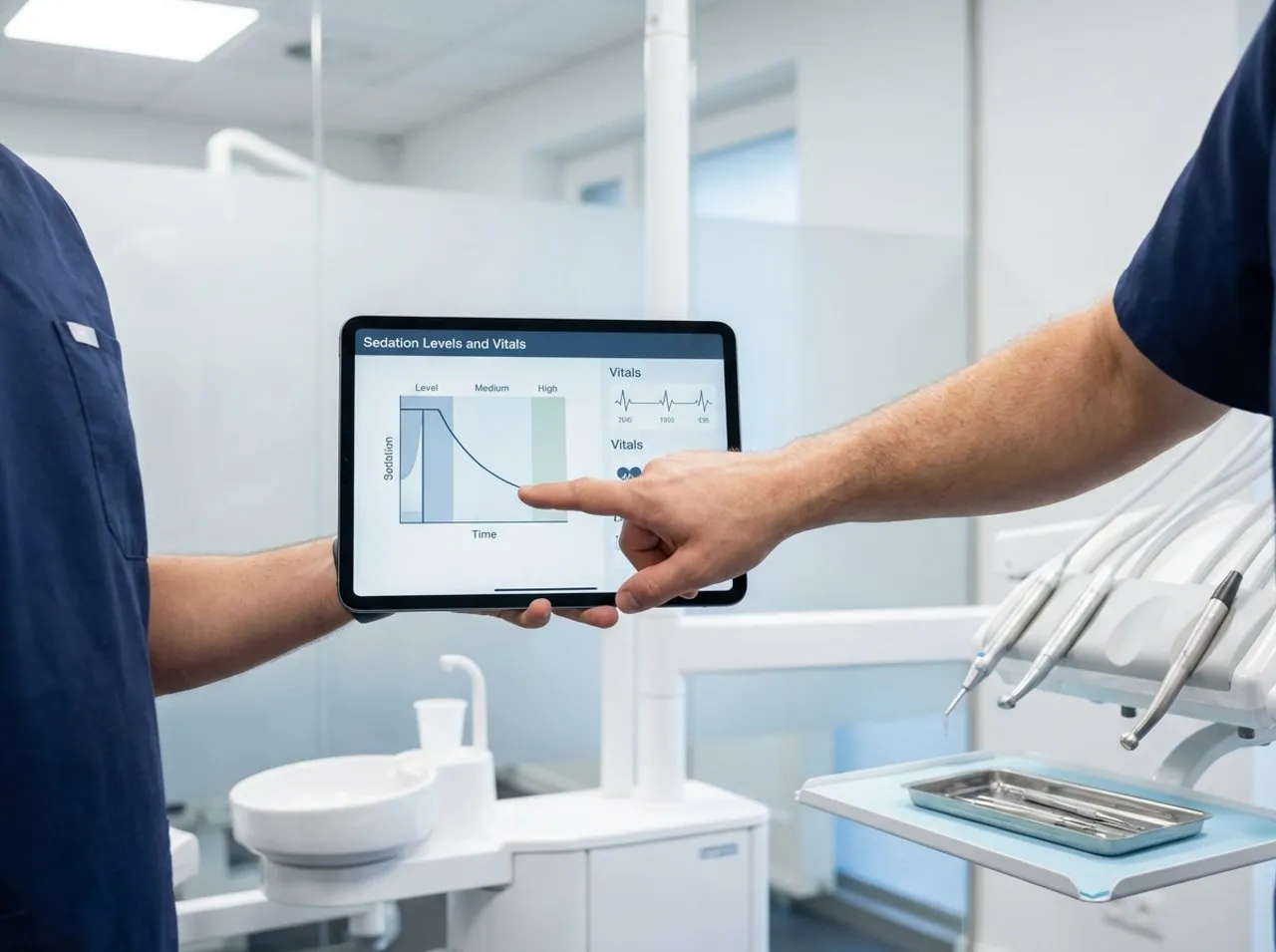
Treat periodontitis first: how the therapy works
Basic therapy begins with professional teeth cleaning. This is followed by subgingival instrumentation. We remove calculus deposits and biofilm from the pockets. Depending on the findings, adjunctive antibiotic therapy may be considered. This is decided strictly according to the clinical indication. Mechanical cleaning always remains important. Surgical therapy may be necessary for deep defects. Here we use flap surgery and regenerative procedures, for example with membranes or enamel matrix proteins. We assess the result only after healing. The decisive factor is reduced inflammatory activity. Without a stable phase, the risk to implants increases.
Bone volume after periodontitis: is it sufficient?
Periodontitis often leads to vertical bone defects. An implant requires sufficient bone volume. If this is lacking, we plan augmentation procedures. Typical approaches include guided bone regeneration and bone substitute material. Autologous bone may also be useful. A sinus lift is sometimes required in the upper jaw. The soft tissues are also important. Sufficient keratinised mucosa makes hygiene easier. It reduces irritation in the peri-implant area.
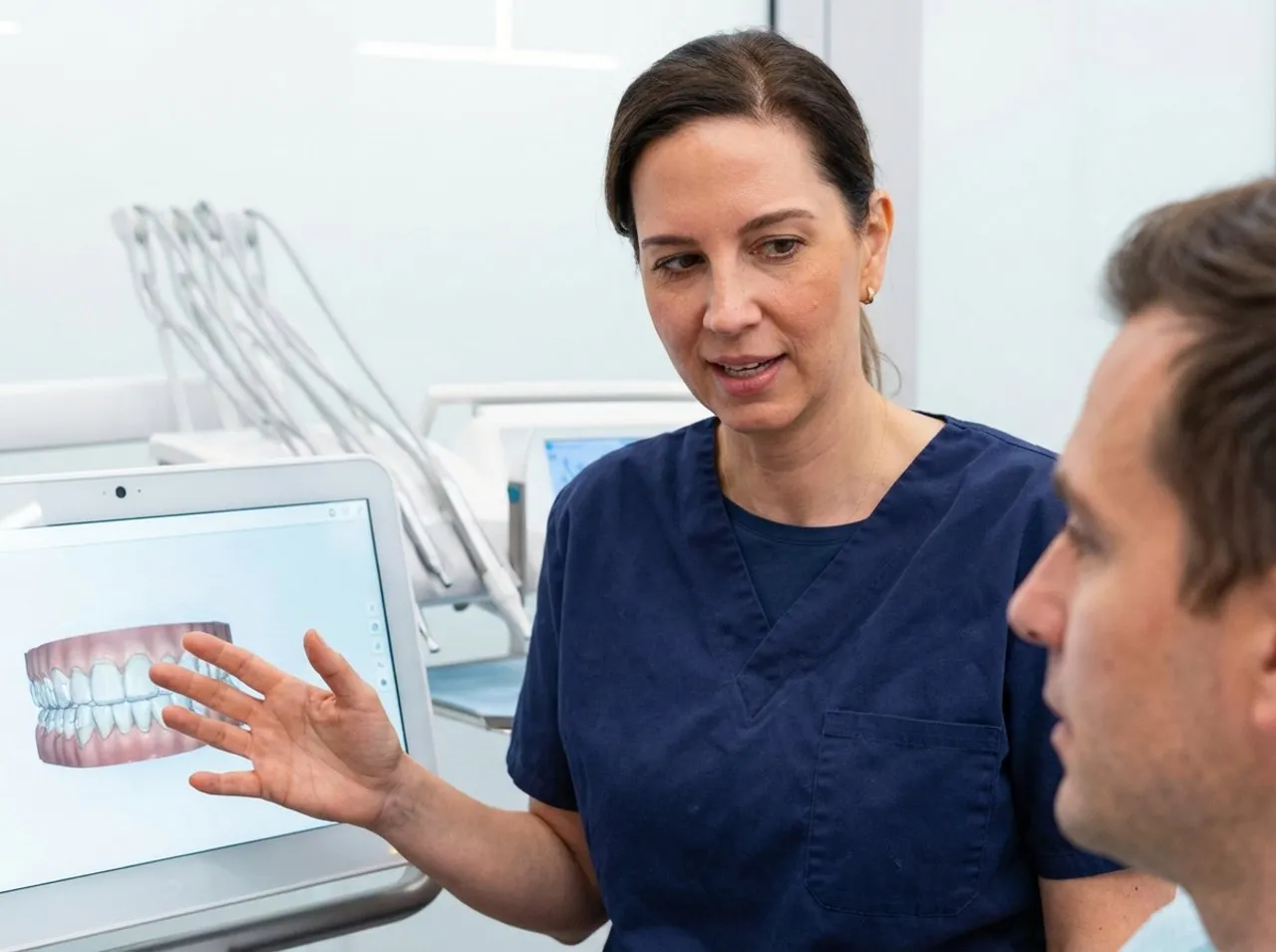
Placing implants: which strategy is safe?
Delayed implant placement is often advisable after periodontitis. This allows the tissue to heal stably. Immediate implant placement is possible in selected cases. The decision depends on the infection status and the shape of the defect. Primary stability also plays a major role. We select the implant design and surface to suit the clinical findings. During the procedure, we use atraumatic surgical techniques. This protects the bone and soft tissue. Good suturing supports wound healing.
Materials and prosthetics: details that prevent inflammation
We usually use titanium or ceramic implants. Both materials are biocompatible and well established. The choice depends on the clinical findings and the patient's wishes. The superstructure must also be easy to keep clean. A clean emergence profile makes cleaning easier. Residual cement must be consistently avoided. We therefore plan cement-free solutions where appropriate. Alternatively, we use controlled cementation. This reduces the risk of peri-implant inflammation.
Aftercare is essential: maintenance phase and SPT
Long-term success depends on maintenance therapy. This is known as supportive periodontal therapy, or SPT for short. It includes check-ups, preventive care and professional biofilm control. The intervals depend on the risk. Three to four months is often appropriate. This allows us to detect early signs of inflammation. We check probing depths around the implant. Bleeding, suppuration and radiographic findings also matter. Where necessary, we treat peri-implant mucositis early. Clear hygiene instructions are needed for home care. Interdental brushes are often better than dental floss. Superfloss and special brushes help with bridges.
What risks remain despite good therapy?
Periodontitis is a lifelong condition. It can flare up again even after years. This also affects areas around implants. Smoking remains a major risk factor. Poorly controlled diabetes also worsens the prognosis. Both significantly increase susceptibility to inflammation. Occlusal overloading can also cause problems. Splints protect against grinding and clenching. Correct bite alignment is also important.

Benefits when periodontitis is stable
An implant functionally replaces the tooth root. It stabilises chewing function and speech. Many patients regain quality of life. With good planning, bone is better preserved. This prevents teeth drifting into gaps and faulty contacts. Dentures can also be stabilised more securely. Realistic expectations are important. Implants are no substitute for aftercare. They require monitoring, just like natural teeth.
Conclusion: dental implants can be planned with periodontitis
Dental implants are possible with periodontitis when the inflammation is controlled. Therapy, hygiene and regular SPT are essential. At the Wunschlachen practice, we support you with a structured approach.
FAQ – Frequently asked questions about dental implants with periodontitis
Yes, implant treatment is often feasible when periodontitis is stable. Periodontal therapy must have been completed first.
The bacterial load is often higher with periodontitis. This means the tissue around the implant becomes inflamed more quickly.
Yes, without inflammation control, the risk of implant loss increases significantly. Therapy is therefore the first step.
It means implant treatment despite a history of periodontitis. More frequent check-ups are then particularly important.
This depends on the findings and healing. We usually look for stable readings over several months.
Usually yes, often every three to four months. This is part of SPT.
Yes, bone loss is common with periodontitis. Augmentation procedures can improve the implant bed.
Smoking impairs wound healing and increases inflammation. It reduces the success rate of implants.
It is an inflammation of the mucosa around an implant. It is usually reversible if treated early.
With excellent oral hygiene and regular check-ups. Maintaining stable general health also helps.