
Dislocated jaw: seek urgent help and prevent recurrence afterwards
After a wide yawn, the mouth remains open and can no longer be closed normally: this may indicate a dislocation of the jaw joint. The condyle is outside its normal position. An acute dislocation requires prompt professional treatment. Do not try to put your jaw back into place yourself, and do not allow an untrained person to manipulate it. If you have breathing difficulties, severe bleeding or are in a life-threatening condition, call 112. A locked jaw following an accident must also be examined urgently, as further injuries are possible.
The short answer
An acute dislocated jaw requires prompt medical treatment. Do not attempt treatment yourself: other causes of restricted jaw movement must also be checked.
- What a dislocation of the jaw joint means
- During normal opening, the lower jaw moves in the jaw joint. In a dislocation, the condyle moves into a position from which it cannot return normally. Unilateral and bilateral dislocations can present differently. Pain, an altered bite and an inability to close the mouth are possible signs. However, the diagnosis must be confirmed by an examination.
- What to do now
- Arrange an urgent examination through an appropriate dental, oral and maxillofacial surgery or medical emergency service. Describe the locked jaw position explicitly. A suspected acute dislocation should not wait until the next routine check-up. If you do not know where to go, a medical service can advise you on the appropriate care pathway.
- How professional treatment is provided
- An acute dislocation is often treated by professionally returning the joint to its normal position. The team decides whether pain relief, medication or sedation is needed. The duration and procedure depend on factors including the situation and muscle tension. This article deliberately does not describe any manoeuvres that you could perform at home.
- Aftercare without doing your own movement exercises
- After treatment, a temporary soft diet and avoiding wide mouth opening may be recommended. The extent and duration depend on the findings. Follow the specific instructions and do not start stretching exercises that you have devised yourself. Exercises for other jaw problems are not automatically suitable after a recent dislocation.
What a dislocation of the jaw joint means
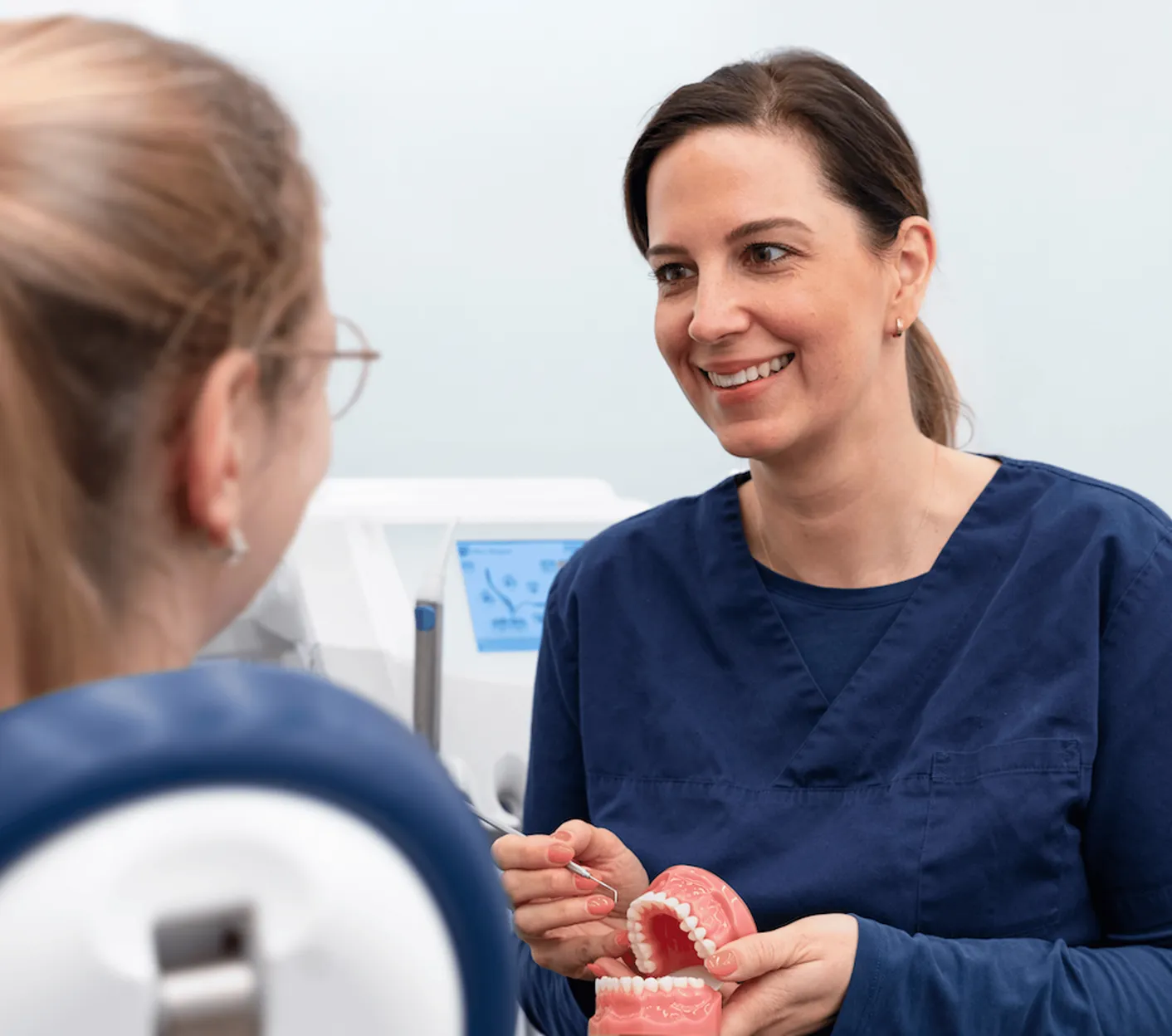
During normal opening, the lower jaw moves in the jaw joint. In a dislocation, the condyle moves into a position from which it cannot return normally. Unilateral and bilateral dislocations can present differently. Pain, an altered bite and an inability to close the mouth are possible signs. However, the diagnosis must be confirmed by an examination.
Jaw clicking alone is not proof of a dislocated jaw. Likewise, restricted mouth opening is not the same as a jaw that is locked open. A precise description helps with the initial assessment: is the mouth locked open or can it hardly be opened? Did this start suddenly? Was it preceded by an accident? State this information clearly when you call.
Why the jaw can become dislocated
A dislocation can occur after wide mouth opening, for example when yawning or during certain treatments. Injuries and individual characteristics of the joint can also play a role. Anyone who has previously had dislocations should mention this before dental or medical appointments. The cause is not the same for everyone and cannot be inferred from the triggering event alone.
After acute care, make a note of the situation in which the event occurred. If similar episodes have happened before, report how frequently they occurred and any treatment you have received so far. This history helps with further planning. Recurrent episodes warrant targeted investigation; the fact that a previous blockage resolved is not a guide to attempting treatment yourself next time.
What to do now
Arrange an urgent examination through an appropriate dental, oral and maxillofacial surgery or medical emergency service. Describe the locked jaw position explicitly. A suspected acute dislocation should not wait until the next routine check-up. If you do not know where to go, a medical service can advise you on the appropriate care pathway.
Avoid further attempts to open your mouth wide, biting down firmly and putting pressure on your jaw. Do not try to eat if this is not possible with your jaw in its locked position. A companion can help with telephone calls and transport. After an accident or if your condition is significantly impaired, you should not attempt to drive yourself. Have any treatment records and medicines ready, provided this can be done without delay.

What examination may be needed
The team asks about the onset and examines the position, mobility and possible injuries. Imaging may be required after an accident or if the findings are unclear. This also helps to identify a fractured jaw or other causes of the blockage. Not every dislocation requires the same examination; the choice depends on the situation and the findings.
Tell the team about any medicines, pre-existing conditions and previous joint problems. If you had dental or other medical treatment beforehand, explain what was done. An accurate history makes care easier. Afterwards, you can ask which findings were confirmed and whether there is also an injury. Acute treatment does not have to wait until you can reconstruct every detail of a previous episode.
How professional treatment is provided
An acute dislocation is often treated by professionally returning the joint to its normal position. The team decides whether pain relief, medication or sedation is needed. The duration and procedure depend on factors including the situation and muscle tension. This article deliberately does not describe any manoeuvres that you could perform at home.
After treatment, it should be clear whether further diagnostic tests or follow-up appointments are needed. Ask which activities should be avoided for the time being and who can be contacted if problems recur. Successful repositioning alone does not explain why the joint was dislocated. Following a first uncomplicated event, the further plan may differ from that for recurrent dislocations.
Aftercare without doing your own movement exercises
After treatment, a temporary soft diet and avoiding wide mouth opening may be recommended. The extent and duration depend on the findings. Follow the specific instructions and do not start stretching exercises that you have devised yourself. Exercises for other jaw problems are not automatically suitable after a recent dislocation.
Ask for practical advice on eating, yawning and further appointments. Make a note of when the next check-up should take place. If a bandage or another supportive measure is used, have its use and limitations explained to you. Do not make any changes to it yourself. General background information on problems affecting the joint and muscles can be found under jaw pain.
Recurrent dislocations need their own plan
If the joint dislocates repeatedly, contributing factors and suitable preventive options are investigated. The current German S3 guideline describes various conservative, minimally invasive and surgical options. Which measure is appropriate depends on the course of the condition and the individual situation. The diagnosis does not automatically mean that surgery is needed.
Ask about the aim of each recommended measure, the alternatives and the possible risks. Describe how often the episodes occur and which activities they restrict. A clear plan can also specify who you should contact in the event of another acute episode. Treatment that has helped another person is not a general guarantee for your joint.
Do not confuse other jaw blockages
Problems with the articular disc, muscle pain, inflammation or injuries can also affect movement. Some mainly affect opening, while others affect closing of the mouth. A supposed ‘dislocation’ that you infer from a noise should therefore be professionally assessed. Braces or a splint must not be altered by you as a solution to a new blockage.
Following an accident, there may also be dental injuries. Have any corresponding symptoms assessed at the same time; if such an event has occurred, the guide to broken teeth also provides information on treating loosened or damaged teeth. The key point for the next step remains: an acutely locked jaw position should be examined promptly, and aftercare depends on the findings actually identified.
Frequently asked questions
A mouth that suddenly locks open, pain and an altered bite may indicate this. Other causes are possible; an examination confirms the diagnosis. When you call, say whether opening or closing is blocked.
Do not try to do this. Pressure and manipulation by an untrained person can cause additional injuries or mean another cause is overlooked. Arrange prompt professional treatment.
An acutely locked jaw position requires urgent assessment. Use an appropriate emergency service. If you have breathing difficulties, severe bleeding or are in a life-threatening condition, call 112.
No. A noise alone does not prove a dislocation. Pain or new restrictions in movement should be assessed so that different joint problems are not confused.
The team examines the findings and, if necessary, professionally returns the joint to its normal position. Pain relief, sedation and further measures are decided on an individual basis.
Targeted investigation of the causes and an individual prevention plan. Different measures may be appropriate depending on the findings. No method is suitable for every person solely on the basis of the term ‘jaw dislocation’.