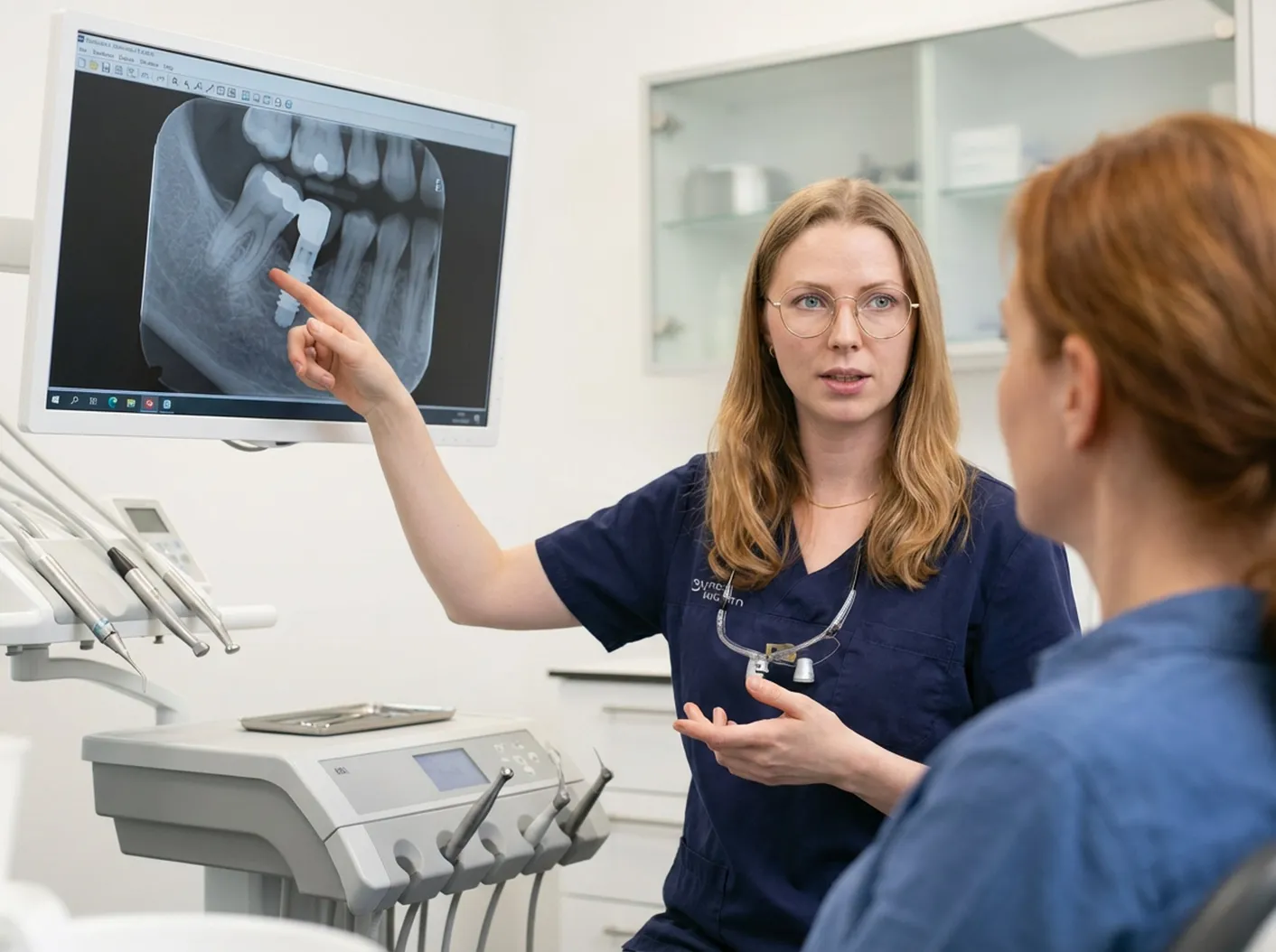
What does ‘full-arch dental implants’ mean?
Full-arch dental implants are a treatment for an entire jaw. They replace many or all missing teeth with implants and replacement teeth. Often, a fixed bridge is supported by just a few implants. Alternatively, implants can stabilise a removable denture.
Über 350 Google-Bewertungen
Fixed teeth in one day?
“Complete dental implants” refers to the restoration of an entire jaw: either a fixed bridge is supported by four or six implants, or a removable denture is stabilised on implants using a bar, Locator or stud attachments. After digital 3D planning and a healing period, this restores strong chewing function; statutory health insurance usually pays a fixed subsidy.
- Options
- Fixed bridge on four or six implants per jaw or implant-supported denture with a bar, Locator or stud attachments
- Duration
- The healing phase often lasts several weeks to months; immediate restoration is sometimes possible with good primary stability
- Statutory health insurance benefit
- Statutory health insurance usually pays a diagnosis-based fixed subsidy towards the dental prosthesis, which the bonus booklet can increase; it does not normally subsidise the implant surgery or implant itself, except in defined rare qualifying cases. Your remaining out-of-pocket contribution is detailed in the treatment and cost plan before treatment begins
This information does not replace dental advice. Individual diagnostic assessment determines which full-jaw restoration is suitable.
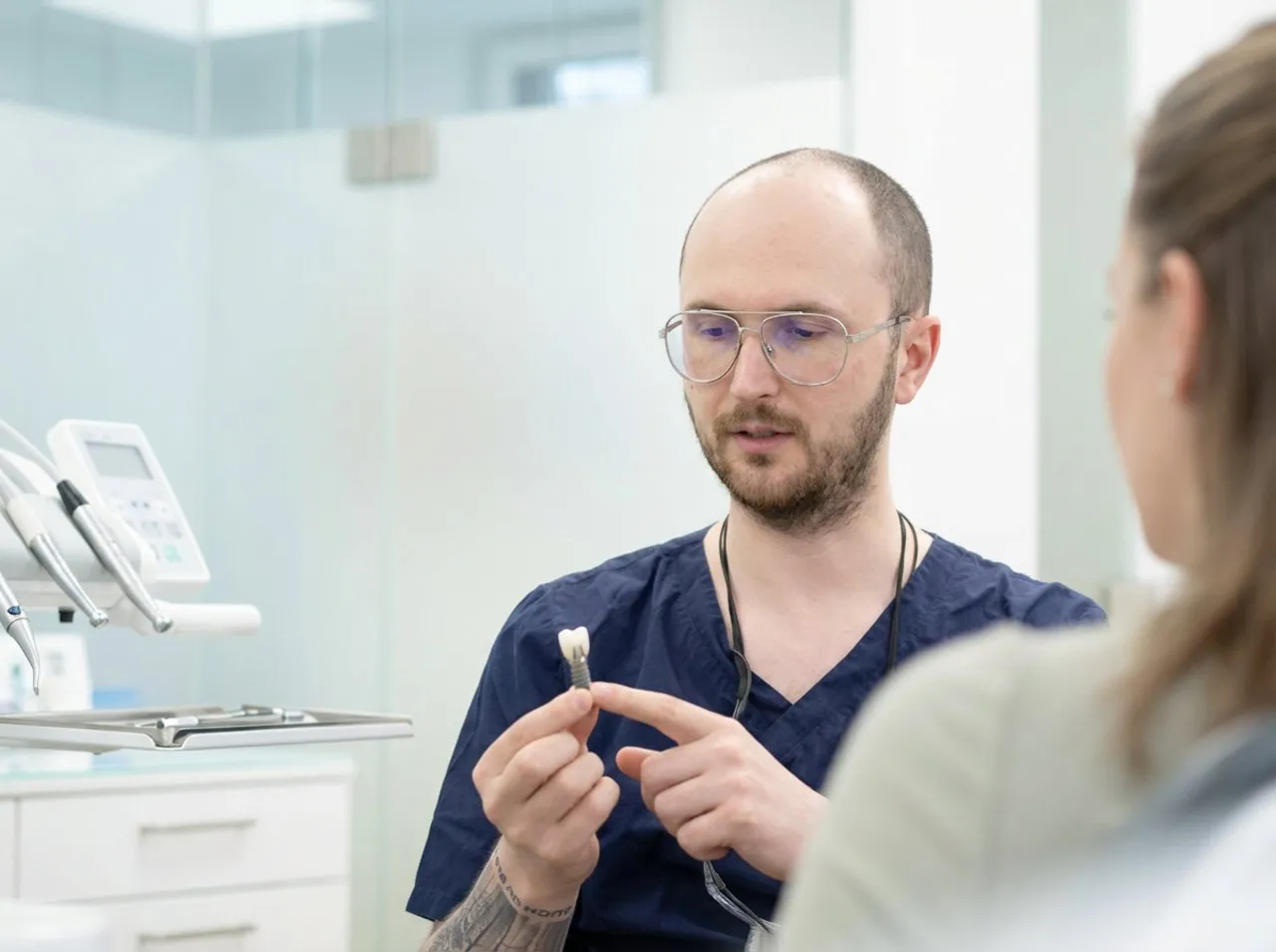
Who is a full-arch restoration suitable for?
A full-arch restoration is suitable for severe tooth loss or toothless jaws. It can also improve quality of life for people with loose dentures. Many people want greater confidence when chewing and speaking.
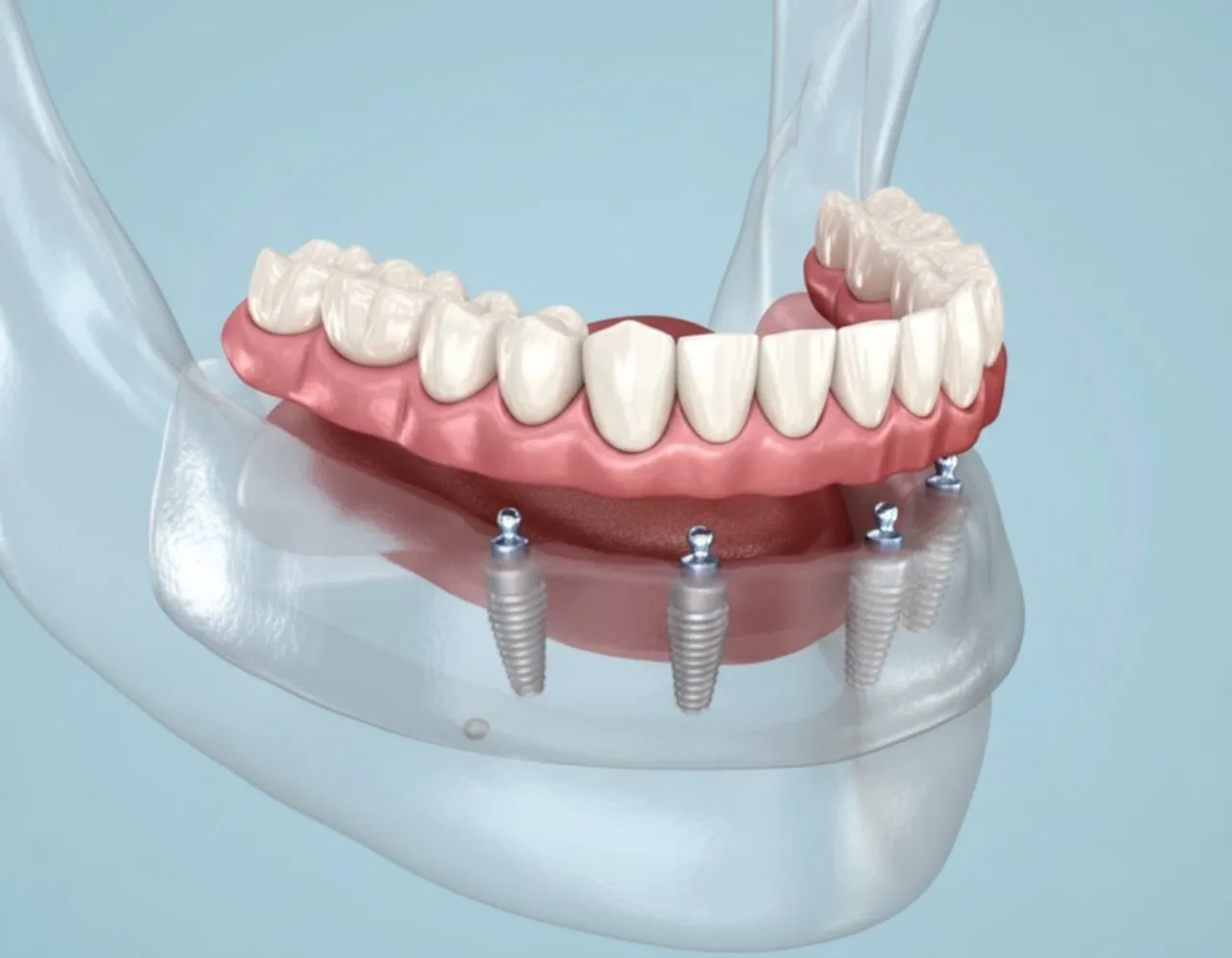
What solutions are available for the entire jaw?
Well-known concepts use four or six implants. In these cases, a bridge is supported by four or six implants per jaw. A second option is an implant-retained denture. It is held significantly more securely by a bar, locator or press studs. Sometimes more implants are advisable, for example when chewing pressure is high. Diagnostic tests show which option is suitable.
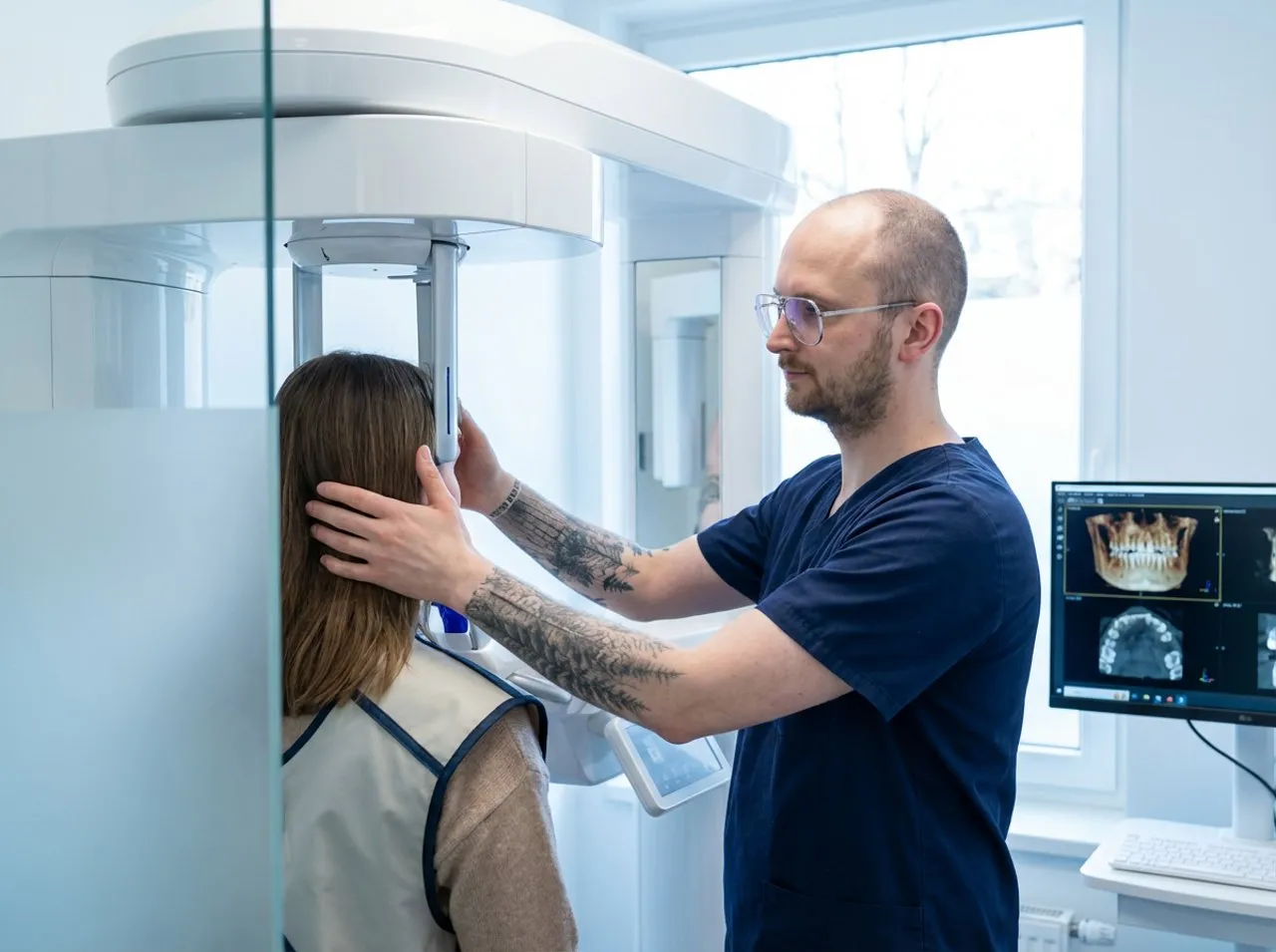
Digital planning and safe positioning
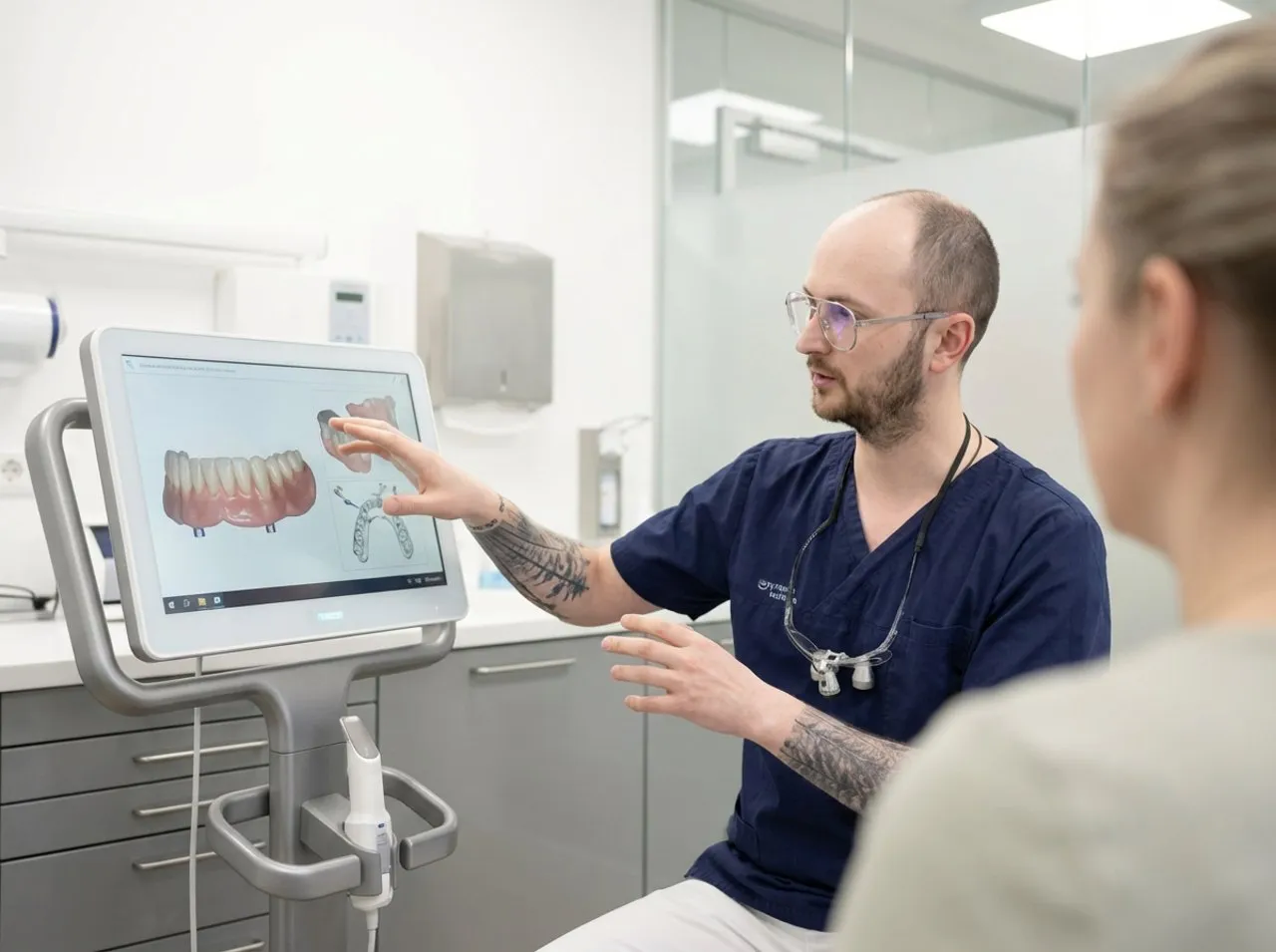
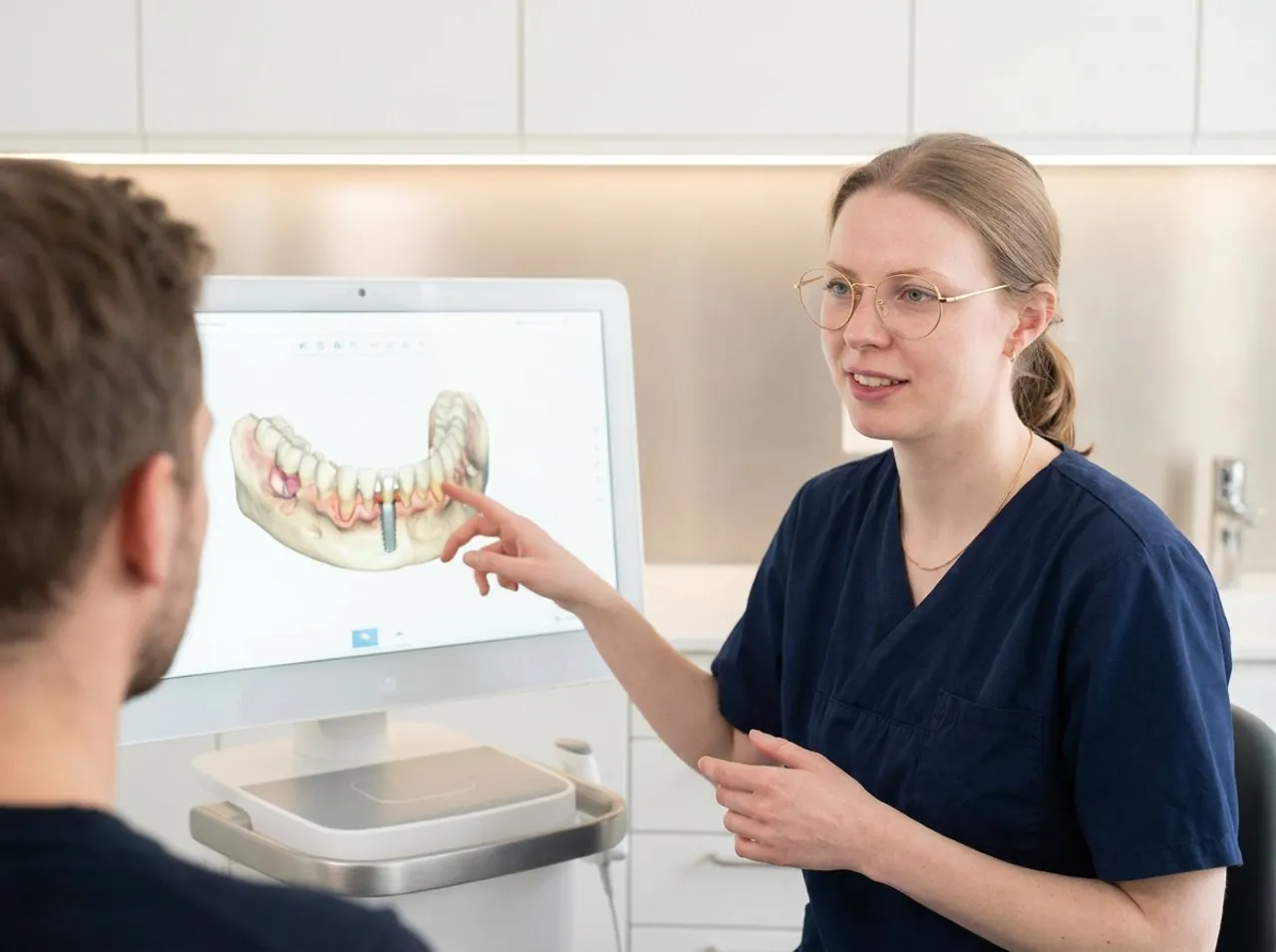
Every detail matters in a full-arch restoration. That is why we plan the implants digitally and in three dimensions. We take nerves, the maxillary sinus and bone width into account. Where necessary, we use a drilling guide for high precision.
How treatment at Wunschlachen in Berlin works
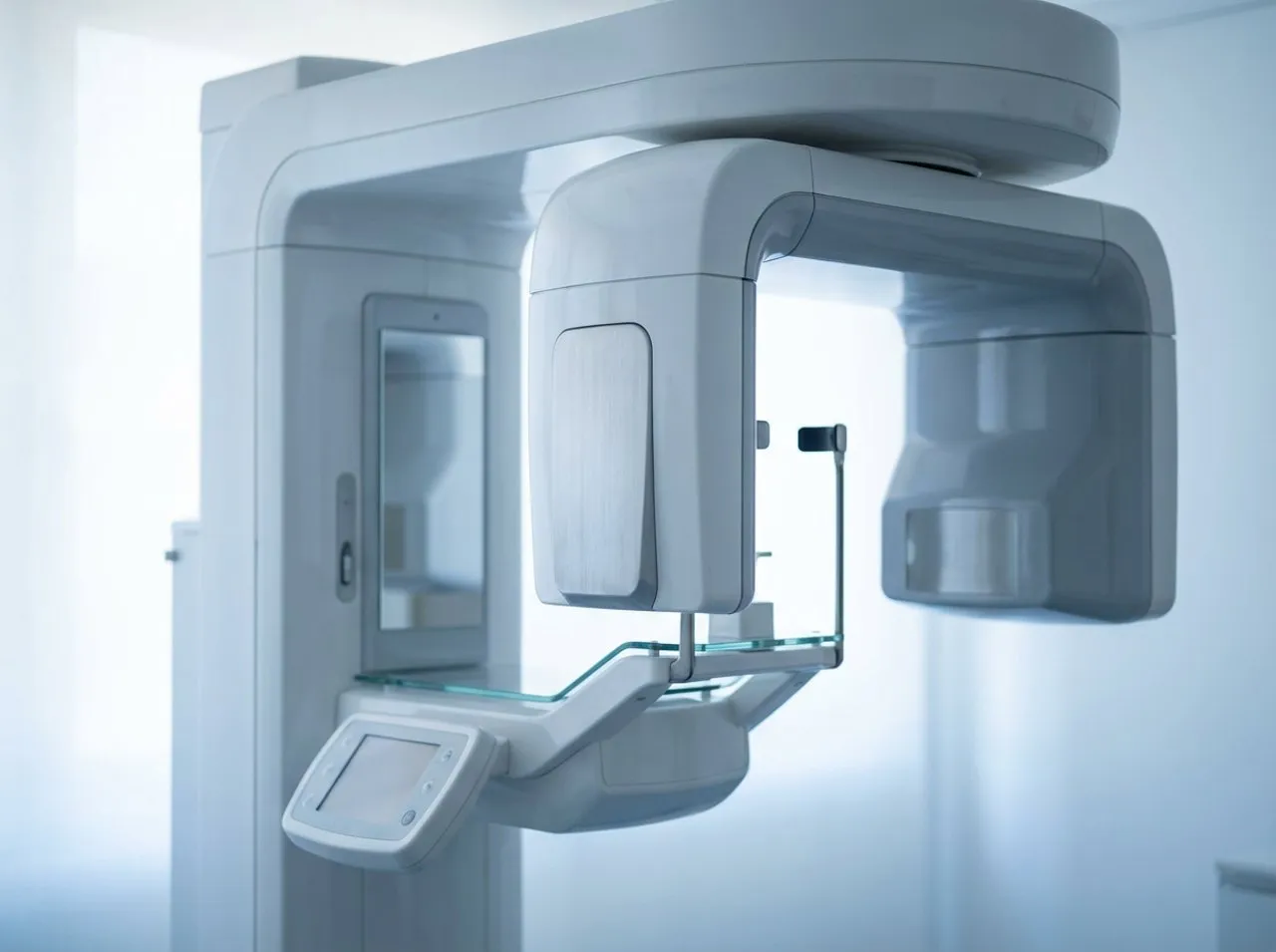
Treatment begins with a detailed consultation. We discuss goals, risks and alternatives. This is followed by 3D diagnostics, usually using digital volume tomography. This allows us to plan positions and bite height with foresight. Implant placement is usually carried out under local anaesthetic. Twilight sedation is also available on request.
Immediate restoration or healing without loading?
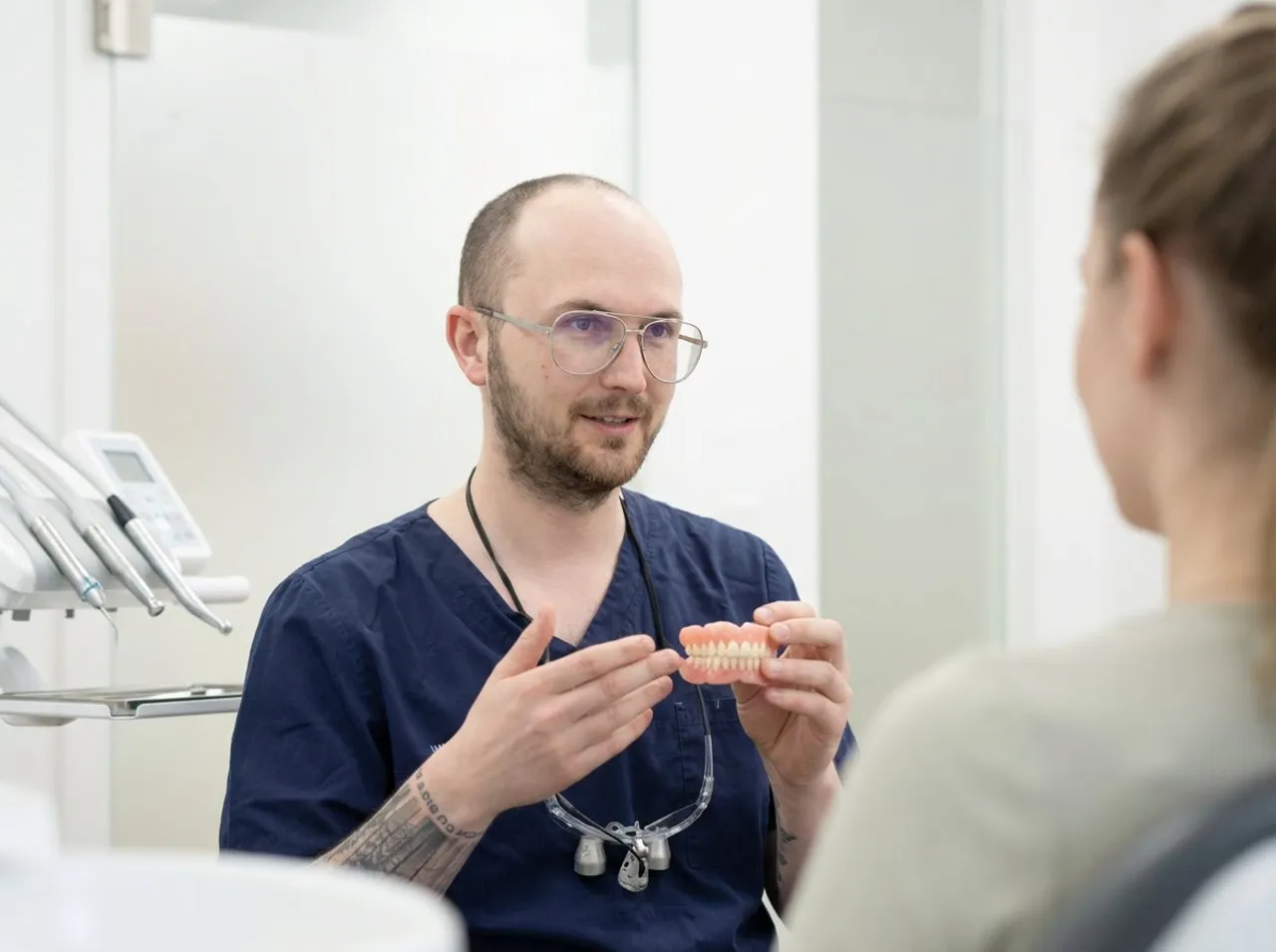
Some patients would like fixed teeth immediately. This is sometimes possible with immediate restoration. The prerequisite is good primary stability in the bone. Any inflammation in the mouth must be reliably treated beforehand. If the risk is too high, we choose a recovery period without loading. The final restoration then follows after the healing phase.
Healing phase and final dental prosthesis
Implants must fuse firmly with the bone. Depending on the situation, this osseointegration takes several weeks. After healing, we make the final dental prosthesis. Finally, we check the bite very carefully.
Materials and aesthetics
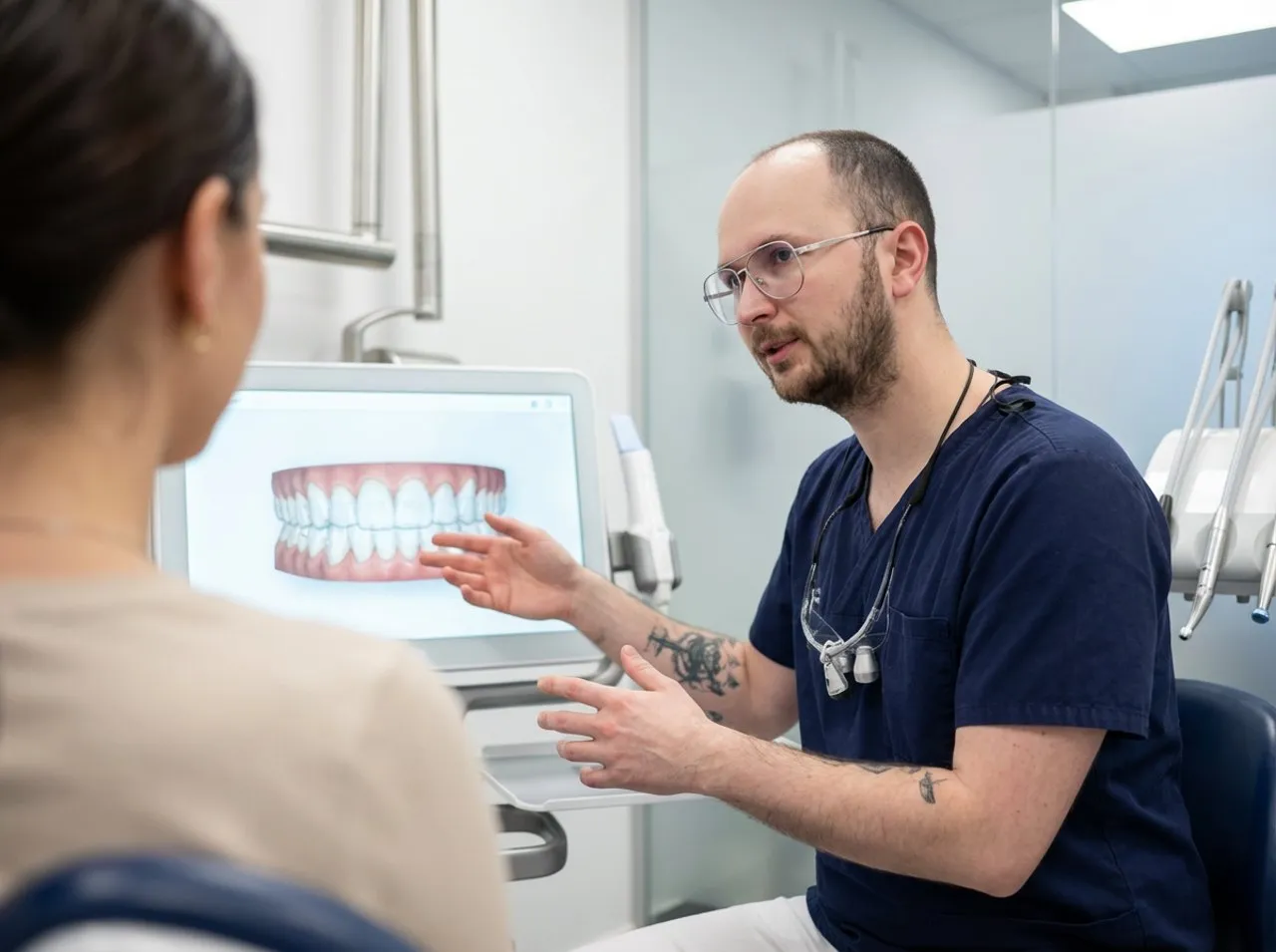
For bridges, ceramic, metal-ceramic or high-performance plastic may be suitable. The choice depends on space, aesthetics and load. Ceramic looks very natural and is colour-stable. In cases of severe teeth grinding, a reinforced framework may be advisable.
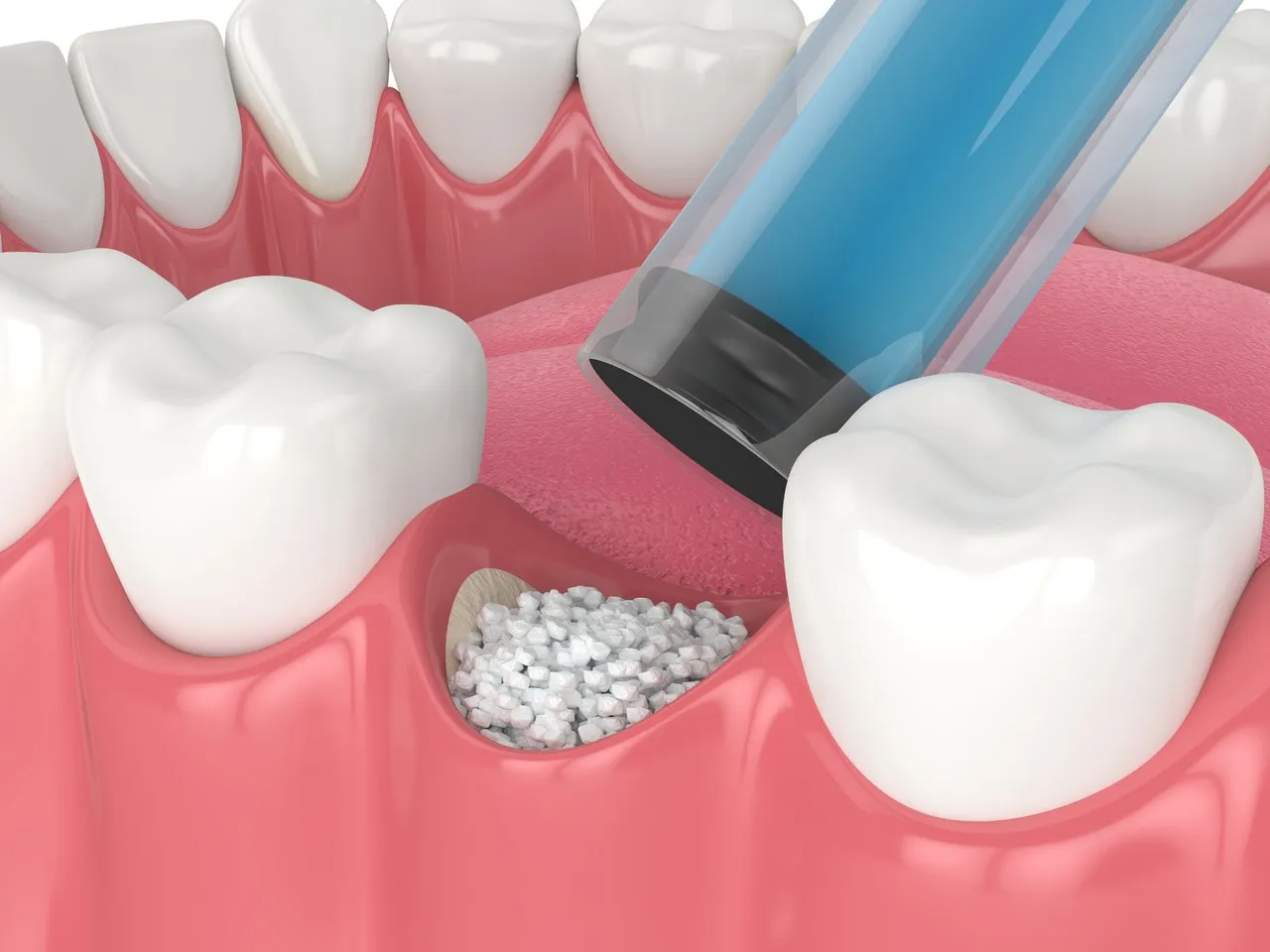
Bone augmentation: when is it necessary?
After tooth loss, bone loss often occurs in the jaw. Bone augmentation can then provide the basis for implants. A sinus lift is sometimes required in the upper jaw. In the lower jaw, we pay particular attention to nerve structures.

Effects of smoking, diabetes and medication
Smoking reduces blood circulation in the tissue. This can delay healing. Treatment is usually possible with diabetes, but stable blood sugar levels are required. We must also carefully check any osteoporosis medication beforehand.
Benefits of full-arch implants
Fixed teeth improve chewing function in everyday life. Many people experience greater comfort and self-confidence. Fixed dental prostheses do not slip while eating. They distribute forces more evenly than a loose denture.
Risks and how we reduce them
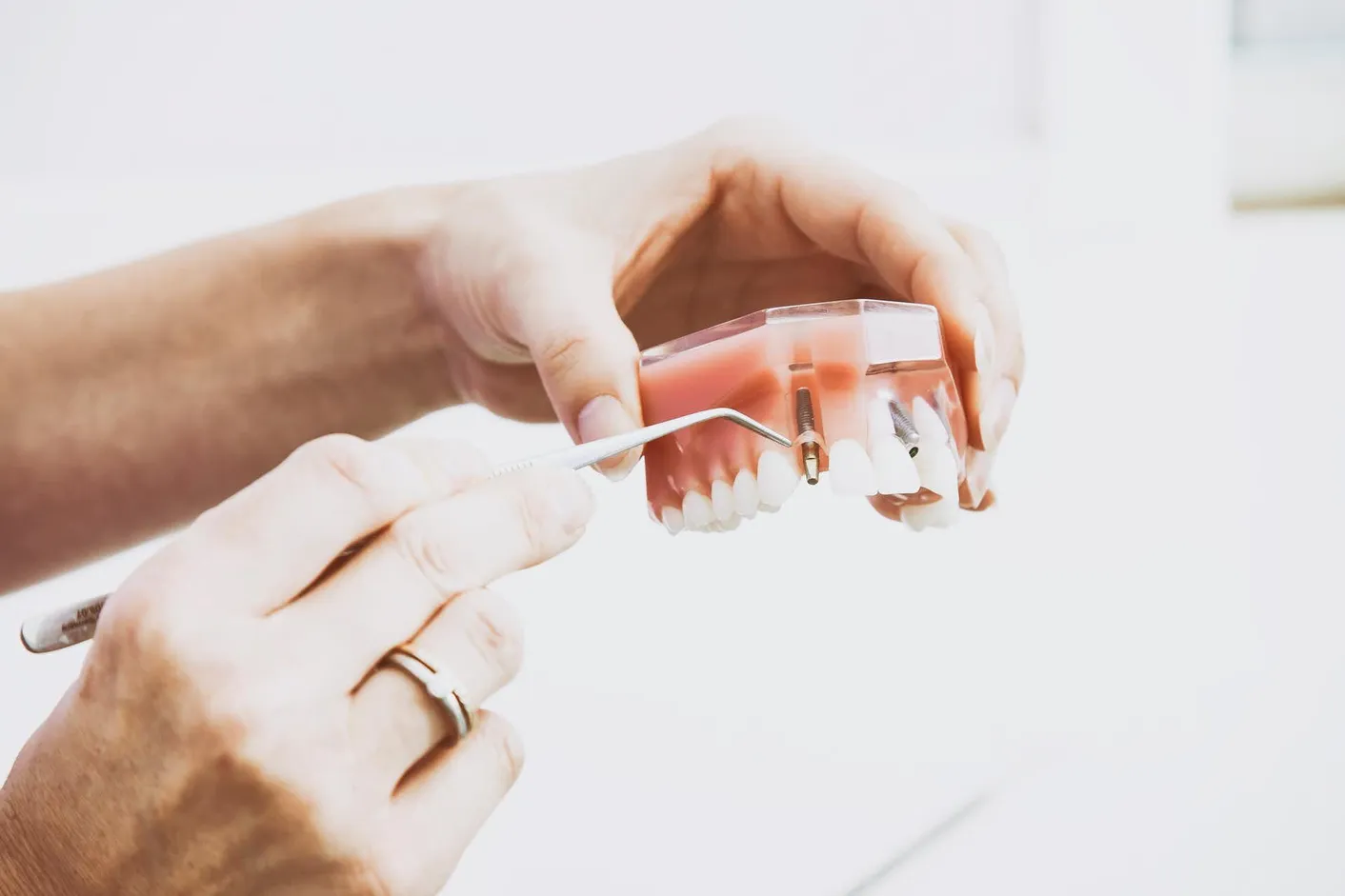
Swelling and pain are possible after the procedure. These symptoms usually subside within a few days. One risk is peri-implantitis, an inflammation around the implant. Hygiene, stopping smoking and check-ups are therefore essential. In very rare cases, an implant does not integrate. We then plan a gentle, safe alternative.

Costs, health insurance and financing
Costs depend on the number of implants, bone augmentation and the dental prosthesis. Laboratory work and materials also affect the total price. Statutory health insurance usually pays a diagnosis-based fixed subsidy towards the dental prosthesis, rather than towards the implant surgery or the implant itself, except in defined rare qualifying cases. A bonus booklet can increase the subsidy. We draw up a transparent treatment and cost plan. This means you know your own contribution towards the treatment before starting. If required, payment in instalments with predictable monthly payments is possible. This keeps the treatment financially manageable.
Everyday care and durability
Implants require thorough daily oral hygiene. Interdental cleaning aids also clean beneath a bridge. Professional dental cleaning is a useful addition to this care. Check-ups ensure long-term durability. People who grind their teeth at night often benefit from a splint. It protects the bridge, implants and temporomandibular joint.

Aftercare during the first few days
Cooling helps reduce swelling and pressure. Soft food puts less strain on the wounds when chewing. Start rinsing and brushing according to our instructions. This supports undisturbed healing and keeps the treated area clean. Take your medicines as agreed. Avoid sport and saunas in the first few days.
Recall appointments and long-term monitoring
We usually recommend check-ups every three to six months. We check the bite, gums and cleaning.
Conclusion: fixed teeth can be possible again
Full-arch dental implants are a modern solution for extensive tooth loss. Planning determines comfort, stability and longevity. At the Wunschlachen practice in Berlin, we provide personal advice. We assess which full-arch restoration is suitable for your jaw.
FAQs about full-arch dental implants
They replace an entire jaw with implants and replacement teeth. This restores a strong chewing function.
Four implants are often sufficient with suitable bone quality. Six implants distribute forces more widely and provide more reserve capacity.
Immediate restoration is possible under suitable conditions. You will usually receive a fixed temporary prosthesis first.
This depends on the available bone and the planning. Bone augmentation may be necessary where there are deficiencies.
Implant placement is carried out under anaesthetic. Afterwards, pressure, swelling and mild pain are possible.
The healing phase often lasts several weeks to months. The timeframe depends on bone quality and loading.
Infection, peri-implantitis or, rarely, failure to integrate are possible. Check-ups and hygiene significantly reduce the risk.
Statutory health insurance usually pays a diagnosis-based fixed subsidy towards the dental prosthesis, not the implant surgery or implant itself, except in defined rare qualifying cases. You pay the remaining costs yourself; supplementary insurance can reduce your own contribution.
Yes, payment in instalments is often possible. We explain the terms before treatment.
Clean thoroughly twice a day. Interdental brushes clean beneath the bridge.