Cervical caries: recognising damage at the gumline
A sensitive spot at the gumline, dark discolouration or a small depression: changes such as these can indicate cervical caries, but they can also have other causes. The location at the tooth neck does not reveal how deep the damage is. A dental examination will determine whether this is tooth decay, a non-carious defect or something else, and which treatment is appropriate.
The short answer
Cervical caries develops near the gumline and can affect exposed root surfaces. Sensitivity or discolouration alone does not prove that tooth decay is present.
- What does caries at the tooth neck mean?
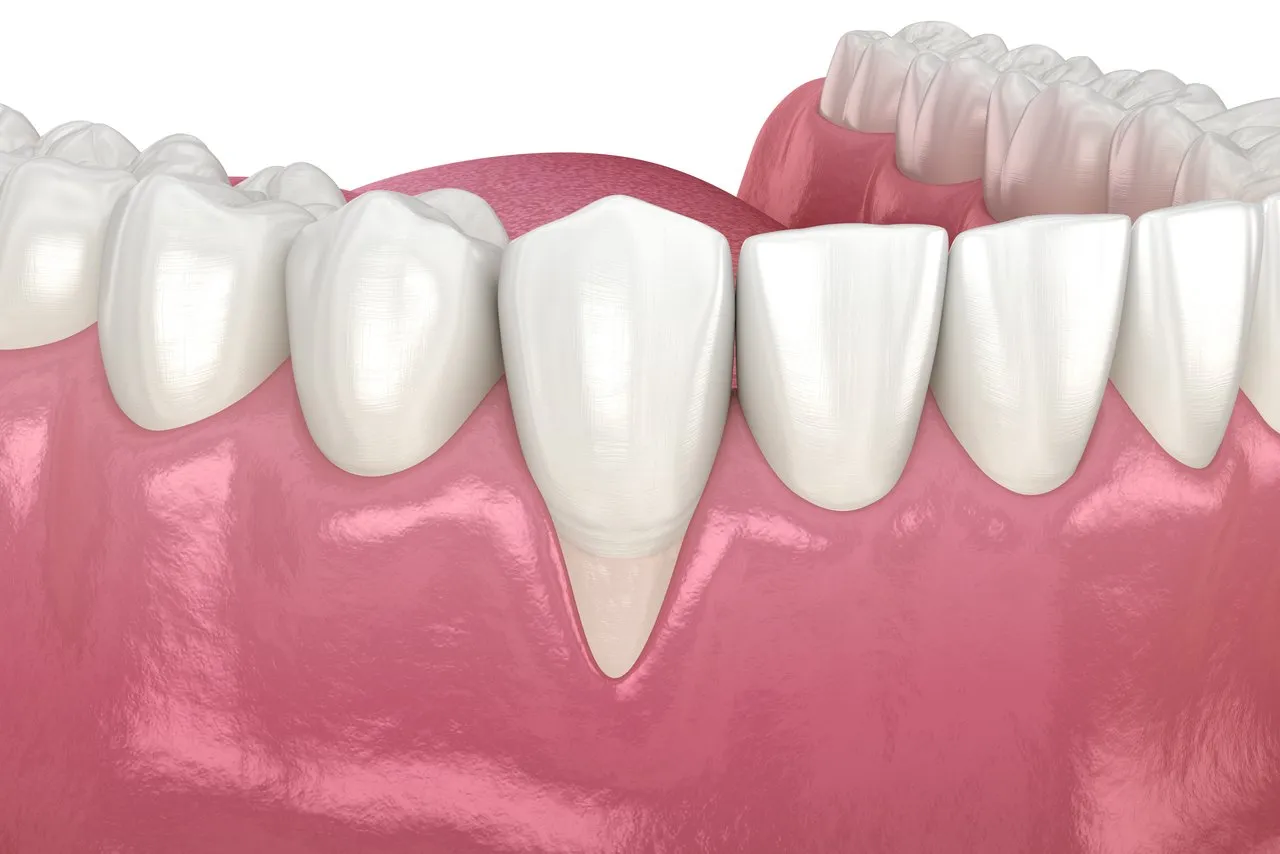
- The tooth neck is at the junction between the visible crown and the root. If the gums recede, previously covered root surfaces can become exposed. Decay develops on a different surface here from that on the enamel-covered part of the crown. The term root caries is used for carious damage to these root surfaces.
- Tooth decay or another cervical defect?
- A twinge in response to cold drinks does not prove that cervical caries is present. Exposed root surfaces can also be sensitive without carious damage. Likewise, depressions at the tooth neck are not automatically caused by tooth decay: tooth substance can be lost through mechanical stress or exposure to acid, for example.
- What treatment is available?
- Treatment depends on the extent and activity of the damage. Under certain conditions, early changes without significant loss of tooth substance can be stabilised through targeted care, fluoride applications and check-ups. The area must be accessible and its progression must be assessed. A general instruction to ‘simply brush more’ is no substitute for an individual plan.
- When should you book an appointment?
- You should have new discolouration, depressions or recurring sensitivity at the gumline checked. Early tooth decay can be present even without pain. Do not wait for an obvious defect to develop before mentioning changes at your next appointment. Regular check-ups help ensure that the next steps are tailored to the findings.
What does caries at the tooth neck mean?
The tooth neck is at the junction between the visible crown and the root. If the gums recede, previously covered root surfaces can become exposed. Decay develops on a different surface here from that on the enamel-covered part of the crown. The term root caries is used for carious damage to these root surfaces.
In everyday language, ‘cervical caries’ primarily describes the location near the gumline. A more detailed assessment is crucial for treatment: which surface is affected? Has tooth substance already been lost? Can the area be cleaned easily? A small visible sign cannot answer these questions.
Exposed tooth necks can affect different people, not only those in old age. New changes should also be assessed in younger adults. Conversely, not every exposed root already has tooth decay. A noticeable area is a reason for an examination, not a basis for a remote diagnosis.
Which factors contribute to the disease?
Caries develops when bacteria in plaque produce acids from sugar, causing tooth substance to lose minerals. Frequent sugary snacks or drinks can repeatedly disrupt this balance. Areas near the gum line that are particularly difficult to clean therefore deserve attention.
The situation is further altered when roots are exposed: the root surface does not have the same enamel protection as the tooth crown. Gum recession can be associated with diseases of the periodontium, but must be assessed individually. Gum care and tooth decay prevention are connected, but they are not identical treatments.
Dry mouth can also increase the risk of caries. Saliva supports the natural protective and repair processes in the mouth. Medicines or illnesses can affect saliva flow. Do not stop taking medicines on your own initiative. Mention persistent dryness to your doctor and dentist so that the causes and appropriate measures can be determined.
Tooth decay or another cervical defect?
A twinge in response to cold drinks does not prove that cervical caries is present. Exposed root surfaces can also be sensitive without carious damage. Likewise, depressions at the tooth neck are not automatically caused by tooth decay: tooth substance can be lost through mechanical stress or exposure to acid, for example.
Colour is not a reliable self-test either. Tooth decay can appear in different colours, while a dark spot does not necessarily mean active decay. Do not scratch it with sharp objects to test its hardness. Whether damage is active and requires treatment is a matter for professional assessment.
Instead, describe when you notice the spot and which stimuli trigger symptoms. It may be helpful to consider the following before your appointment: has the area changed? Does food get stuck there? Does pain occur only briefly in response to cold, or also without a trigger? Make a note of these observations without deliberately provoking the area repeatedly.
How is cervical caries examined?
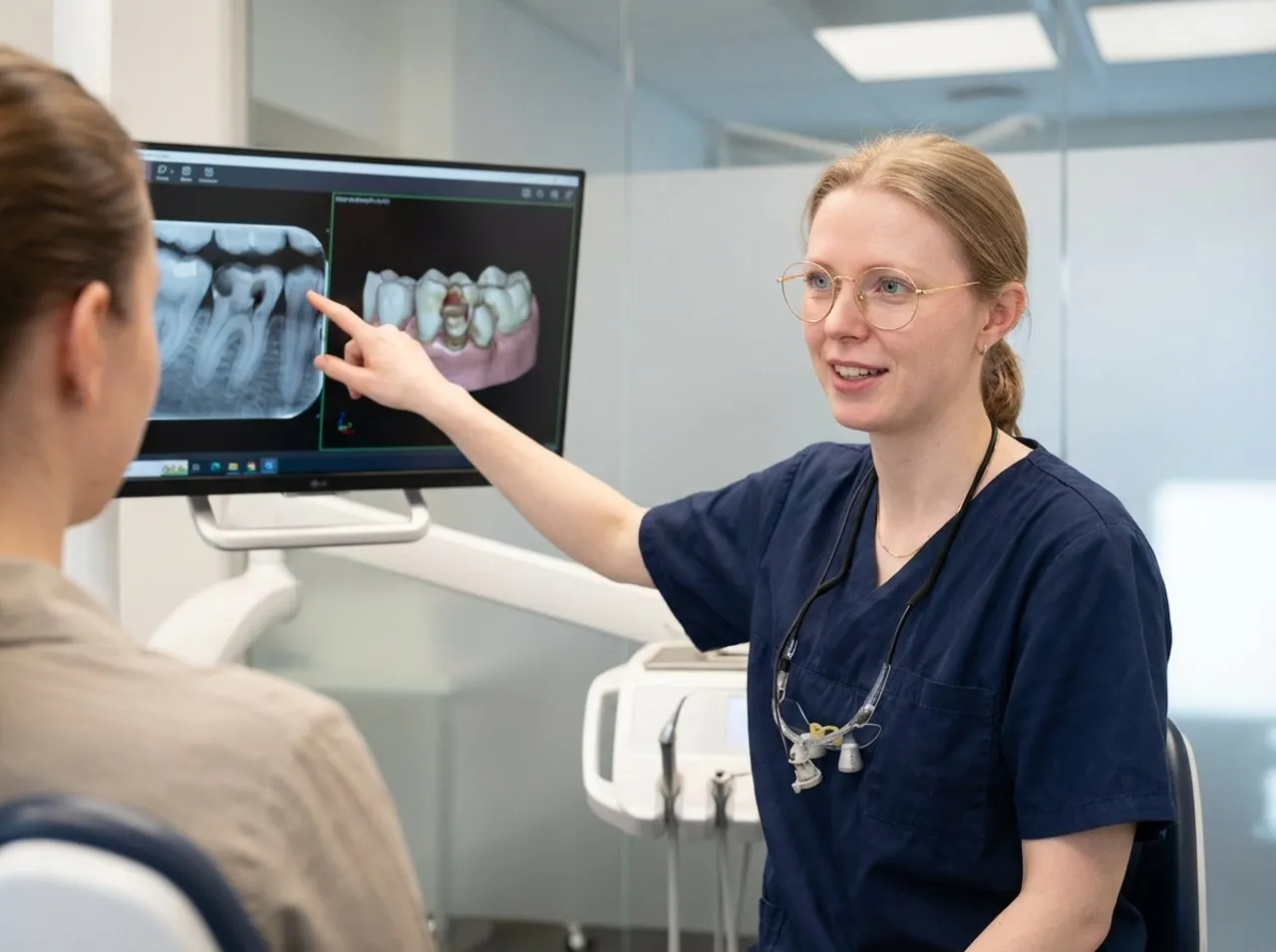
The examination considers the tooth surface, existing fillings, the gums and how easy the area is to clean. The diagnosis takes visible changes and other findings into account. Depending on the situation, X-rays can provide additional information that cannot be seen from the outside. Not every spot requires the same examination.
Your individual risk of tooth decay is also important: are there other new areas of damage, frequent sugar intake or dry mouth? Are roots exposed on several teeth? Do you have difficulty brushing? These questions help ensure that treatment is not reduced to a single filling.
If there are signs of periodontal disease, an additional examination may be necessary. Information on measurement and assessment can be found under periodontal pockets. Ask for a clear explanation of whether the main issue to be treated in the affected tooth is surface damage, a care problem or gum disease.
What treatment is available?
Treatment depends on the extent and activity of the damage. Under certain conditions, early changes without significant loss of tooth substance can be stabilised through targeted care, fluoride applications and check-ups. The area must be accessible and its progression must be assessed. A general instruction to ‘simply brush more’ is no substitute for an individual plan.
If a cavity requiring treatment has already developed, a filling may be necessary. The defect and the possibility of a suitable restoration are assessed. Which material is suitable depends, among other things, on the location, extent and conditions of the tooth. The overview of dental fillings explains the basic principles.
If caries extends into the interior of the tooth and causes inflammation requiring treatment there, further steps may be necessary, such as root canal treatment. However, proximity to the gum line alone does not mean that root canal treatment is required. Depth, symptoms and findings must be assessed together.

What helps with everyday prevention?
Brush your teeth twice a day with fluoride toothpaste and clean between your teeth with suitable aids. Ask to be shown how to reach exposed areas gently. More pressure does not automatically mean more thorough care; a technique you can put into practice is more helpful than vigorous scrubbing.
Pay attention to how often sugar comes into contact with your teeth. Lots of small sweet snacks or repeatedly drinking sweetened drinks can be more problematic than a single planned meal. Review your habits for a few days: what do you drink when you are out and about? What is within reach at work? Which snacks do you have regularly?
Additional fluoride measures may be advisable if you are at increased risk. The concentration, product and application should be agreed with the practice; highly concentrated toothpaste is not an automatic recommendation for every sensitive spot. The current S3 guideline on tooth decay prevention covers risk-related measures. For an explanation of the basics of early changes, see Early-stage tooth decay.
When should you book an appointment?
You should have new discolouration, depressions or recurring sensitivity at the gumline checked. Early tooth decay can be present even without pain. Do not wait for an obvious defect to develop before mentioning changes at your next appointment. Regular check-ups help ensure that the next steps are tailored to the findings.
Severe or persistent pain, swelling, pus or fever requires urgent dental care. If you have difficulty breathing or swallowing, or significant swelling in the mouth, immediate medical help is required; call 112 in an acute emergency.
Three pieces of information are particularly helpful at your appointment: how long has the change been present, what symptoms are you experiencing and which medicines are you taking? Then ask about the treatment objective and follow-up plan. This makes it easier to understand whether care and observation are planned initially, or whether the defect is to be restored.
Frequently asked questions
The terms overlap. Cervical caries describes the location near the gumline; root caries affects exposed root surfaces. The exact surface affected is examined.
No. Exposed surfaces and non-carious defects can also be sensitive. Symptoms alone cannot distinguish between these causes.
Discolouration does not automatically mean active tooth decay. Colour, surface and other findings must be assessed together. Have new changes checked.
Not every early change does. Care, fluoride measures and check-ups may be options where the findings are suitable. A cavity requiring treatment, on the other hand, may require a filling.
Reduced saliva can increase the risk of tooth decay. Have persistent dryness investigated and mention any medicines without stopping them yourself.
An additional or highly concentrated fluoride application should suit your individual risk and be agreed with a dental professional. It is no substitute for an examination or any necessary treatment.