
Dental nerve dying: how long does the pain last?
Toothache may indicate pulp injury. Pulpitis caused by deep caries or trauma is often present. Pressure in the dentinal tubules overstimulates nerve fibres and causes sharp peaks of pain. Diagnosis requires a dental assessment.
Über 350 Google-Bewertungen
How long does the pain last?
There is rarely a fixed timeframe: during the irreversible pulpitis phase, intense bouts of pain, often lasting hours, occur over several days. When the nerve dies, cold-induced pain often subsides – however, this is not a good sign, because pain on pressure and biting often follows due to inflammation at the root tip. Prompt endodontic assessment is crucial.
- Typical progression
- Stimulus-dependent pain → persistent bouts of pain (including at night) → apparent calm → pain on pressure and biting.
- Warning signs
- Diminishing cold-induced pain while the cause persists, tooth discolouration, swelling, fever.
- When to act immediately
- Seek medical help immediately if you experience facial or neck swelling, fever, difficulty swallowing or restricted mouth opening.
General information only; this does not replace a diagnosis. Pain-free phases do not mean that healing has occurred – have the cause assessed by a dentist.
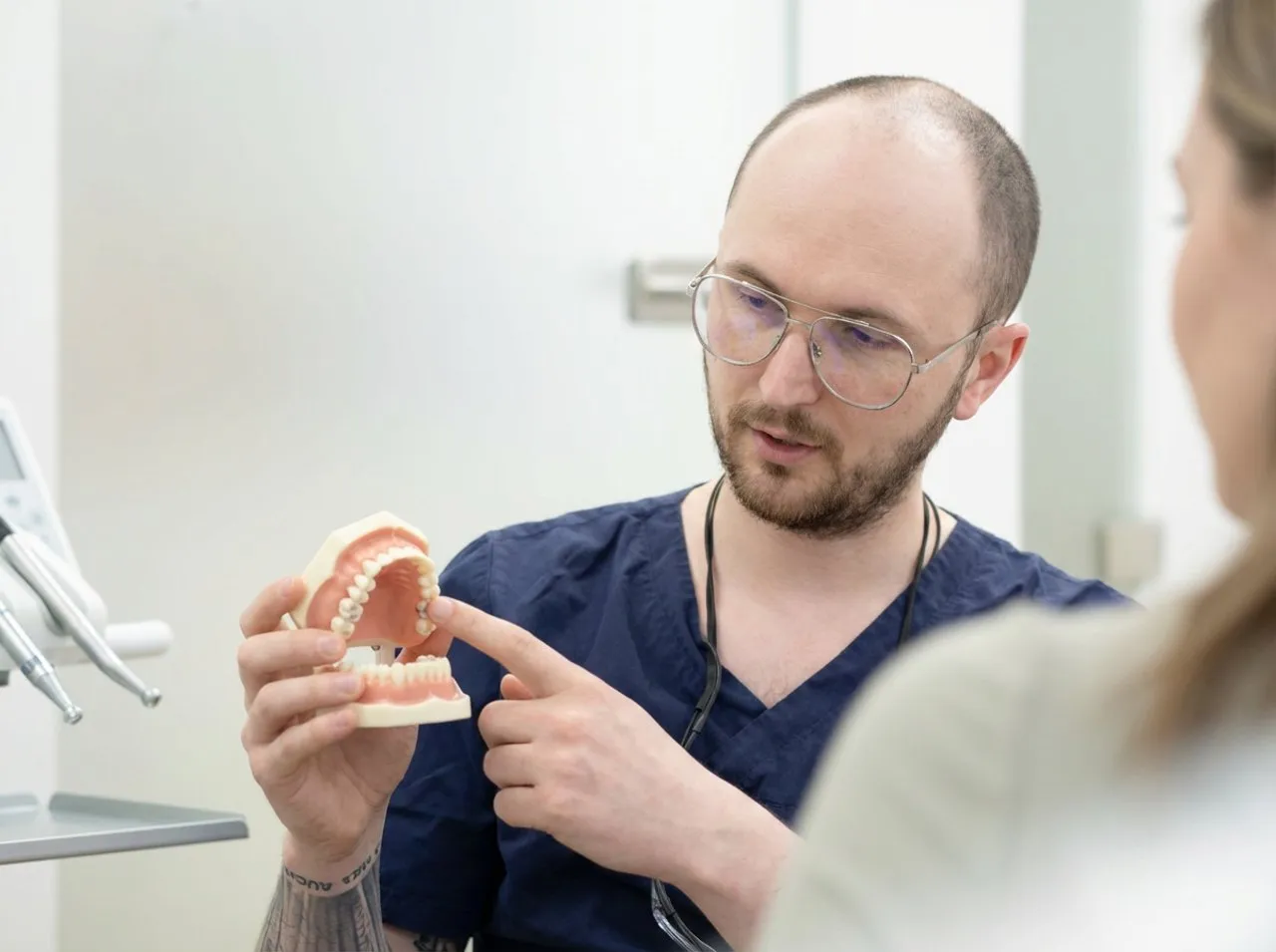
What does “the dental nerve is dying” mean?
The “dental nerve” is part of the pulp, also known as the dental pulp tissue, which contains blood vessels and bundles of nerves. As inflammation progresses, ischaemia occurs, meaning reduced blood flow, eventually leading to pulp necrosis. The tooth then loses its sensitivity but remains vulnerable to microbial infection.

Typical stages: from pulpitis to necrosis
Reversible pulpitis usually causes short, stimulus-dependent pain. In irreversible pulpitis, the pain persists, often at night as well, and lingers after exposure to cold. If left untreated, necrosis often follows, although the symptoms may fluctuate.

Dental nerve dying: symptoms and their clinical significance
In the early stages, a prolonged response to the cold test predominates. Later, many people report symptoms triggered by heat, pulsating throbbing and marked tenderness to percussion. Pain on biting, tenderness to pressure and occasional tooth discolouration are also consistent clinical findings. Further warning signs include: • Spontaneous pain without a trigger, often when lying down • Pain radiating to the ear, temple or lower jaw • Swelling, redness of the gums or a palpable “blister-like spot” • Foul odour or an unpleasant taste when discharge drains

How long does it take for a dental nerve to die?
The key factors are the bacterial load, the depth of the lesion and the anatomical complexity of the root canal system. With very deep caries, the transition can occur within a few days, whereas with a slowly progressing lesion it can take place over weeks. The pulp can also die after a blow to the tooth. In such cases, pulp necrosis sometimes occurs with a delay because the blood supply is initially compensated for. A check-up is advisable even if there are no symptoms at first.

Dental nerve dying: how long should pain be expected?
There is rarely a clear timeframe. During the irreversible pulpitis phase, the pain is typically intense and episodic. Such episodes can last for hours and recur over several days. When the pulp becomes necrotic, cold-induced pain often subsides. This may seem like an improvement but is more of a diagnostic warning sign. Pain on pressure and biting then predominates because the process becomes periapical. People searching for “how long a tooth takes to die” often mean these changing phases. A short period of calm is possible, but the underlying cause remains. Diagnostic assessment is indicated at the latest when pain on biting increases.

Why the pain can suddenly subside
As necrosis progresses, the sensory pathways that transmit stimuli are lost. Sensitivity to cold therefore disappears even though bacteria and toxins remain in the canal. These substances diffuse through the apical foramen and trigger apical periodontitis. A periapical abscess can develop later. Throbbing pain, swelling and sometimes fever may then occur. In some cases, a fistula forms, temporarily reducing the pressure.

Diagnosis at the dental practice
The assessment combines medical history, clinical tests and imaging. These include cold and heat tests and, if necessary, EPT, or electric pulp testing. We also assess percussion, palpation and the occlusal contact. Periapical radiolucencies often only become visible on X-rays after a delay. CBCT imaging can be helpful when findings are unclear. The aim is a clear endodontic diagnosis, not merely a description of the pain. At Wunschlachen, we discuss the findings and prognosis transparently. This enables a well-planned treatment decision.
Immediate measures at home: what helps
Until you receive treatment, you should avoid putting strain on the affected side. External cooling is helpful for swelling, whereas heat can make symptoms worse. Analgesics provide short-term relief but should be taken strictly in accordance with the package leaflet. Avoid placing “home remedies” in the tooth, such as tablets. These can cause necrosis of the mucous membrane. Gentle oral hygiene remains important to prevent additional gingivitis.
Treatment options: endodontics or extraction
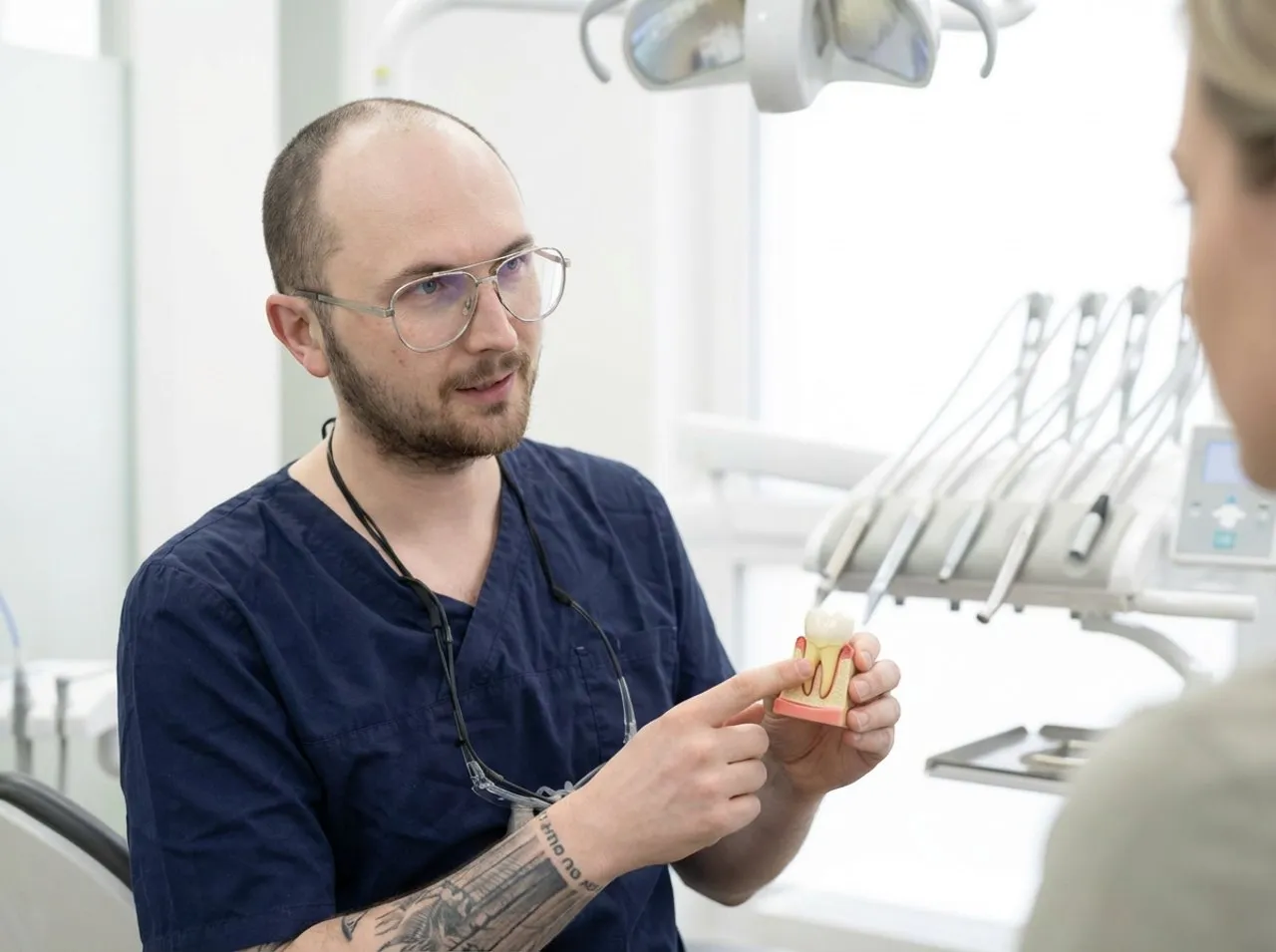
If the tooth can be saved, root canal treatment is the standard therapy. This involves debridement of the canal system, accompanied by irrigation protocols, often using sodium hypochlorite. The obturation is then completed with a bacteria-tight seal, usually using gutta-percha and sealer. In cases of extensive destruction, the tooth often requires definitive restoration. A partial crown or crown is often needed to prevent fractures. If the prognosis is unfavourable, extraction followed by tooth replacement may be advisable.

When you should act immediately
Immediate assessment is necessary for facial or neck swelling. Fever, difficulty swallowing or restricted mouth opening are warning signs. Pain that escalates despite analgesics also indicates a need for action. “Waiting until the tooth is dead” is risky. Infections can spread into the soft tissue. This significantly increases the complexity of treatment and the risk of complications.

Conclusion: understand the course of the pain and treat the cause
A dying dental nerve can be extremely painful, but the pain does not have to be continuous. The typical pattern is a change from stimulus-induced pain to pressure pain once the process becomes periapical. Prompt endodontic diagnosis and treatment are crucial.
FAQ: dental nerve dying – how long does the pain last?
With irreversible pulpitis, bouts of pain often last for hours and recur over several days.
This varies considerably depending on the bacterial load and blood supply to the pulp.
Prolonged cold-induced pain, spontaneous pain and, later, tenderness to percussion are common.
With pulp necrosis, sensitivity is lost even though the infection persists.
Yes, apical periodontitis or an abscess often causes severe pain on pressure.
This usually refers to removal of the inflamed dental pulp as part of endodontic treatment.
Cold testing, EPT, percussion and X-rays are part of standard diagnostics.
Cooling helps with swelling; heat can make symptoms worse during acute inflammation.
If you have a fever, swelling or trismus, you should come in immediately for an urgent dental assessment. If you have difficulty swallowing or your airway is affected, call 112 in Berlin for emergency medical help.
A crown often follows the obturation to stabilise the tooth in the long term.