The short answer
Endodontics treats the inside of the tooth and the root canals with the aim of preserving a diseased tooth. Whether root canal treatment or another tooth-preserving option is suitable depends on the findings and will be discussed with you following examination and diagnosis.
- Aim
- Preservation of the tooth through cleaning and treatment of the root canals.
- Duration
- Depends on the tooth and canal anatomy; back teeth often require more time.
- Location in Berlin-Mitte
- Friedrichstraße 147, 10117 Berlin
We will determine which treatment is suitable during your dental examination.
In this article
Before treatment, there is a clear plan.
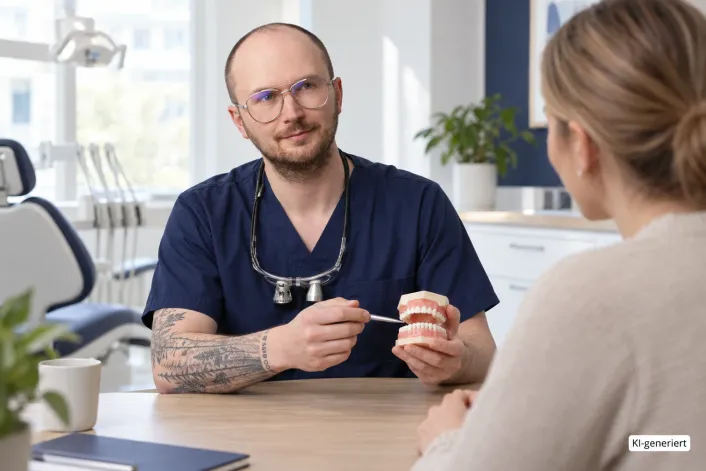
What is causing the symptoms? Can the tooth be preserved? Which options for preserving the tooth are possible? We will discuss the options based on your examination. A model of a tooth can illustrate its structure and the planned steps. It does not show the findings of a particular patient.
- Starting point
Symptoms, previous treatments and existing documents help us assess your concerns.
- Findings and options
The examination shows whether the tooth can be preserved and which treatment options are possible. The diagnostic tests depend on your findings.
- Treatment and follow-up
We will discuss the planned treatment steps and when the follow-up examination will take place. The course of treatment varies from person to person, and preservation of the tooth cannot be guaranteed.
Treatment and procedure: the right information
This page is about endodontic treatment and advice at Wunschlachen. If you would like to read about the general procedure for root canal treatment, you will find it in our dedicated guide. If treatment has already begun, bring any existing findings and X-rays with you to the consultation.
Relevant information for your next step
Endodontics: what is it?
Endodontics refers to treatment of the root canal system. The aim is to preserve the tooth through cleaning and disinfection. In dentistry, this is usually called root canal treatment. We remove inflamed tissue and bacteria. We then seal the canals against bacteria.
When is treatment necessary?
Deep caries can allow bacteria to reach the nerve. A crack or accident can also damage the pulp. This can cause throbbing, pain when pressure is applied or sensitivity to cold. Sometimes there is no pain. Nevertheless, inflammation can develop at the tip of the root. An X-ray will often then show a radiolucency.
How root canal treatment is carried out
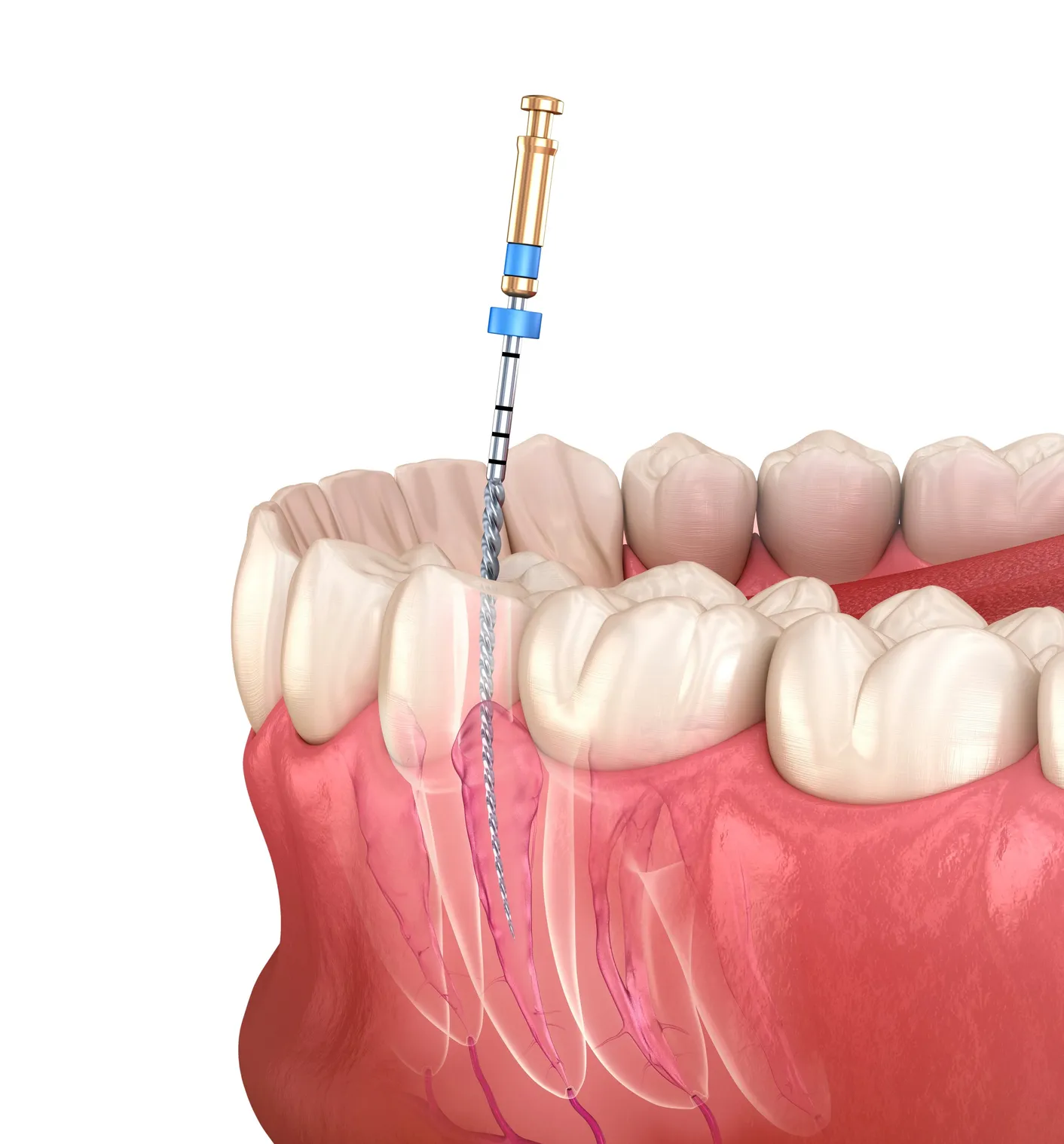
First we examine the tooth clinically and with X-rays. We then administer a local anaesthetic and place a rubber dam. This keeps the area dry and clean. Next, we determine the canal length using a measuring device. We then shape the canals with fine files. Irrigation solutions dissolve biofilm and tissue remnants. Finally, we fill the canals to create a tight seal. We often use warm gutta-percha with sealer. We then stabilise the tooth with a core build-up and crown.
Modern endodontology in Berlin
Precision matters at our endodontic practice in Berlin. An operating microscope makes additional canals visible. This is important for back teeth. Rotary nickel-titanium files preserve tooth substance. Ultrasound supports irrigation in lateral canals. Digital images help with complex findings.
Endodontics in Berlin: technology for difficult cases
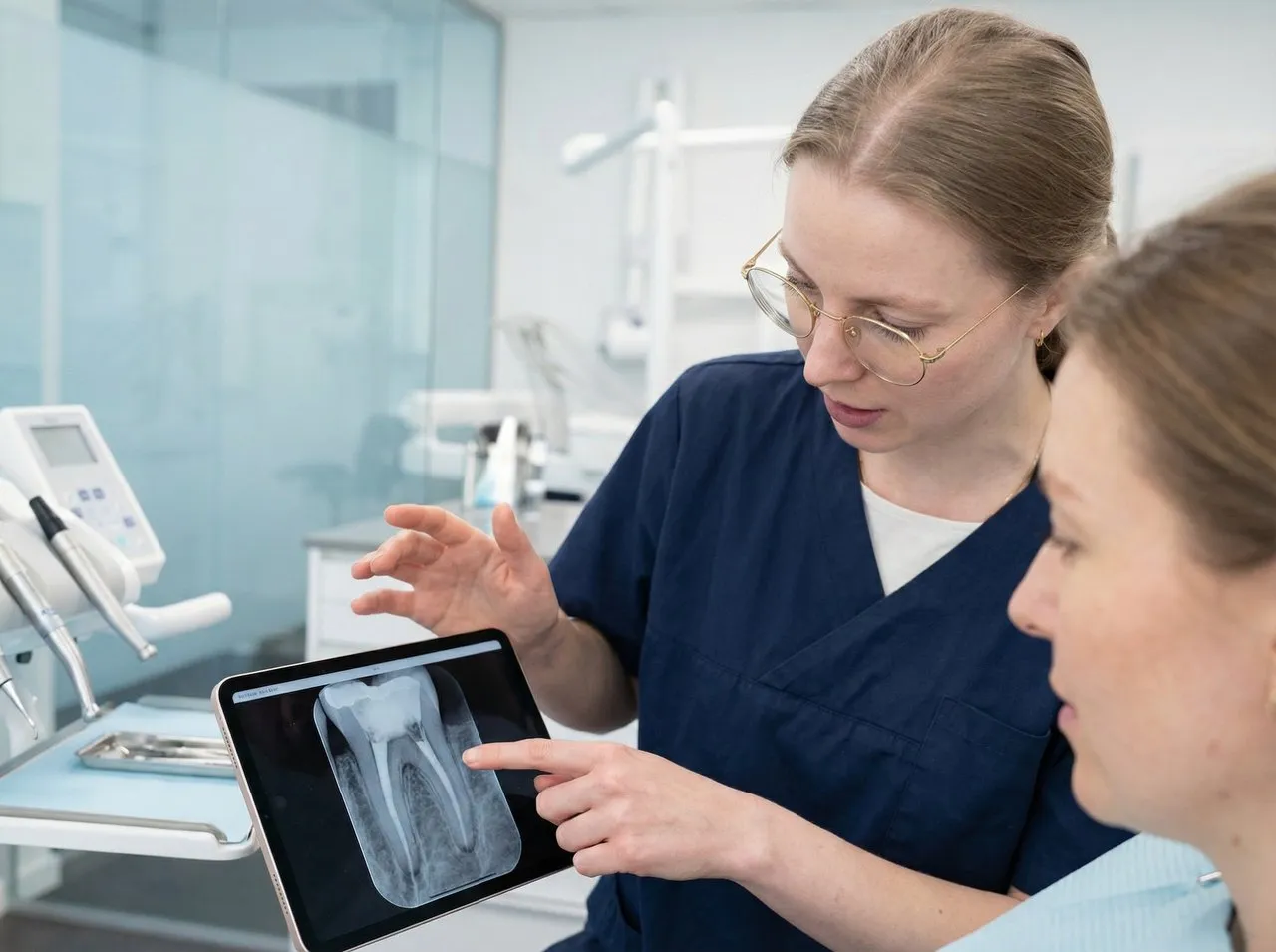
Many people seek endodontic treatment for acute symptoms. Experience and a clear protocol are important. This reduces the risk of residual bacteria. If we suspect hidden canals, we use magnification. With old fillings, we check for cracks and leakage. This enables us to decide whether to preserve the tooth or choose an alternative.
Endodontics at Friedrichstraße and second opinions
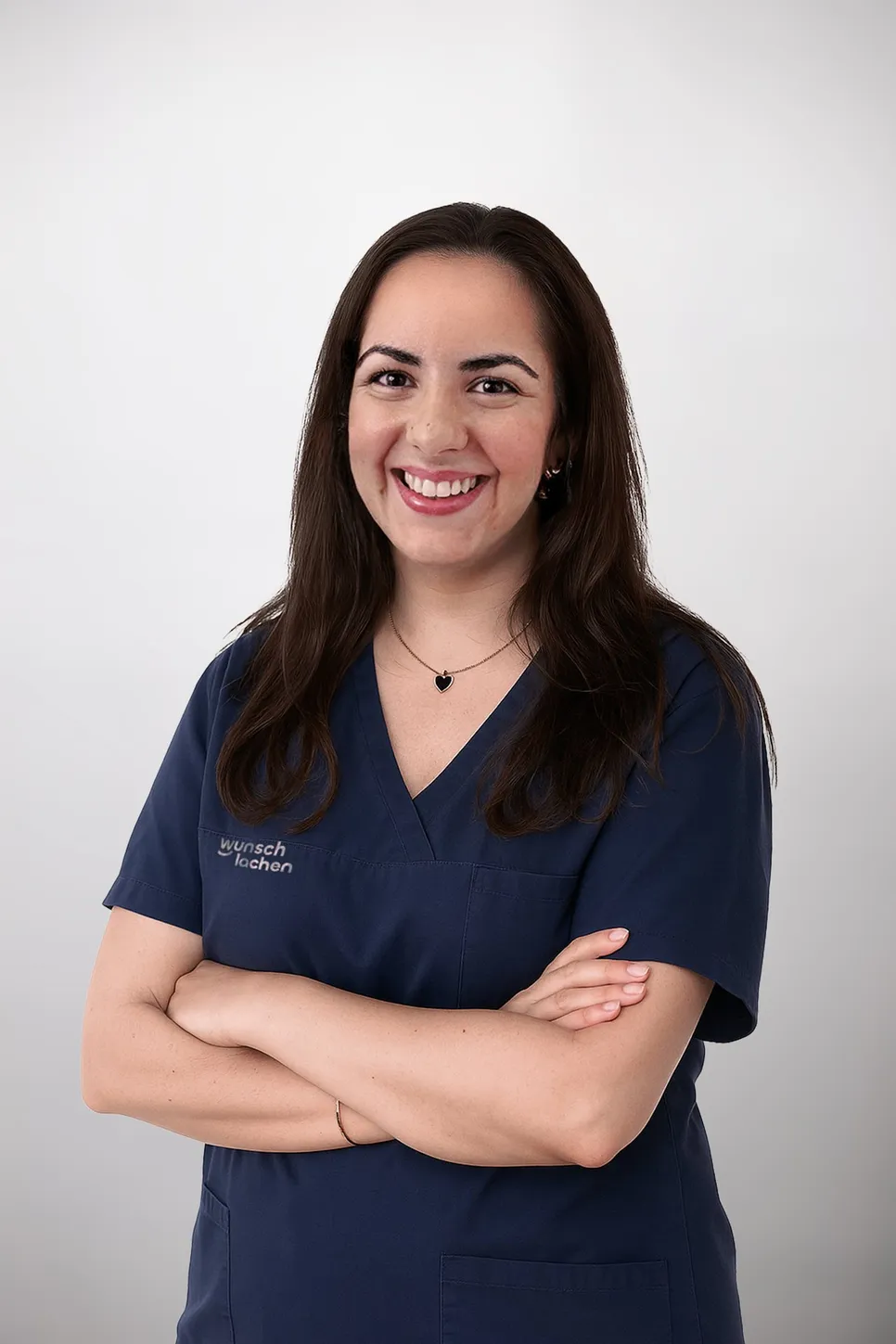
Endodontic consultations are also available at our practice at Friedrichstraße 147 in Berlin-Mitte. Marta Gomez, a dentist whose practice focuses on endodontics, is part of the team there. We will discuss which examinations and treatment steps are appropriate based on your findings.
Would you like a second opinion on an existing diagnosis or proposed treatment? Please feel free to bring any existing documents and X-rays with you. After the examination, we will discuss which tooth-preserving options or alternatives may be suitable in your situation.
If symptoms persist after treatment, a reassessment may be advisable. Further information: Dentist Berlin-Mitte – Friedrichstraße 147 · Root canal retreatment · Root canal treatment or tooth extraction.
Retreatment, apicoectomy and alternatives
Retreatment may be necessary if symptoms persist. In this case, we remove old filling materials and clean the canals again. We often find a canal that was previously overlooked. Sometimes the inflammation is only at the root tip. An apicoectomy can then help. This involves surgically shortening the tip and sealing it tightly. If the tooth cannot be saved, we assess replacement options. These include a bridge, denture or implant. The aim remains stable chewing function.
Dentist for endodontics at Wunschlachen
Endodontics is teamwork based on diagnostics and precision. Our team works to modern standards. The aim is to preserve your own tooth. We provide prompt advice for emergencies. Book an appointment in Berlin. We explain the findings, discuss the prognosis for the tooth and answer your questions about the next steps. This enables you to make a confident decision.
Our locations in Berlin
Frequently asked questions
1. Which documents are helpful for the consultation?
Bring information about previous treatments and any relevant existing documents with you. The findings will determine whether any further images or examinations are required.
2. Can every tooth be preserved with root canal treatment?
No. Whether treatment is advisable depends, among other things, on the initial situation and whether the tooth can be preserved. This will be assessed and discussed individually.
3. What exactly does endodontics mean?
Endodontics is the treatment of the nerves and root canals inside the tooth. The aim is to preserve the tooth.
4. How do I know if I need root canal treatment?
Typical symptoms include throbbing, pain on pressure or severe sensitivity to cold. Sometimes only an X-ray reveals inflammation.
5. Is endodontic treatment painful?
With local anaesthesia, you will usually feel no pain. The tooth may be sensitive for a short time after the appointment.
6. How long does root canal treatment take?
It depends on the tooth and the canal anatomy. Back teeth often require more time.
7. When do I need a specialist?
A specialist in endodontics can help with retreatment and difficult canals. This also applies after unsuccessful previous treatment.
8. What is the difference between endodontics and endodontology?
In everyday language, endodontics refers to the treatment. Endodontology is the specialist field with a scientific focus.
9. What should I bring to my appointment?
Bring any existing X-rays, findings and information about previous treatment of the affected tooth with you. This helps the team understand the history more easily.
10. Where is the Friedrichstraße practice located?
You will find the practice at Friedrichstraße 147 in Berlin-Mitte, near Friedrichstraße S-Bahn and U-Bahn station.
11. What do I need to bear in mind after treatment?
Chew carefully at first and keep your follow-up appointments. Good oral hygiene protects the tooth.
12. What happens if the treatment is not enough?
In that case, we will consider retreatment or an apicoectomy. Sometimes tooth replacement is also the best solution.