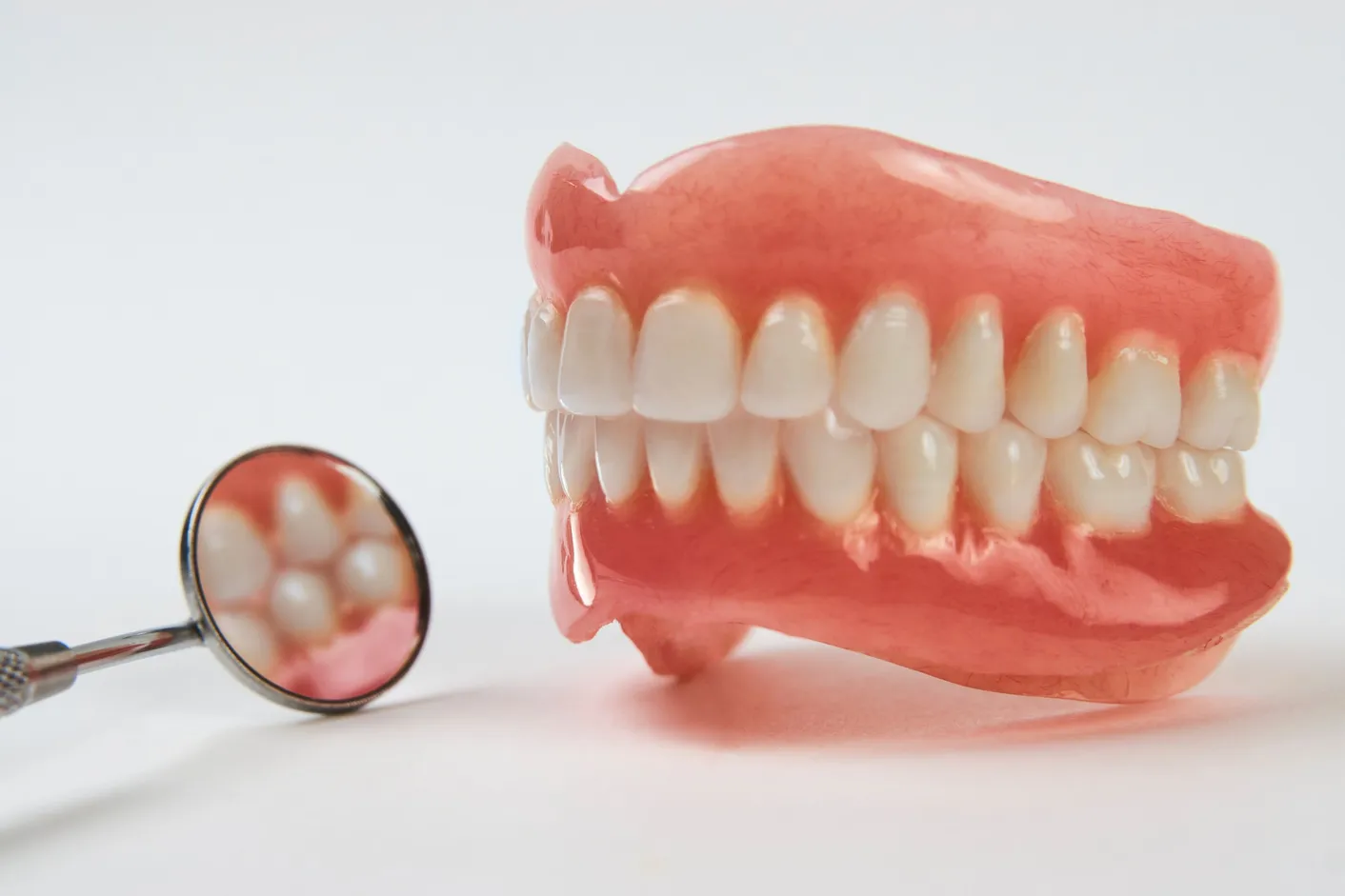
Full dentures – quality of life with a secure smile
The complete loss of natural teeth presents many people with a major challenge. It involves both functional and aesthetic limitations. However, a modern full denture now offers a reliable, tried-and-tested and visually appealing solution.
Über 350 Google-Bewertungen
The short answer
A full denture replaces all the teeth in one jaw with a custom-fit acrylic base and artificial teeth. As a practice guide, the total cost is approximately €800–€1,300 per jaw. Separately, statutory health insurance pays a fixed subsidy: in 2026, this is generally 60%, or up to 75% with a qualifying, regularly maintained bonus booklet, calculated on the official standard-care benchmark for the finding rather than as a percentage of your bill. The treatment and cost plan provides definitive clarity.
- Costs
- Guide price of approximately €800–€1,300 per jaw, depending on the material and complexity; definitive cost information is provided in the treatment and cost plan before treatment begins.
- Statutory health insurance benefit
- Fixed subsidy at the 2026 rate of generally 60%, or up to 75% with a regularly maintained bonus booklet, applied to the corresponding official standard-care benchmark for the finding.
- Durability
- Usually 5–10 years, depending on the material, care and changes in the jaw.
- Retention
- Upper jaw dentures generally adhere better due to the suction effect; in the lower jaw, an implant-supported solution can improve retention.
Does not replace individual dental advice; definitive cost information is provided before treatment begins.
What is a full denture?
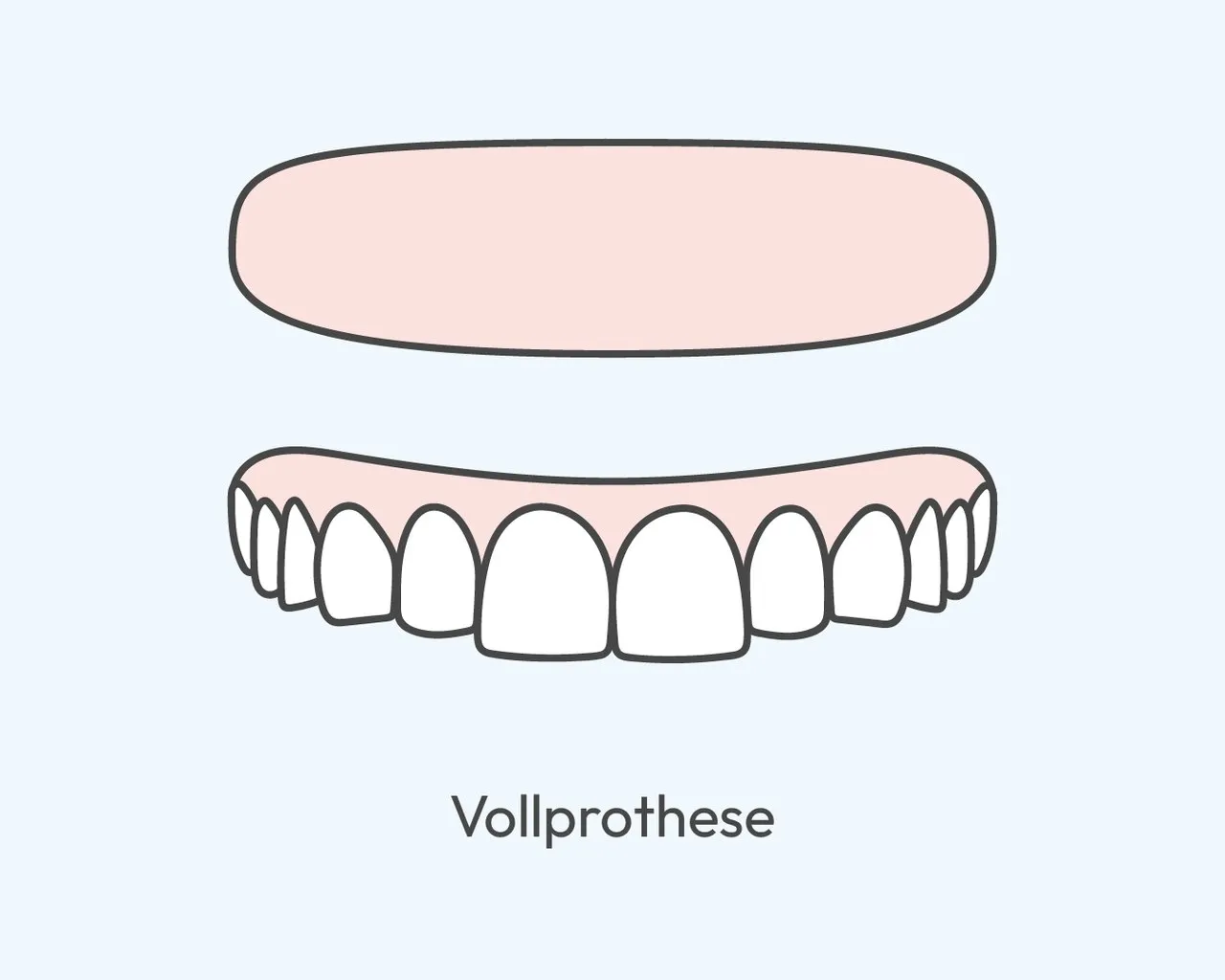
A full denture replaces all the natural teeth in one jaw. It can be used in either the upper jaw, the lower jaw or both jaws. The denture consists of the following elements:
• an individually customised plastic base that rests on the jaw
• and artificial teeth whose shape, colour and size are matched to the natural appearance of your teeth.
Depending on your anatomical circumstances and personal requirements, there are various solutions available, from conventional mucosa-borne dentures to implant-supported options with a particularly secure fit. Together, we will find a suitable option for you.
When is a full denture necessary?
A complete denture is used when no natural teeth remain in the upper or lower jaw. This may be caused by advanced tooth loss due to caries, periodontitis or accidents.
Even if existing teeth can no longer be preserved, this type of denture can restore the dentition. The artificial teeth are both functional and aesthetically pleasing. You need not worry about them looking conspicuously artificial.
How does a full denture stay in the mouth?
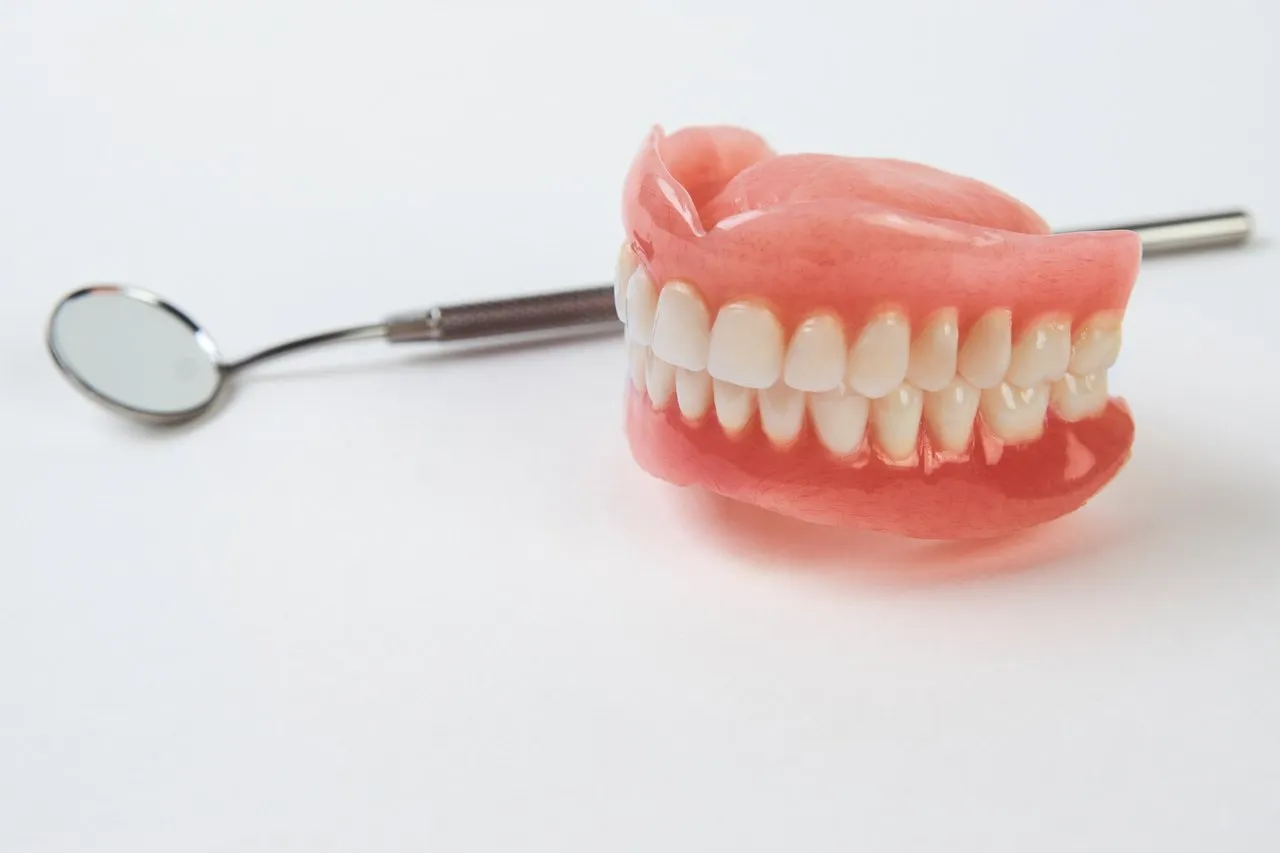
There are noticeable differences between an upper denture and a lower denture:
• Upper dentures generally have better retention due to the palatal coverage, as this creates a suction effect.
• Lower dentures rest only on the narrower lower alveolar ridge, which often results in reduced stability.
For patients with unstable lower dentures, implant-supported treatment can offer a significant improvement in quality of life.
Full denture materials – durable and well tolerated
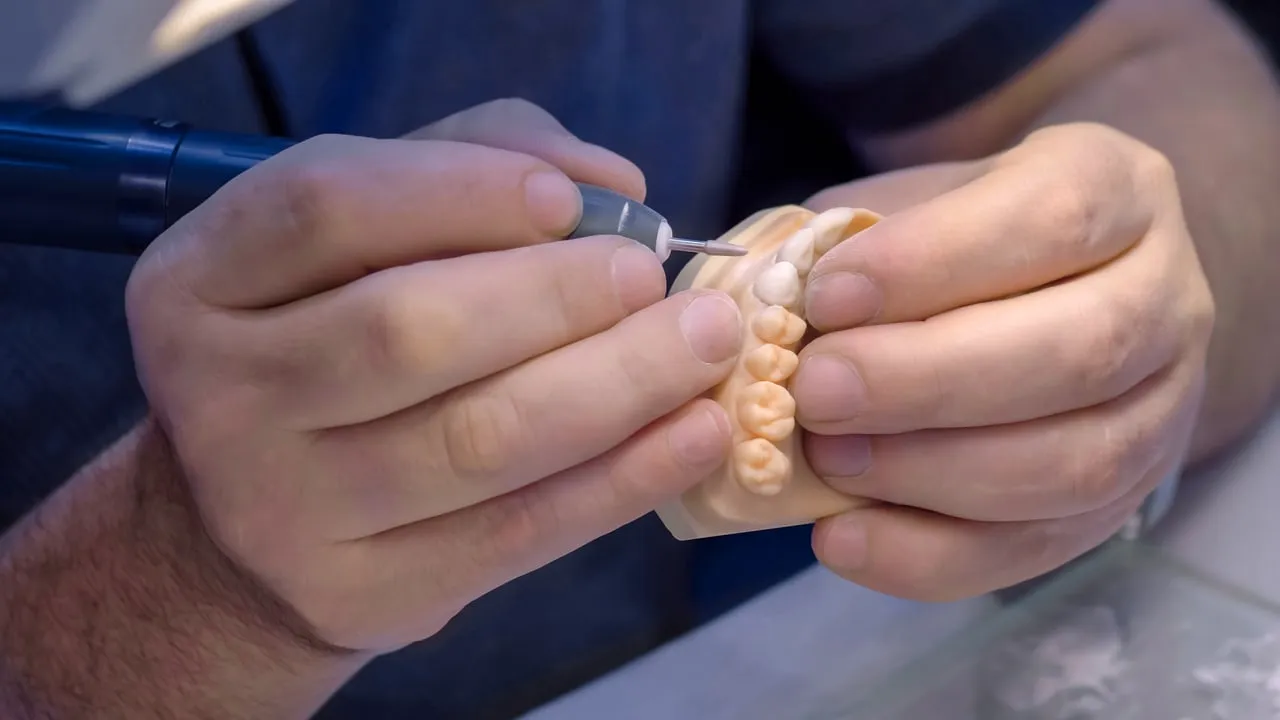
At the Wunschlachen dental practice, we use only high-quality materials to make complete dentures. The following options are available:
• The denture base is made of biocompatible plastic that is individually coloured to resemble natural gum tissue.
• The artificial teeth are made of plastic or ceramic. This varies according to your preferences, durability requirements and budget.
• All materials are precision-fitted and processed to be biocompatible, so that you experience the highest level of wearing comfort. Our in-house laboratory works closely with the treating dentists, so subsequent adjustments can also be made.
The process of fitting a full denture
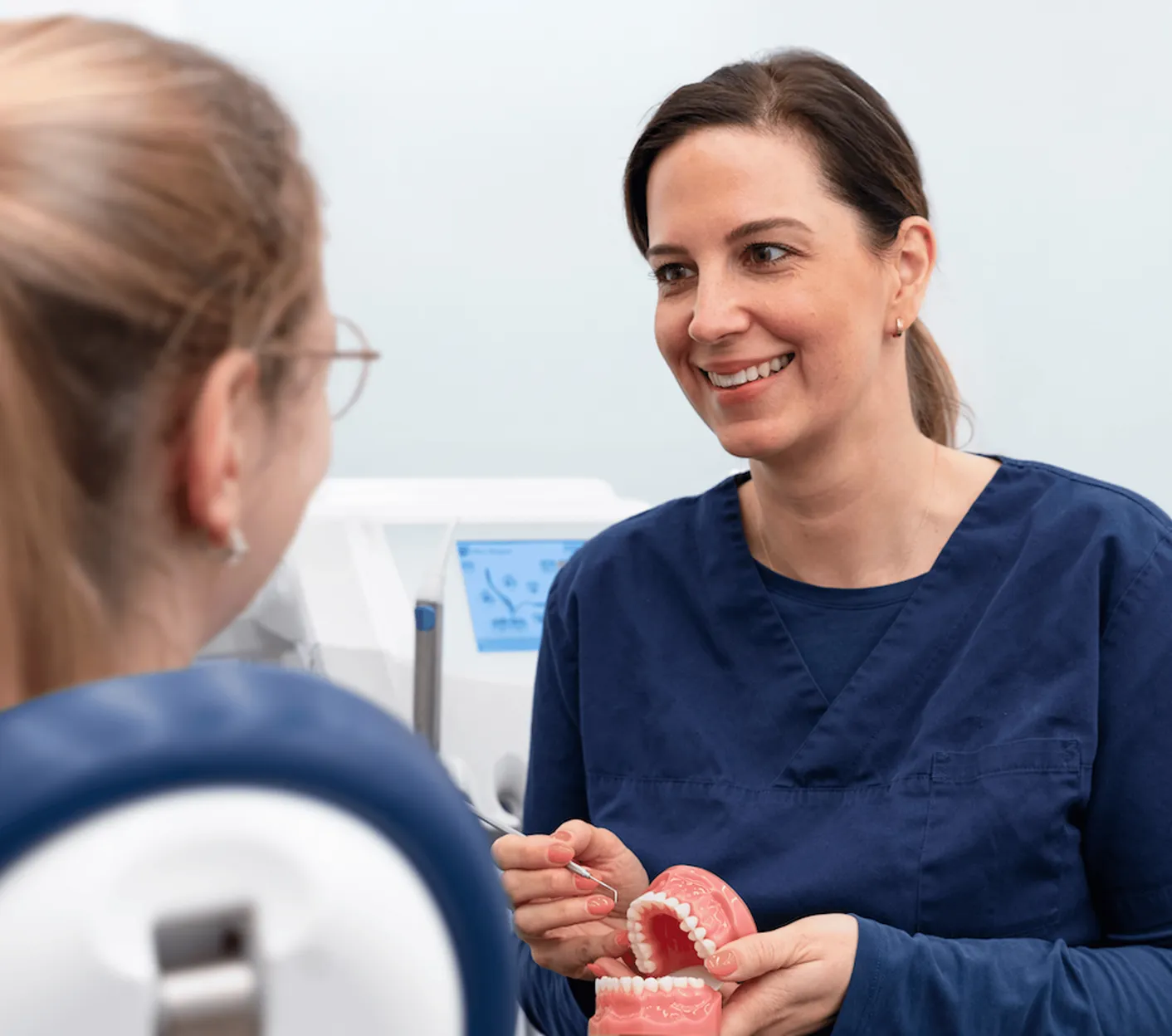
The process of obtaining a new complete denture involves several careful steps:
1. Initial consultation & diagnostics
We discuss your wishes and thoroughly examine the condition of your jaws.
2. Impressions & bite registration
Precise impressions and functional analyses form the basis for an accurately fitting denture.
3. Fabrication in the dental laboratory
Our close collaboration with experienced dental technicians guarantees a high level of precision and aesthetics.
4. Try-in & adjustment
Before it is finally fitted, the denture is checked for function and fit.
5. Fitting & aftercare
Even after it has been fitted, we support you as you get used to it and are available to make adjustments.

How much does a complete full denture cost?
The cost of a full denture depends on several factors: the choice of material, the condition of the jaw, the fabrication method and any individual additional requirements.
Statutory health insurance usually pays a fixed subsidy for standard care, regardless of the provider. In 2026, this subsidy is generally 60% of the official standard-care benchmark for the finding, and up to 75% with a regularly maintained bonus booklet. The insurer confirms the finding-based fixed subsidy in the individual treatment and cost plan.
We will advise you in detail about your options and potential cost coverage. At Wunschlachen, we also support you in communicating with your health insurance provider.
Example cost structure (practice guide prices and hypothetical 2026 subsidy calculations only):
Treatment Total costs
Full upper denture approx. €800–€1,200
• (Ø) With bonus booklet (75%) approx. €600–€900 hypothetical subsidy
• (Ø) Without bonus booklet (60%) approx. €480–€720 hypothetical subsidy
Full lower denture approx. €800–€1,300
• (Ø) With bonus booklet (75%) €600–€975 hypothetical subsidy
• Without bonus booklet (60%) approx. €480–€780 hypothetical subsidy
The subsidy calculations above are hypothetical 2026 arithmetic only: they illustrate what the percentages shown would produce if the illustration amounts were the official benchmark. They are not actual benefit amounts and are separate from the practice guide prices.
Please note: Without a bonus booklet, a full denture can result in considerably higher out-of-pocket costs for the patient. It is therefore worth having your bonus booklet stamped regularly by your dentist. The longer the booklet is maintained, the higher the subsidy provided by your health insurer.
Getting used to and caring for your full denture – managing everyday life
The first few days with a new full denture require a little patience:
• The jaw must get used to the new pressure and the changed conditions in the mouth.
• The tongue needs time to adjust to the new shape of the denture.
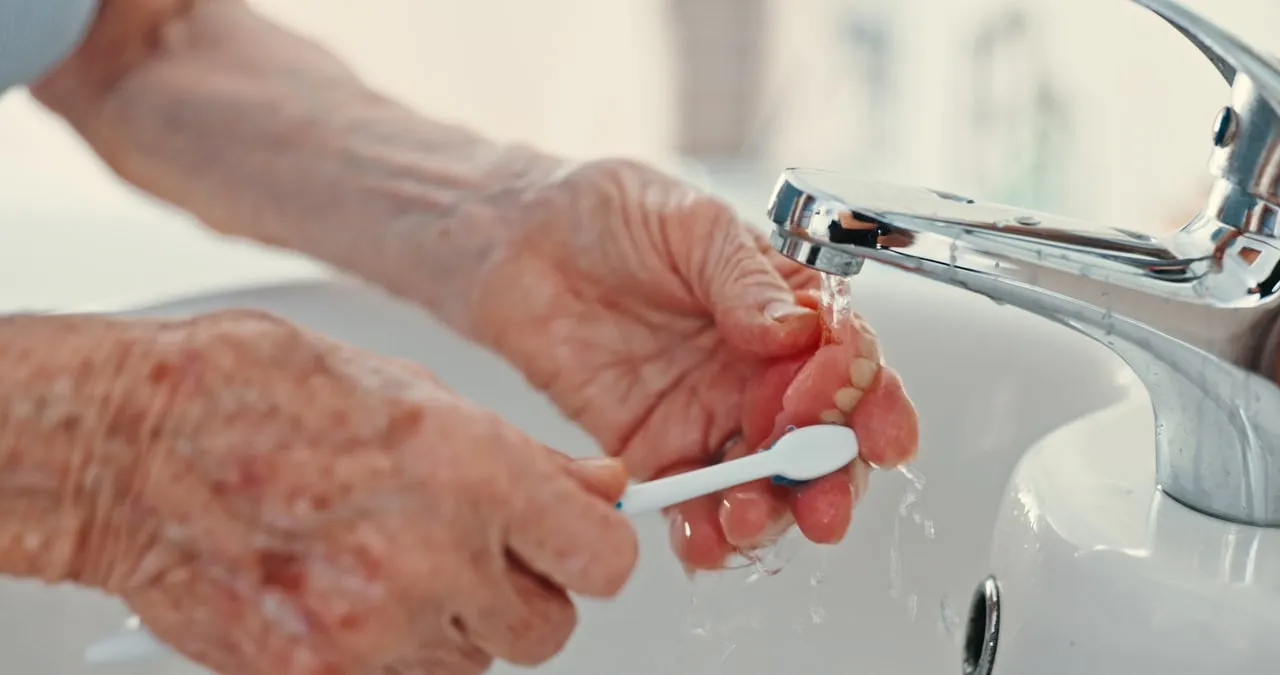
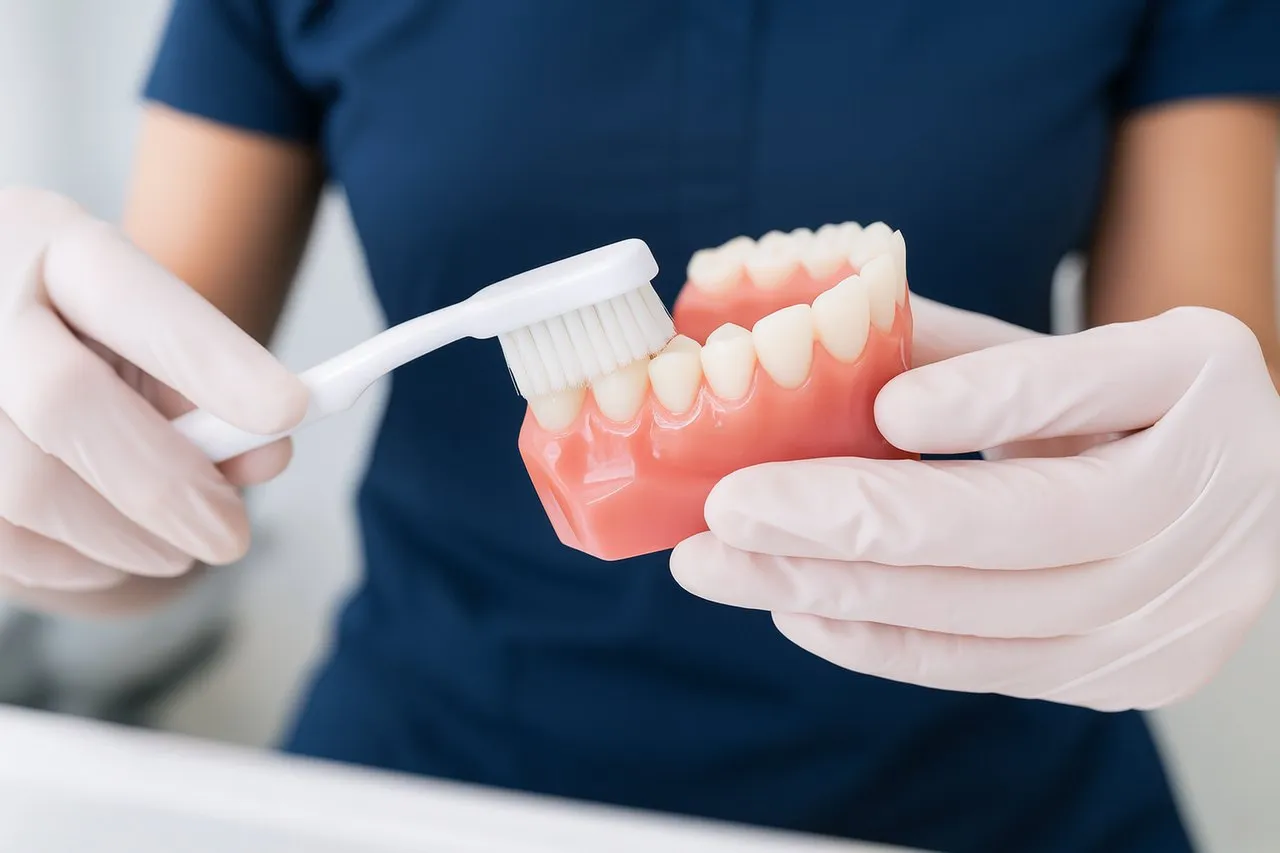
With a little practice, speaking, chewing and smiling will soon feel normal again. Daily, thorough cleaning of the denture is also important. Ideally, this should be done with a special denture brush and denture cleaner.
FAQ – frequently asked questions about full dentures
A complete denture generally lasts 5–10 years. However, this depends on the material, care and changes in the jaw.
On average, the cost is between 800 and 1,300 euros per jaw. The material and complexity play an important role. Health insurance generally contributes through a fixed subsidy. We provide detailed advice on the costs of your denture.
Both terms are synonyms and mean the same thing. Both refer to a restoration for an edentulous upper or lower jaw.
Usually acrylic for the base and acrylic or ceramic for the teeth. Together, we will find a suitable solution and select the materials for your complete denture.
The entire process takes approximately 2–4 weeks, including all fitting and try-in appointments.
Making the denture is pain-free. Pressure points may occur while you are getting used to it, but we can easily adjust these afterwards.
Without a qualifying bonus, the patient’s own share is generally the remaining 40% of the 2026 statutory reference amount. Around €300–€600 per jaw is an illustrative figure only; actual out-of-pocket costs differ depending on the confirmed fixed subsidy and the treatment cost. The costs will be discussed with you in detail at an in-person appointment.
Depending on the cause, relining, denture adhesives or implant-supported solutions may help. Contact us if you experience difficulties wearing your complete denture.
High-quality materials and individual customisation now produce a natural, almost invisible result. In this sense, the denture imitates the lost teeth as closely as possible.
Clean it daily with a denture brush, have it checked regularly and store it overnight either dry or in a special solution.