
General anaesthetic for anxious patients: Compassionate treatment
For many people, a visit to the dentist is associated with anxiety and uncertainty. A trip to the dentist can become a real challenge, particularly for anxious patients who suffer from intense anxiety. In such cases, a general anaesthetic can offer a helpful solution. This...
Über 350 Google-Bewertungen
General anaesthetic or sedation?
For anxious patients, a general anaesthetic can make it possible to undergo dental treatment without consciously experiencing it: an anaesthetist puts them into a monitored, sleep-like state, and several procedures can often be combined in one session. After treatment, patients remain under observation and should go home with someone accompanying them. A consultation will determine whether an anaesthetic is appropriate.
- Suitable for
- Severe dental anxiety or phobia, extensive treatment in a single session, children with special care needs.
- Procedure
- Induction via a vein or anaesthetic gas, continuous monitoring by the anaesthetist, recovery under supervision.
- After the anaesthetic
- Possible tiredness, dizziness or nausea usually subsides quickly; someone must accompany you, and you must not drive.
This does not replace individual dental advice.
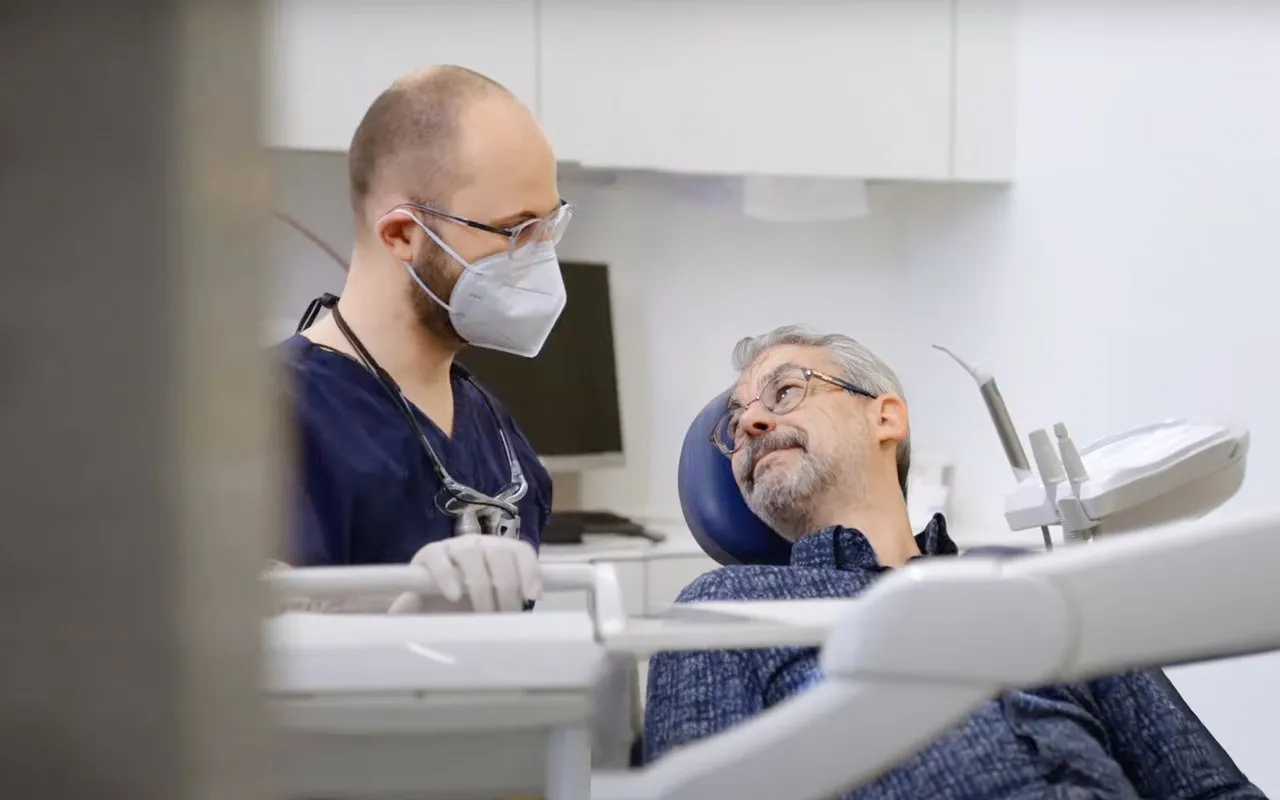
What is a general anaesthetic?
A general anaesthetic is a form of medical anaesthesia that puts the entire body into a sleep-like state. The patient is unconscious during treatment. This type of anaesthesia is used in dentistry primarily for patients who suffer from severe dental anxiety. It is also used for patients who require extensive treatment for other reasons. A general anaesthetic allows the patient to get through the treatment without psychological distress such as anxiety or stress. General anaesthesia is administered under strict medical supervision.

Who is a general anaesthetic suitable for?
Not every patient requires a general anaesthetic. It is generally recommended for people who suffer from severe dental anxiety or phobias, to the extent that they can barely tolerate a visit to the dentist or cannot tolerate one at all. A general anaesthetic can also be useful for more complex dental procedures that require several sessions. This allows treatment to be carried out in a single appointment, sparing the patient unnecessary strain. It is also used for children who are unable to remain still enough. A general anaesthetic is also suitable for patients who require several procedures in one session.

Benefits of a general anaesthetic for anxious patients
For anxious patients, a general anaesthetic is a valuable option that allows them to experience dental treatment more calmly. The benefits of this method are numerous: 1. Low-stress treatment: Most anxious patients experience extreme tension when visiting the dentist. With a general anaesthetic, the patient remains calm and relaxed, making the entire treatment process significantly more pleasant. 2. Efficient treatment: In some cases, a general anaesthetic can enable several dental procedures to be carried out in a single session. This is particularly beneficial for patients who require extensive treatment. 3. Reduction of anxiety: For many people, the thought of consciously experiencing treatment is a source of intense anxiety. A general anaesthetic minimises this anxiety and allows patients to undergo the procedure with less psychological distress.

How is a general anaesthetic administered?
A general anaesthetic is administered by an experienced anaesthetist, who looks after the patient throughout the treatment. At the start, the patient is put into a sleep-like state via an intravenous cannula or by inhaling anaesthetic gas. The patient is continuously monitored throughout the procedure. This allows any adverse reactions to the anaesthetic to be detected and managed. The patient is usually responsive again relatively quickly after the procedure. However, the after-effects of a general anaesthetic can vary in severity from person to person. It is important that patients do not go home alone after treatment. They may still experience mild grogginess or drowsiness.

After treatment
After a general anaesthetic, the patient remains under medical observation for some time. Once the patient is fully awake and feels stable, the clinical team will assess whether they can be discharged home with a responsible escort and instructions from the team. You must have a responsible escort accompany you after treatment. Full responsiveness returns only gradually after anaesthesia. This helps to avoid potential dangers. Mild side effects such as dizziness, nausea or tiredness may occur in the first few hours after treatment. However, these usually subside quickly. It is recommended that you take it easy on the day of treatment and avoid physical exertion.

Dentist for anxious patients with anaesthesia: Wunschlachen as a trusted partner
At Wunschlachen, we understand the needs of our anxious patients. We do everything we can to make their visit to the dentist as pleasant as possible. Our dental practice specialises in treating anxious patients and offers a wide range of solutions, including the use of general anaesthesia. Our experienced dentists and anaesthetists ensure that every procedure is carried out with the utmost care and consideration. Our aim is for you to feel safe and well cared for at our practice. We take time for your individual needs and offer treatment tailored to you.
FAQ: Frequently asked questions about general anaesthesia at the dentist for anxious patients
During general anaesthesia, you will be put into a deep sleep. This ensures that you remain calm during treatment.
General anaesthesia is administered by experienced anaesthetists under strict monitoring.
No, a general anaesthetic is only used in special cases, for example if the patient suffers from dental anxiety or the surgical procedure is more complex.
The effects of the general anaesthetic last throughout the procedure. You will be responsive again shortly after treatment.
Yes, it is recommended that you do not go home alone after treatment under a general anaesthetic.
Most patients are usually awake and ready to be discharged within a few hours. Some may experience mild side effects such as tiredness or dizziness.
Your dentist and anaesthetist will decide together whether a general anaesthetic is appropriate. This depends on your dental anxiety and the planned procedures.
Not every dentist offers general anaesthesia. It is important to contact a practice that specialises in treating anxious patients.
Whether your health insurance provider covers the costs depends on your individual circumstances and the type of treatment. Clarify this with your health insurance provider in advance.
It is recommended that you rest for a day after a general anaesthetic and avoid strenuous activities.