
Loose teeth: identifying the causes and taking the right action
If a permanent tooth seems to move when you eat or touch it with your tongue, a dental examination is important. Loose teeth can be caused by a disease affecting the tooth-supporting tissues, an injury or other problems. Looseness alone does not reveal either the cause or the prospects of saving the tooth. This overview will help you understand the next steps and prepare for your appointment.
The short answer
A loose permanent tooth should be examined by a dentist. The key factors are the cause, the symptoms and the condition of the tooth-supporting tissues.
- What is moving: the tooth, a crown or a dental prosthesis?
- Describe what you notice as precisely as possible: Is the whole tooth moving at the gum line, is it a fitted crown or is it part of a dental prosthesis? These situations can feel similar but require different examinations. A loose crown does not automatically mean that the underlying tooth root has also lost its support.
- Gum disease can weaken the tooth's support
- In periodontitis, the tissues that hold the tooth in the jaw become inflamed. As the disease progresses, supporting fibres and bone can be lost. This creates deeper gum pockets; affected teeth can become loose or shift. This is different from gum inflammation alone: it initially affects the gums and is not yet a diagnosis of bone loss.
- When is urgent help needed?
- Call the dental practice promptly if a permanent tooth has newly become loose, the movement is increasing or chewing has changed. Mention over the phone whether you have pain, swelling or have had an accident. This makes it easier to assess the urgency than simply describing it as a ‘check-up appointment’.
- What you can do before your appointment
- Avoid putting unnecessary strain on the affected tooth and choose foods that you can eat without biting down firmly. Maintain your oral hygiene by brushing carefully. Do not apply glue, wire or homemade splints to a loose tooth. Never pull out a permanent tooth yourself.
What is moving: the tooth, a crown or a dental prosthesis?
Describe what you notice as precisely as possible: Is the whole tooth moving at the gum line, is it a fitted crown or is it part of a dental prosthesis? These situations can feel similar but require different examinations. A loose crown does not automatically mean that the underlying tooth root has also lost its support.
A tooth is anchored in the jaw by fibres and has a small amount of natural movement. However, you should have pronounced looseness, a newly developed gap or a change in your bite assessed. Repeatedly moving the tooth firmly back and forth is not a suitable way to diagnose the problem yourself. Photographs also do not show how much support a tooth still has.
For your appointment, your observations are more helpful than testing the tooth under pressure yourself: How long has the problem been present? Is only one tooth affected? Does it move during normal chewing? Has there been a blow to the tooth, new dental work or a change compared with before?
Gum disease can weaken the tooth's support
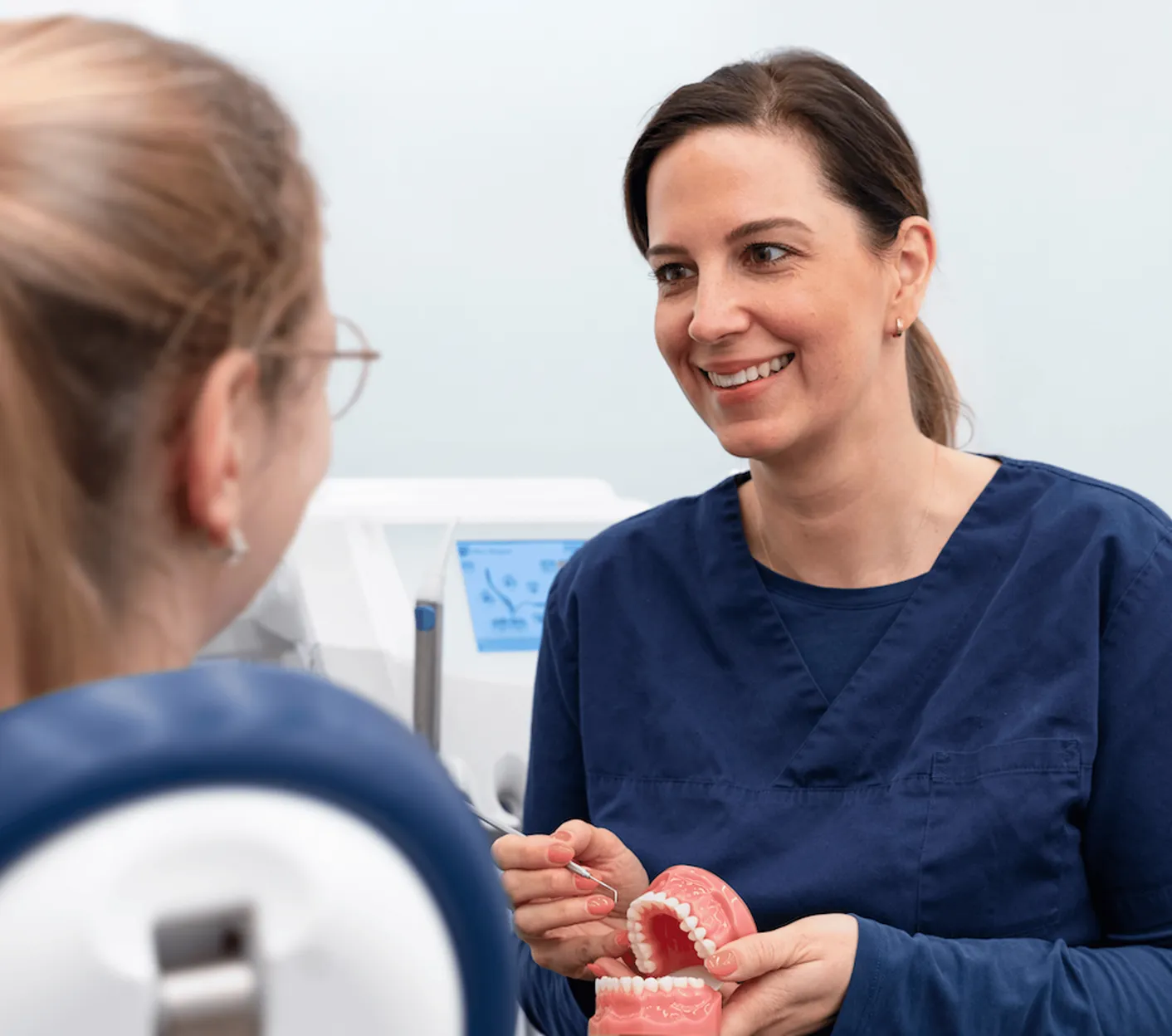
In periodontitis, the tissues that hold the tooth in the jaw become inflamed. As the disease progresses, supporting fibres and bone can be lost. This creates deeper gum pockets; affected teeth can become loose or shift. This is different from simple gum inflammation : it initially affects the gums and is not yet a diagnosis of bone loss.
Possible signs include bleeding gums, receding gums, bad breath or widening gaps between the teeth. The disease can cause few symptoms for a long time. A pain-free tooth is therefore not automatically healthy. Smoking and poorly controlled diabetes affect the risk of developing the disease and should be discussed when your medical history is taken.
Measuring gum pockets is part of the examination. However, a single measurement does not explain all the findings. Only when considered together with bleeding, tooth mobility and, where appropriate, X-rays can the necessary treatment be assessed.
Accidents, teeth grinding and other signs: how to interpret them
After a blow to the mouth, a tooth may be loose, displaced or injured at the root. Have any new tooth mobility following an accident assessed by a dentist on the same day. Even a tooth that looks normal from the outside can be affected. State when the accident happened and say whether your bite has changed since then.
Grinding and clenching can place considerable strain on teeth and existing dental work. Possible accompanying signs include worn tooth surfaces, sensitive teeth and pain in the chewing muscles. However, these symptoms do not prove that grinding is the cause of the loose tooth. The condition of the gums, the tooth substance and the contacts between the teeth when you bite down must also be considered.
A properly fitted bite splint can protect against further strain when the diagnosis indicates one is appropriate. It is no substitute for treating inflamed gum pockets or a tooth injury. You should therefore not buy a splint simply because a tooth is loose without first having the cause assessed.
When is urgent help needed?
Call the dental practice promptly if a permanent tooth has newly become loose, the movement is increasing or chewing has changed. Mention over the phone whether you have pain, swelling or have had an accident. This makes it easier to assess the urgency than simply describing it as a ‘check-up appointment’.
Severe pain, fever, pus or increasing swelling require an urgent dental examination. An infection may need treatment even if painkillers provide temporary relief. If you have difficulty breathing or swallowing, or pronounced swelling in the mouth, immediate medical assistance is required; call 112 in an acute emergency.
If a permanent tooth has been knocked out, prompt treatment is essential. Hold it by the crown and avoid touching the root as far as possible. If it cannot be reinserted, milk can be used as a transport medium. Seek an emergency dental service immediately. A knocked-out milk tooth is not reinserted. Information on where to go can be found under Emergency dentist.
How is a loose tooth examined?
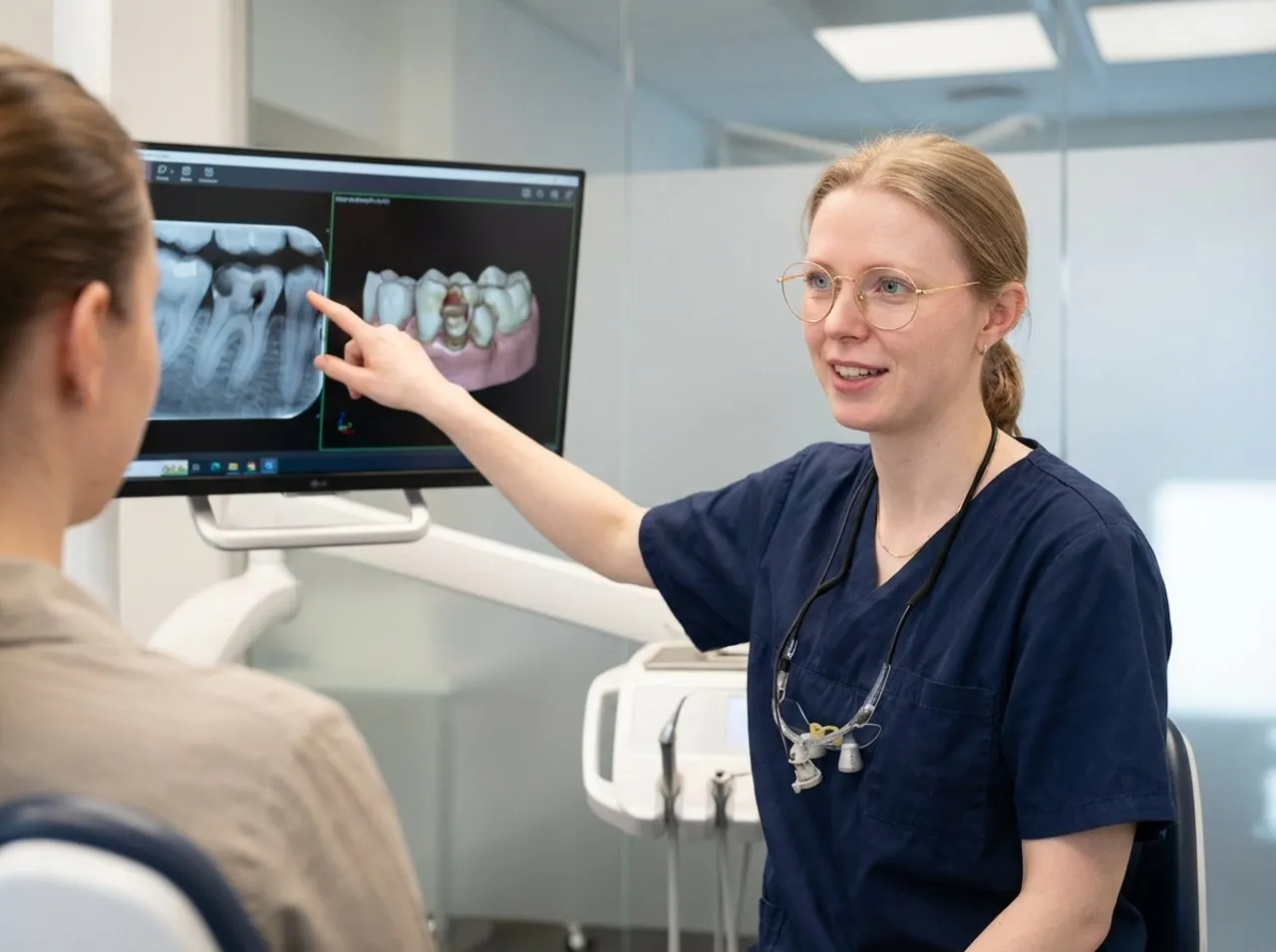
The examination begins with the history of the problem and your medical history. The gums, tooth mobility, existing fillings and the contacts between the teeth when you bite down are then assessed, among other things. If periodontitis is suspected, more detailed measurements of the tooth-supporting tissues follow. X-rays can help assess the bone and root; they are used according to the individual findings.
Bring a list of your medicines and any records of previous dental treatment. If you wear a splint, bring that too. Also make a note of symptoms that may seem minor at first glance: bleeding when brushing, pressure when chewing or a new position of the tooth.
Ask about the underlying cause and the aim of the proposed approach. ‘The tooth is loose’ describes a finding; ‘we are treating the inflammation’, by contrast, identifies a step in the treatment plan. Ask for an explanation of the follow-up checks that will be used to assess subsequent progress.
Which treatment can help?
Treatment for periodontitis includes instruction in oral hygiene, cleaning of the affected root surfaces and subsequent assessment of the result. Depending on the findings, further measures may be required. Periodontitis treatment is based on the overall clinical picture and not solely on the mobility of an individual tooth.
After certain tooth injuries, a dental splint can stabilise the tooth while it heals. Whether it is suitable and how long it is needed depend on the injury. This kind of fixation does not automatically eliminate every cause. Follow-up checks remain important after treatment for an accident as well.
Not every loose tooth has to be removed. Conversely, the appearance of a tooth alone cannot guarantee that it can be saved. Discuss the findings, the possible steps and the limits of treatment. If removal becomes necessary, suitable options for replacing the tooth can then be discussed. Deciding on an implant in advance is no substitute for this assessment.

What you can do before your appointment
Avoid putting unnecessary strain on the affected tooth and choose foods that you can eat without biting down firmly. Maintain your oral hygiene by brushing carefully. Do not apply glue, wire or homemade splints to a loose tooth. Never pull out a permanent tooth yourself.
You can note down three questions for the discussion: What is causing the movement? Which measures are suitable for this tooth? How will we know at the follow-up appointment whether there has been an improvement or further treatment is needed? This turns a general concern into a specific, understandable plan.
Frequently asked questions about loose teeth
No. The decision depends on the cause, the tooth-supporting tissues, the tooth substance and other findings. An examination will determine whether the tooth can be saved and, if so, by which measures.
Yes. Periodontitis in particular can cause few symptoms for a long time. New or increasing mobility of a permanent tooth should therefore be examined.
Have it assessed by a dentist on the same day. Avoid putting strain on it and do not try to secure it yourself. In the event of serious injuries or breathing problems, immediate medical assistance is required.
No. Home remedies or glue do not treat the cause and can cause additional damage. Any stabilisation should be carried out by a dentist.
No. A splint can protect against strain where the findings indicate one is appropriate. However, inflammation of the tooth-supporting tissues or injuries require their own treatment.
No. Loose dental work and a mobile tooth root are different findings. Have the cause examined and do not try to glue the crown back yourself.