
Lower denture will not come out: what to do
A lower denture may suddenly become impossible to remove. This can be alarming. There is usually a mechanism that can be released. Many people then try to prise the denture out. This can quickly injure the mucosa. The denture base can also break.
Über 350 Google-Bewertungen
What to do without causing damage
If your lower denture is stuck, there is usually negative pressure beneath the denture border, too much adhesive cream, or a jammed telescopic or press-stud connection. Rinse with lukewarm water, relax the floor of your mouth, wiggle the denture very slightly from side to side and pull evenly – never use a knife, spoon or force. If you experience pain, bleeding or repeated blockage, have it checked by a dentist.
- Common causes
- Negative pressure beneath the denture border, too much adhesive cream, swollen gums following infections, thick saliva, jammed telescopic components or blocked press-stud attachments.
- First aid
- Rinse with lukewarm water, relax the floor of your mouth, grip the denture on both sides, wiggle it very slightly and pull evenly along the path of insertion; a dry flannel is sufficient to improve your grip – do not use metal instruments.
- When to see a dentist
- If you have severe pain, bleeding, pus or fever, burning with white patches (denture stomatitis), or a fit that remains too tight or too loose.
This does not replace individual advice from a dentist.
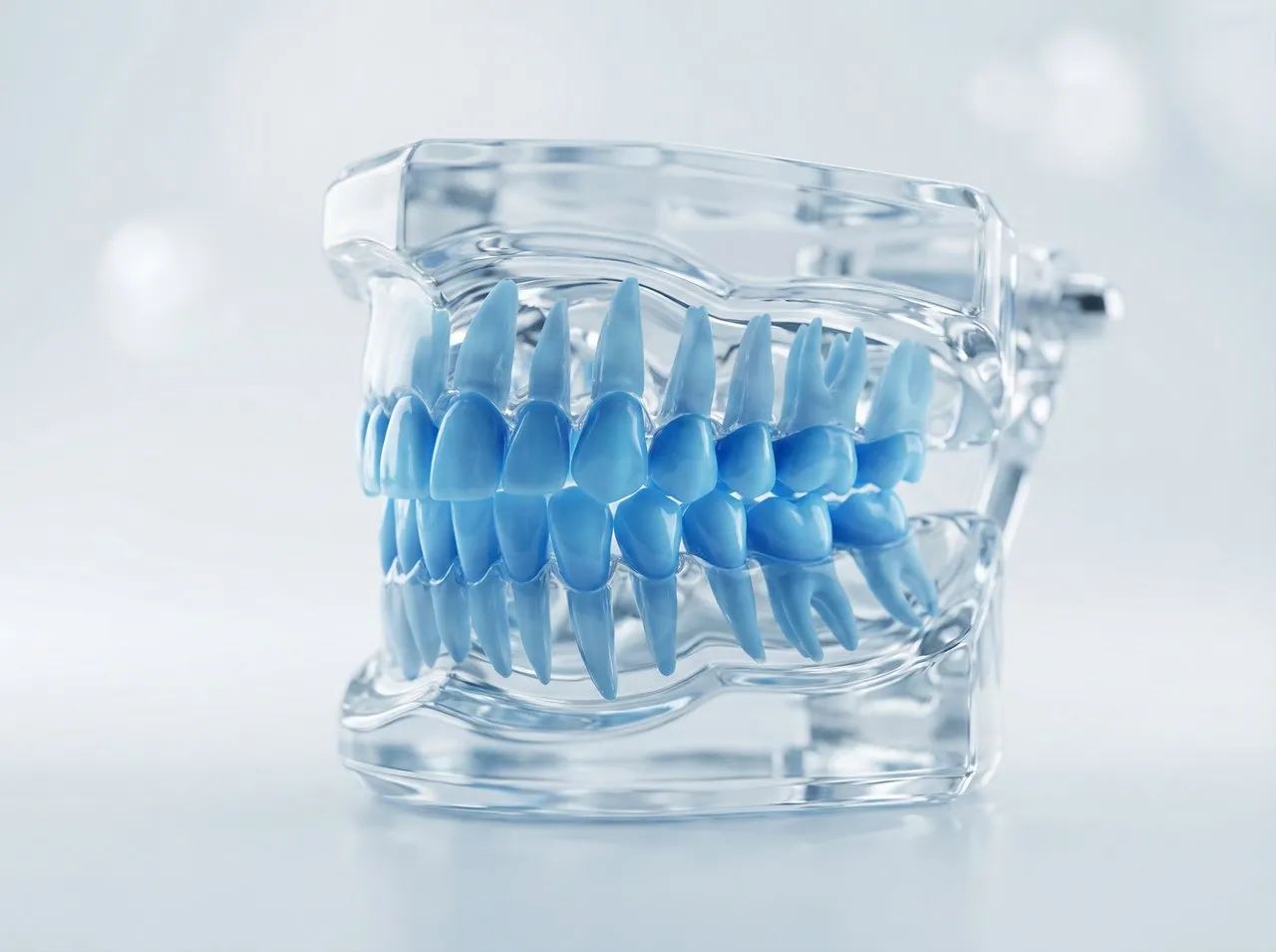
Common causes in the lower jaw
Negative pressure can easily develop beneath the denture border in the lower jaw. A properly formed functional border increases the suction effect. This is often desirable, but can cause a blockage. Adhesives change the adhesion between the denture and the mucous membrane. If too much cream is used, the film becomes viscous. The denture then feels as though it is glued in place. The gums sometimes swell following infections. This changes the undercuts on the alveolar ridge. The denture can then lock into place. Dry mouth is also relevant. The saliva becomes thick. Retention then increases uncontrollably.

First aid: removing a denture safely
Sit in front of a mirror and breathe calmly. Wash your hands thoroughly. Place a towel in the washbasin. Drink some lukewarm water and rinse for 30 seconds. This makes the film of saliva more slippery. Wait a moment and relax the floor of your mouth. Grip the denture on both sides at the border. Wiggle it very slightly to the left and right. Then pull upwards evenly. It is important to release the negative pressure. Carefully allow air to reach the border. A small gap is often enough.
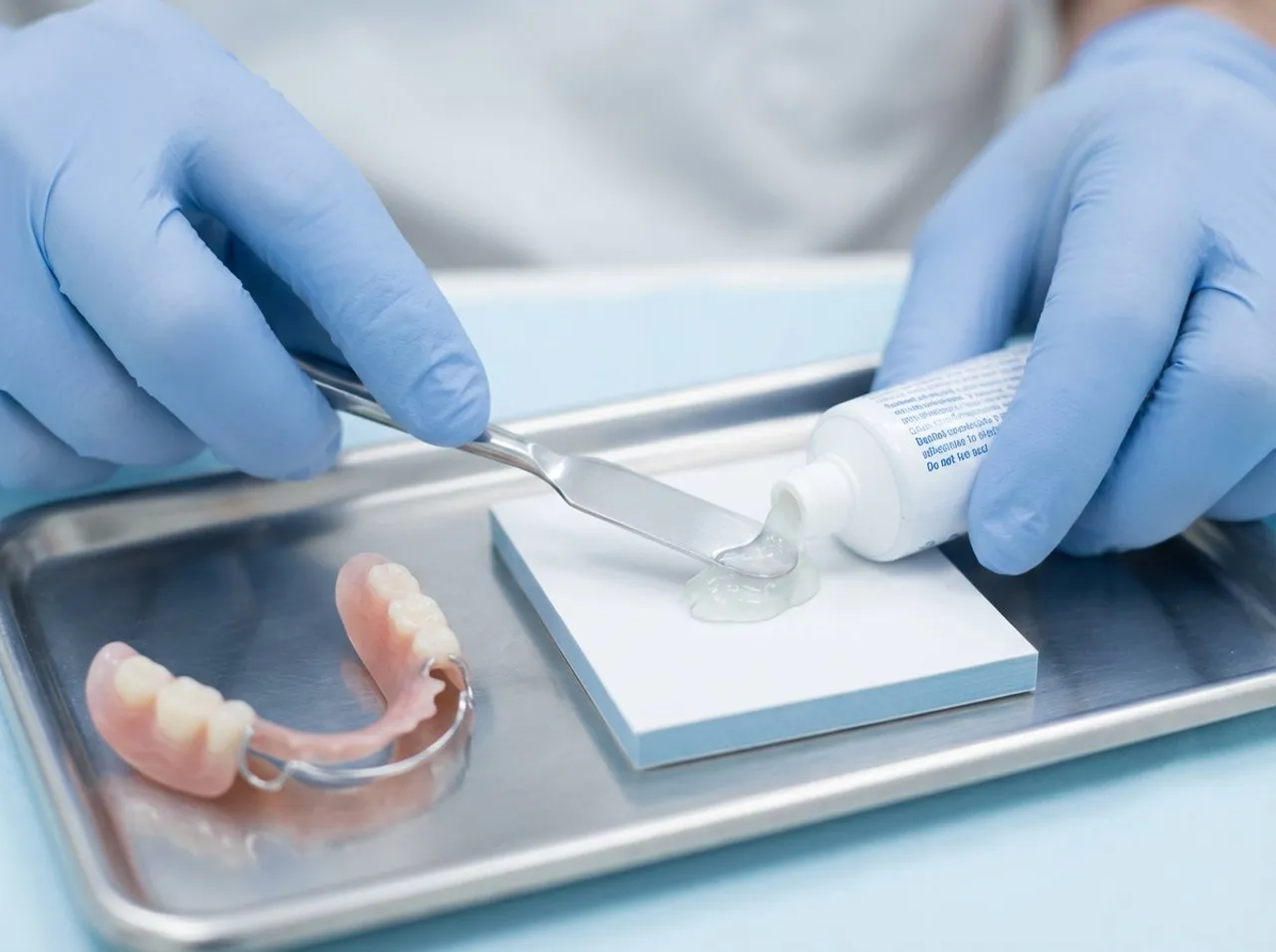
Removing a denture without injury
Avoid jerky movements. This reduces the risk of tears to the mucous membrane. This lowers the risk of inflammation. Do not use knives, spoons or pliers. Metal edges can quickly cut into the mucosa. There is also a risk of fractures to the denture. If you are looking for a tool to remove your denture, remain cautious. Only soft materials that provide a good grip are suitable. A dry flannel is usually sufficient.

When adhesive cream makes the denture ‘stick’
Rinse for longer with lukewarm water. Gently massage your cheek and the floor of your mouth. This often loosens the adhesive film. Only remove adhesive residue after taking out the denture. Do not rub the mucous membrane. Otherwise, pressure ulcers may develop. If you constantly need adhesive, having the fit checked is advisable. Adhesive cream is no substitute for relining. It merely conceals problems with adaptation.
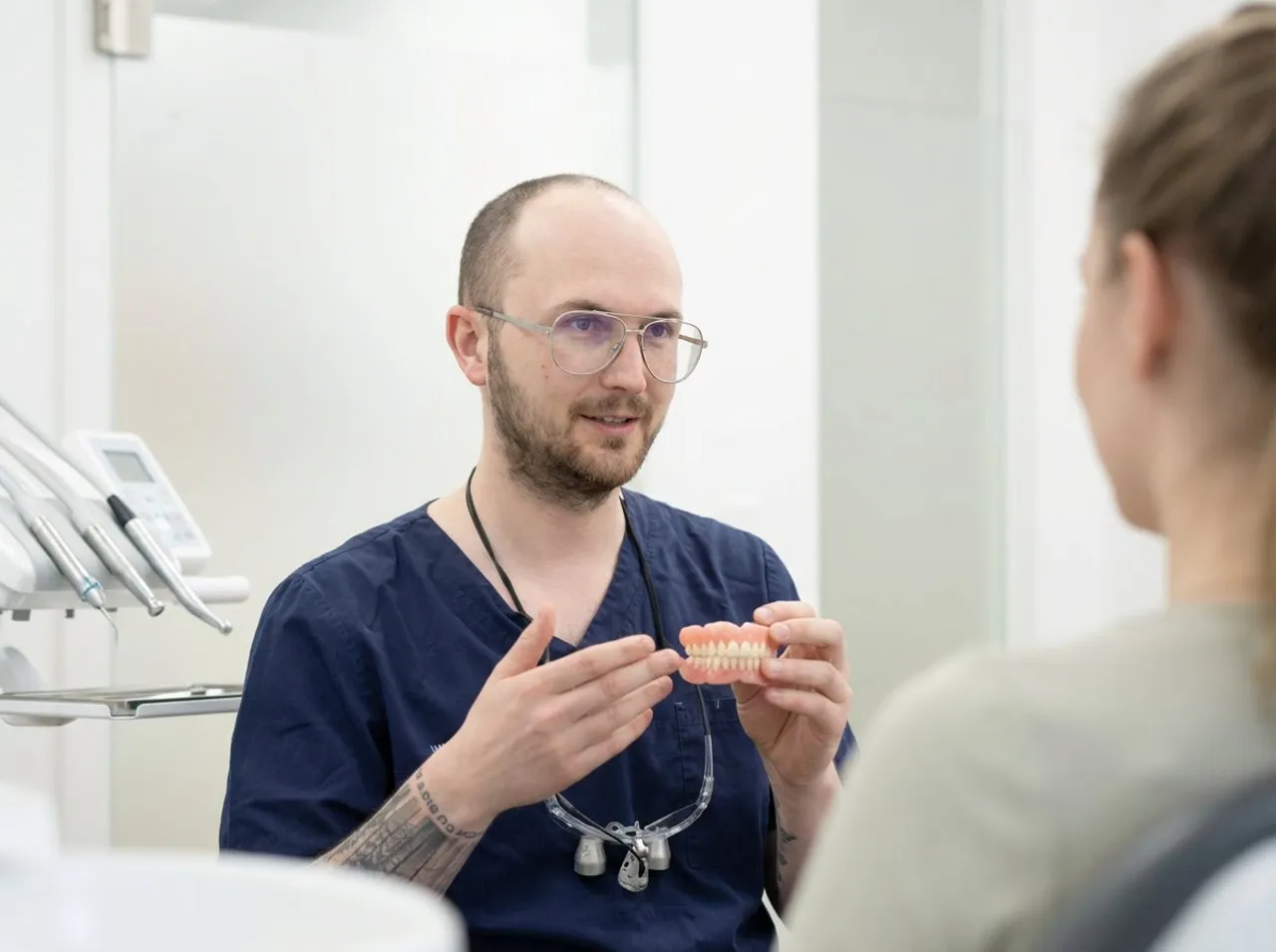
Telescopic dentures: friction and path of insertion
With telescopic dentures, retention is achieved through friction. The direction of insertion is crucial. Even slight deviations cause the denture to bind at an angle. If you want to remove your telescopic denture correctly, pull it along its axis. Use both hands in synchrony. Pulling at an angle impairs parallelism. The rule is: do not use force. Friction often has to be reduced in the laboratory. This is done through controlled adjustment. Many people ask about ‘aids for removing a telescopic denture’. Instruments are rarely needed. If anything, they increase the risk of trauma.
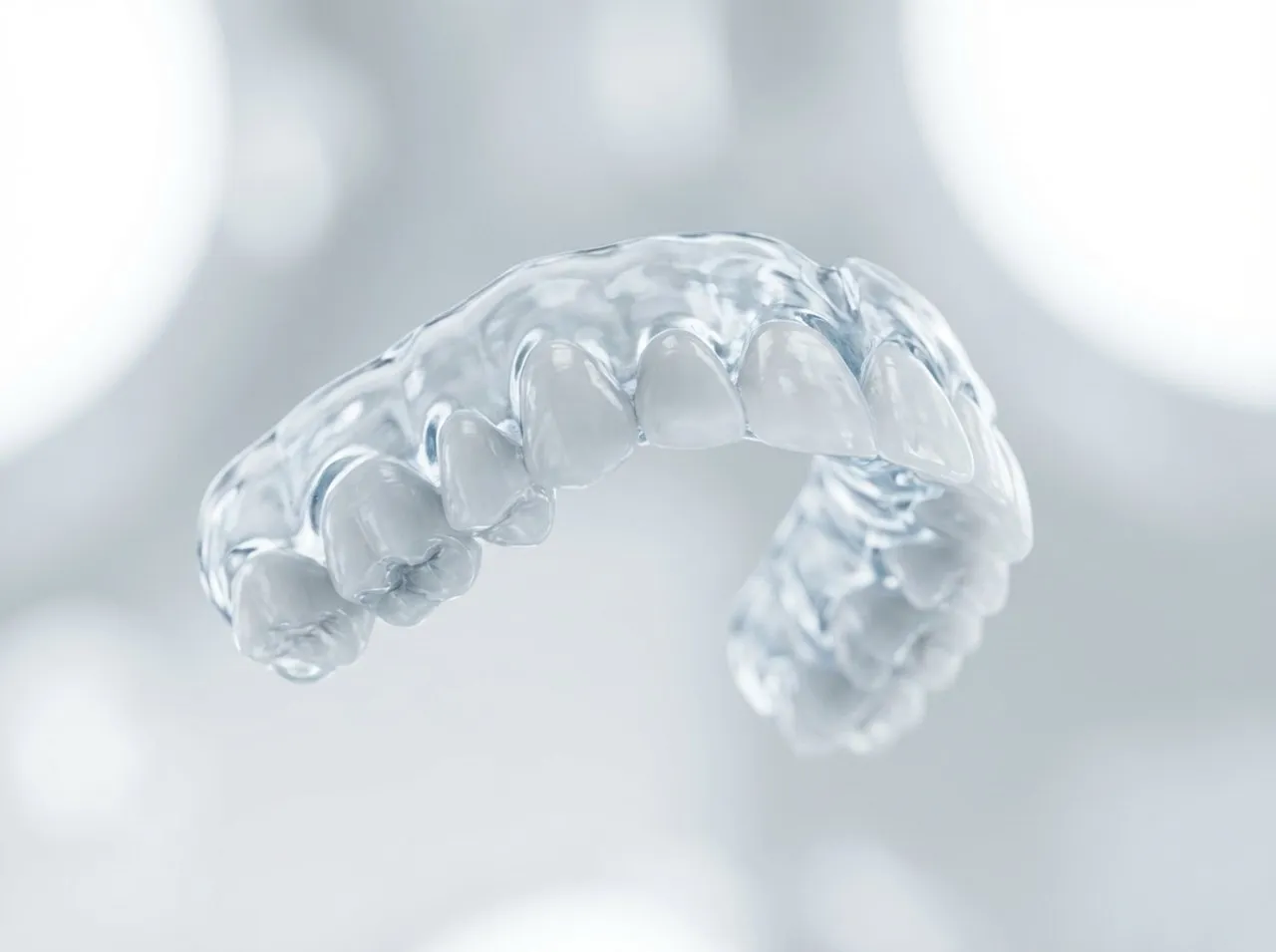
Snap-on denture: blockage caused by deposits or a defect
A snap-on denture works using female and male components. Deposits can block the attachment. Bent parts are also possible. If the snap-on denture will not come out, cleaning often helps. If the blockage persists, it needs to be checked. Sometimes it needs to be replaced.
If the denture is loose or slips when eating
The denture is not always too tight. In some cases, retention is lacking because of jaw ridge atrophy. If a denture does not stay in place when eating, it often tips. Premature contacts increase the leverage. An occlusal adjustment provides stability. In the upper jaw, the border seal is important. A functional impression is then essential.

Warning signs that should be checked by a dentist
Severe pain is not normal. Bleeding, pus or fever are warning signs. If this happens, you should seek help from a dental practice promptly. Look out for burning and white coatings. This may indicate denture stomatitis. Candida is often also involved. If a telescopic denture fits too tightly and causes pressure sores, there is a risk of trauma. The friction then needs to be adjusted. We also check the occlusion.

What we specifically check at the practice
We check the mucous membrane, denture border and denture-bearing tissues. We then assess occlusion and articulation. This enables us to find interfering contacts. We mark pressure points with indicator paste. We then relieve them selectively. Relining is carried out if necessary. With attachments, we check for play and wear. With telescopic dentures, we check friction and parallelism. This makes handling safe again.

Long-term solutions for greater comfort
Sometimes it is advisable to make a new denture. Plastic ages and warps. The fit gradually deteriorates. An implant-supported denture can improve retention. Locator systems are widely used. They significantly reduce strain on the mucosa. At Wunschlachen in Berlin, we advise you on options and costs. This includes payment in instalments. This keeps your treatment predictable.
Conclusion
If your lower denture will not come out, it is important to stay calm. Releasing the negative pressure and gently mobilising the denture usually help. If you experience pain, the cause should be investigated.
FAQ: frequently asked questions
Rinse with lukewarm water. Allow air to reach the border. Then pull slowly and axially.
A jerk can damage the mucosa. Pull evenly and calmly. If it is blocked, seek help.
A dry flannel improves your grip. Thin gloves also help. Metal instruments are strictly off limits.
Telescopic crowns require parallelism. Pulling at an angle quickly causes a blockage. Pull along the path of insertion.
We check the contact surfaces and polish. We then adjust the friction. This is done in a controlled manner.
A hook injures the mucous membrane. There is also a risk of damage to the crowns. A technical adjustment is better.
Deposits block the female and male components. Wear is also possible. Cleaning or replacement helps.
Relining is often necessary. It improves adaptation. Implants help when there is severe bone loss.
Interfering contacts create tipping forces. We correct the occlusion. It then fits more stably.
There is usually strong negative pressure. Adhesives also play a role. At the practice, we release it gently.