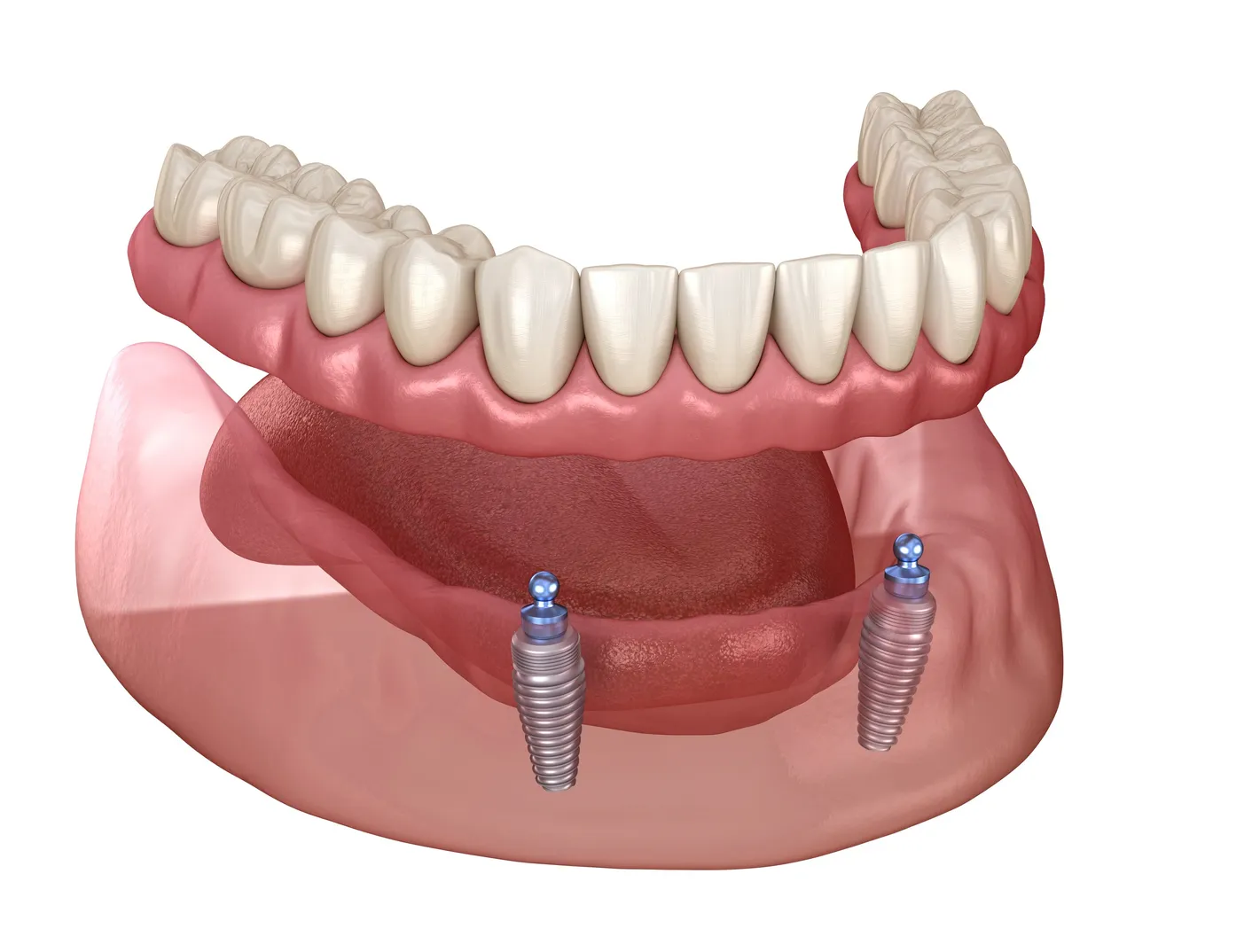
Options for replacing teeth in the lower jaw
High chewing forces act on the lower jaw. The tongue moves every restoration. The supporting surface is often small. The bone is frequently dense. This is good for an implant. At the same time, an important nerve runs through this area.
Über 350 Google-Bewertungen
What is possible?
For the lower jaw, crowns and bridges are options for individual gaps, partial or telescopic dentures for several missing teeth, and full dentures. Because the supporting surface is small and the tongue moves every restoration, full dentures in the lower jaw often fit less securely – implants can significantly improve retention, and two to four are often sufficient. Statutory health insurance pays a fixed subsidy based on the diagnosis.
- Options
- Crown, bridge, partial/telescopic denture, full denture – many variants can be stabilised with implants
- Implants
- Often 2 implants for better denture retention, and frequently 4 implants for very stable solutions
- Statutory insurance cover
- Fixed subsidy based on the diagnosis; higher-quality options usually mean additional costs – details are provided in the treatment and cost plan
Which restoration is suitable depends on the diagnosis, the available bone and your wishes; before treatment begins, you will receive an individual treatment and cost plan.

When tooth replacement in the lower jaw becomes necessary
If a tooth is missing, neighbouring teeth can quickly tilt. Opposing teeth often drift into the gap. This changes the bite. Chewing then becomes strenuous. Many people avoid hard foods. The temporomandibular joint can also be affected.
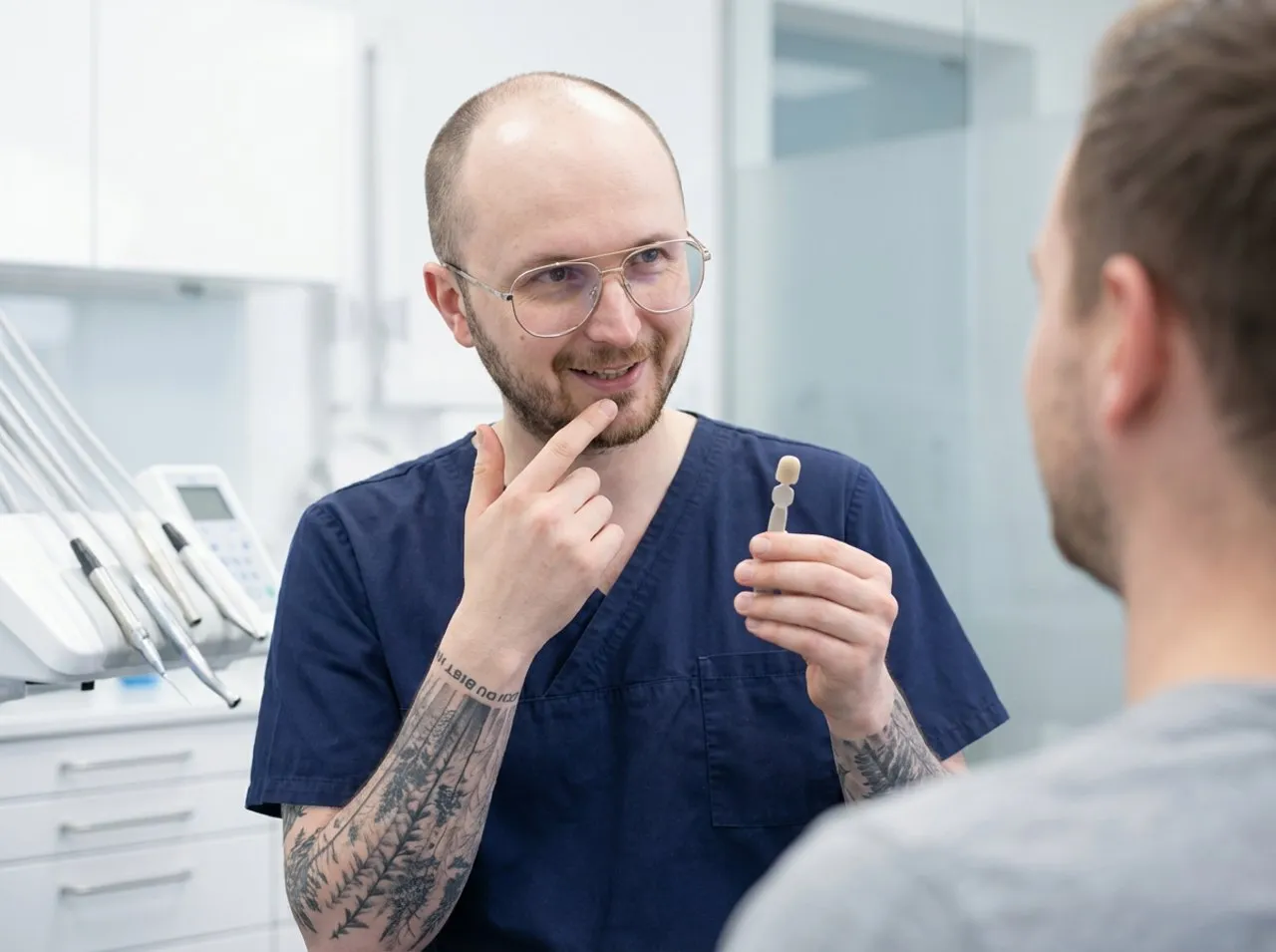
Fixed tooth replacement for individual gaps
A crown is possible for a small gap. It sits on one of your own teeth or on an implant. This usually feels natural. A bridge is another option. It uses the neighbouring teeth as supports. These teeth are ground down for this purpose. An implant-supported bridge protects healthy teeth. It is supported by two implants. This can remain stable for a long time.
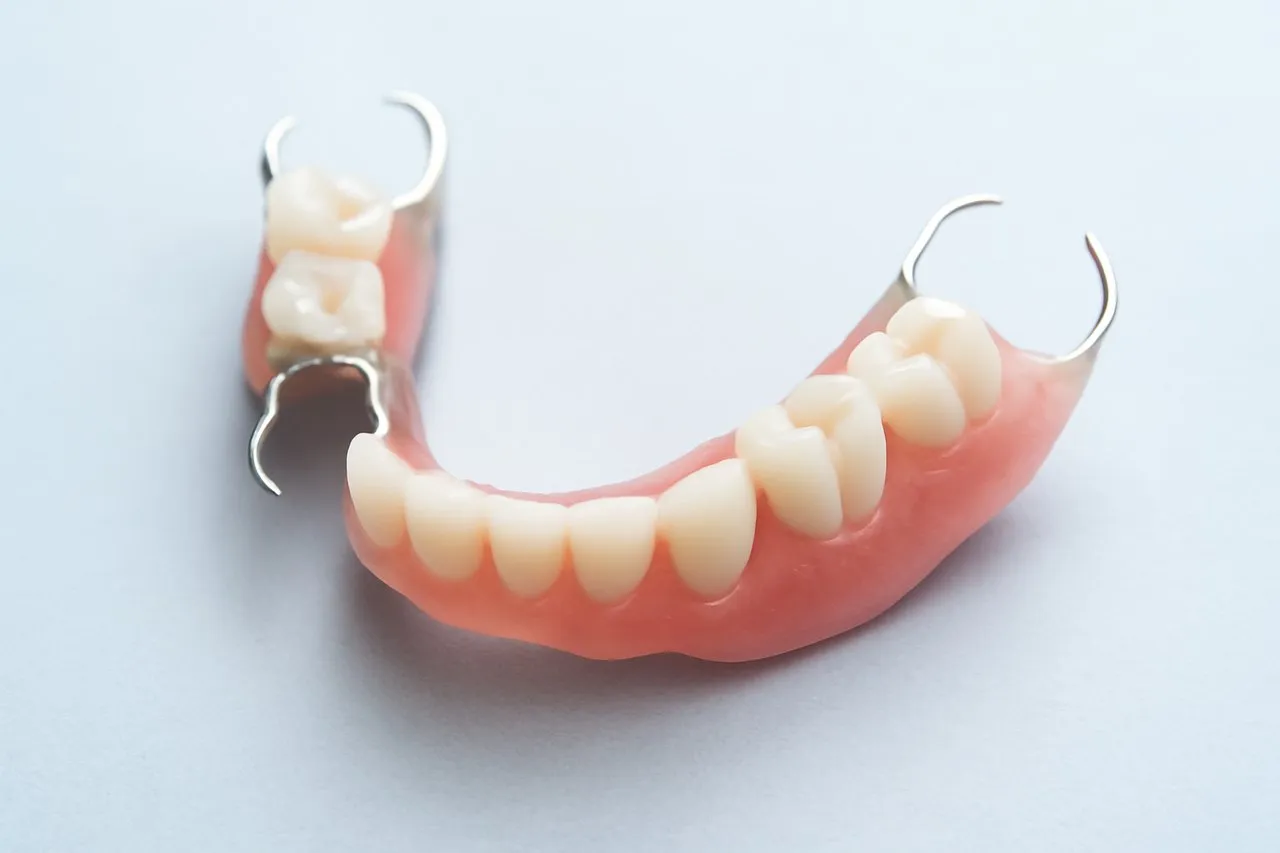
Removable solutions for several missing teeth
A partial denture is often suitable for larger gaps. It replaces several teeth in one piece. It can be removed for cleaning. Clasp-retained dentures are a simple variant. They are functional and usually less expensive. However, some patients are bothered by visible clasps. Telescopic dentures often offer greater comfort. They sit on double crowns. This creates a more secure feel.
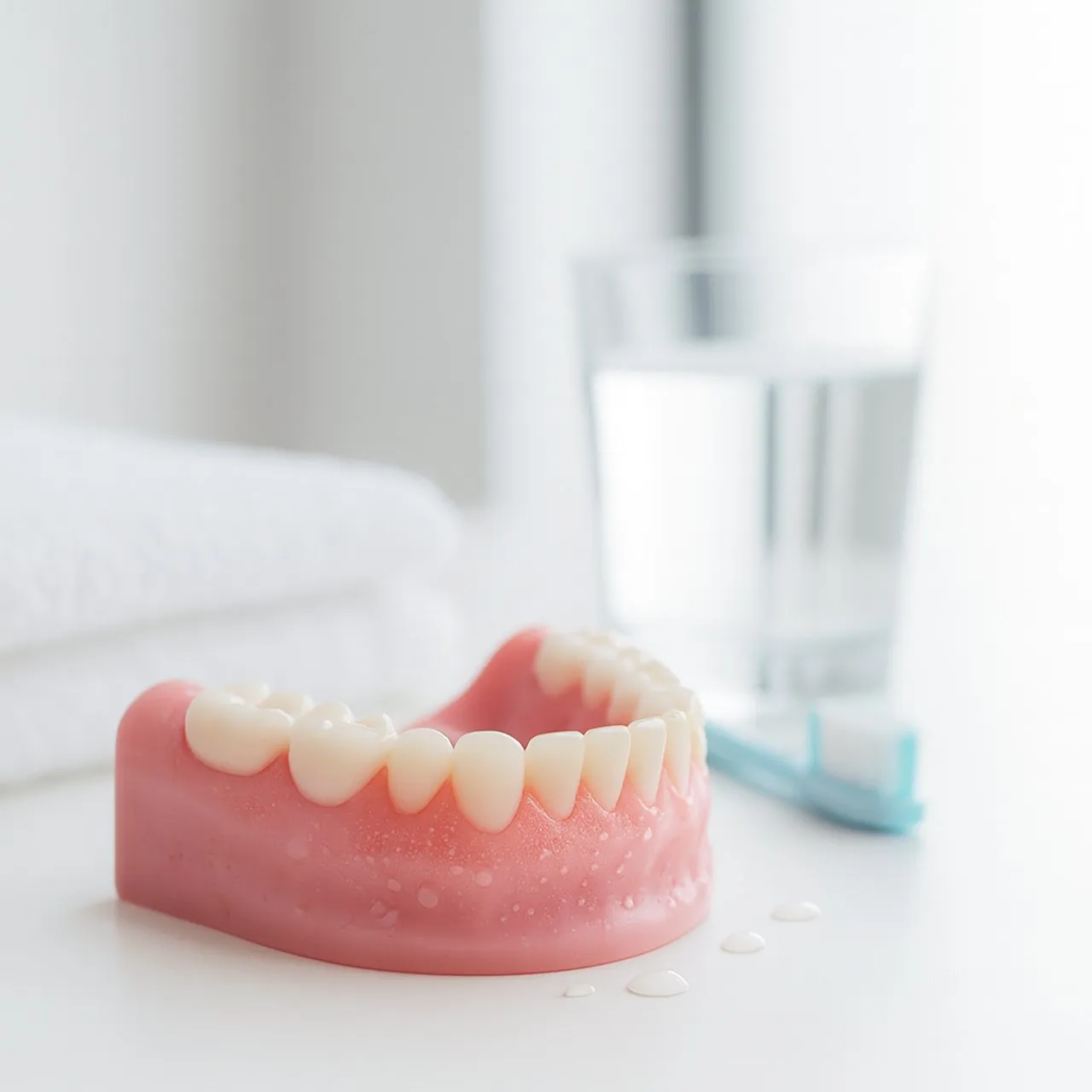
Full denture in the lower jaw
If all teeth are missing, a complete denture may be an option. Retention is often limited in the lower jaw. The denture may move when speaking. Denture adhesives can help for a short time. However, they do not address the underlying cause. Otherwise, pressure sores remain an issue.
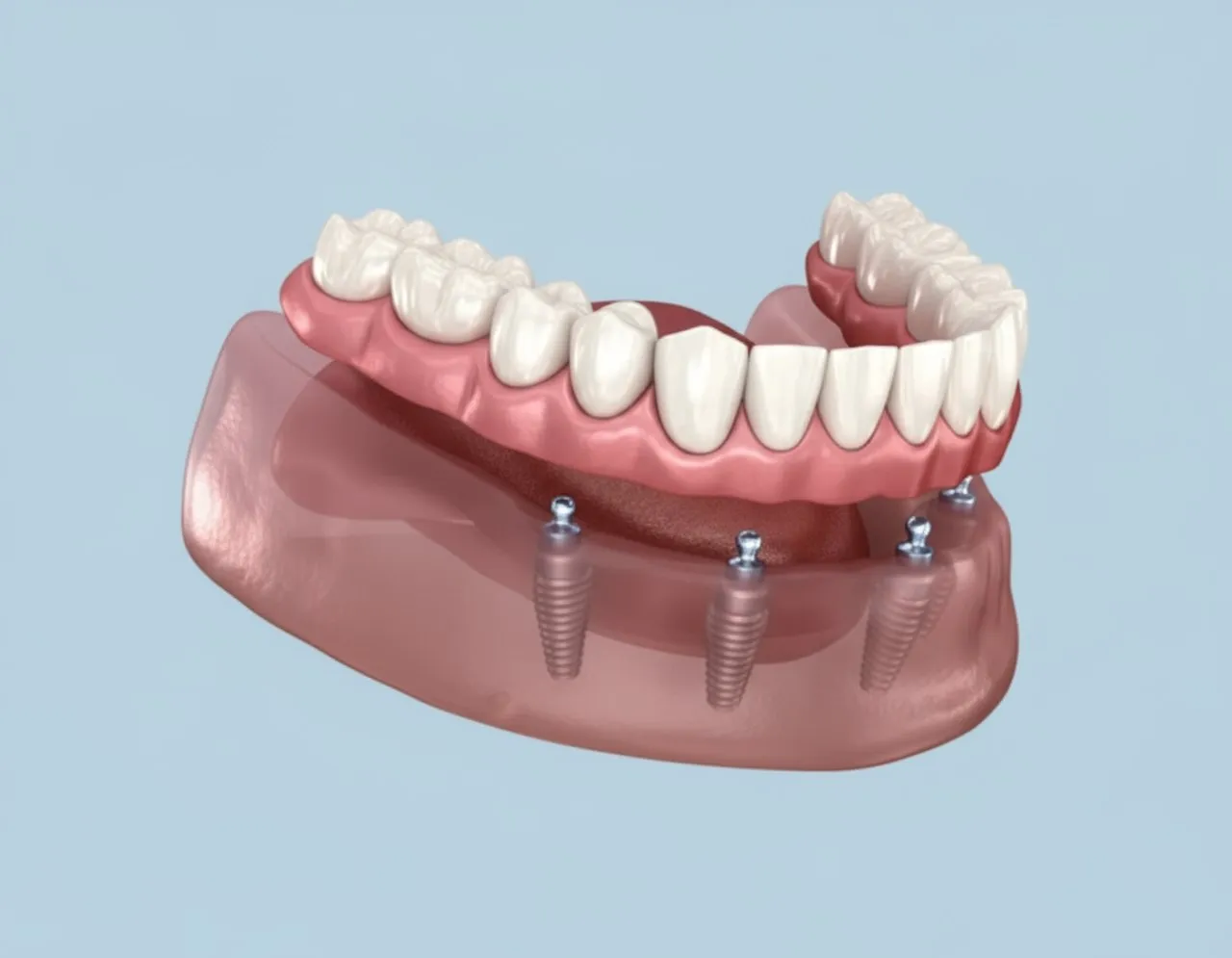
Implant-supported denture for better retention
Even two implants significantly improve the fit. Locator attachments or snap attachments are often used. The denture then clicks securely into place. For patients with higher expectations, a bar-retained denture may be suitable. A bar connects several implants. The denture is guided by it. With four implants, even greater stability is often possible. Sometimes even a fixed bridge is feasible. This depends on the bone and the bite.
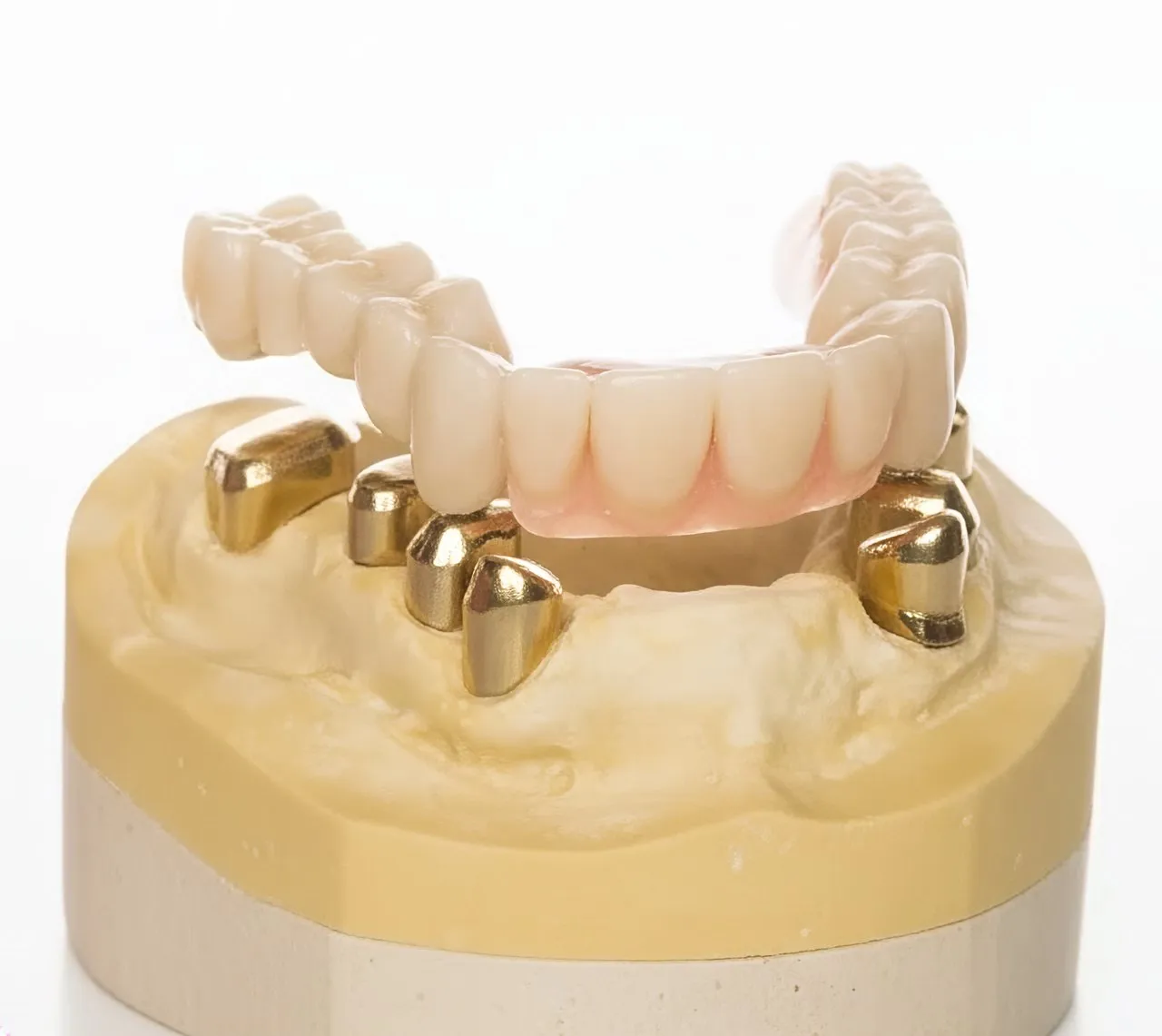
Retaining elements: locators, bars and ball attachments
Locator elements are small and tried and tested. They are easy to clean. Wearing parts can usually be replaced. Ball attachment systems work in a similar way. They are robust and cost-effective. Under heavy loading, new plastic parts are occasionally needed. Magnetic anchors are less common. They make it easier to insert the denture. Retention is usually lower than with a bar.
Temporary restoration and implant healing period
After implantation, the bone needs time. This phase is called the healing phase. It often lasts several weeks. A temporary restoration is possible during this time. It protects the wound when chewing. At the same time, the appearance is preserved.
Which solution suits which diagnosis
For the loss of a single tooth, an implant is often ideal. It loads the bone like a root. This can slow down bone loss. When several teeth are missing, the remaining teeth are important. Good supporting teeth favour telescopic restorations. Few supporting teeth make implant supports more likely. For patients with no teeth, an implant-supported denture is frequently the best choice. It improves chewing comfort and confidence. Many people return to eating a more varied diet.

Bone, inflammation and preliminary treatment
Bone is lost after tooth loss. This also happens in the lower jaw. Bone augmentation is therefore sometimes necessary. Inflammation must be treated beforehand. This applies to periodontitis and retained roots. Teeth grinding should also be taken into account.

Costs, subsidy and financing
Statutory health insurance pays a fixed subsidy. It depends on the diagnosis. This partially covers standard care. Greater comfort usually means costs that you must pay yourself. This applies to ceramic, telescopic restorations and implants. A treatment and cost plan provides clarity. Payment in instalments can spread the financial burden. This means less need to postpone treatment. We explain the terms transparently.
The treatment process at Wunschlachen in Berlin
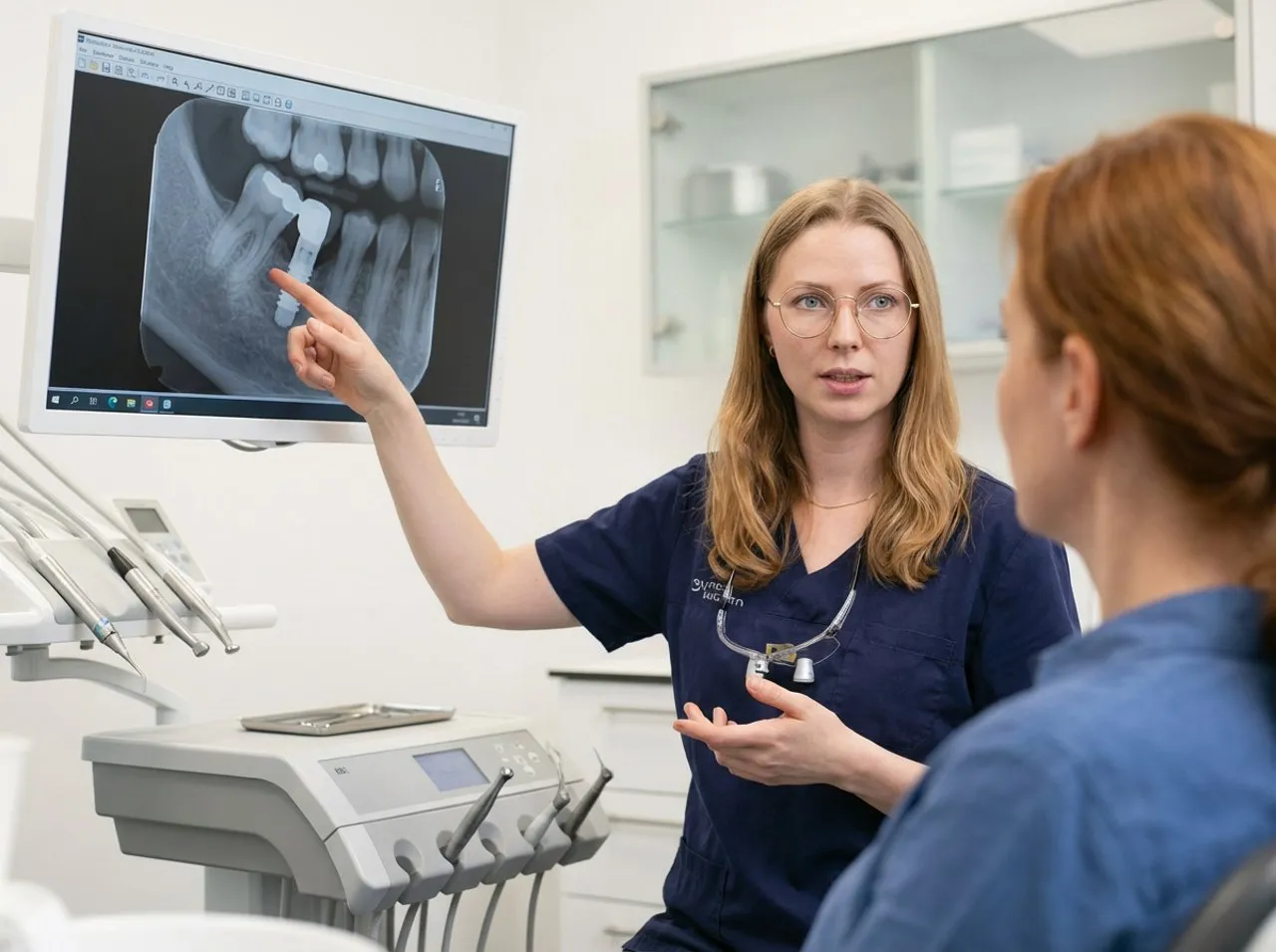
First, we examine your teeth, gums and bite. This is usually followed by a digital X-ray. If necessary, we use 3D diagnostics. We then discuss all the options for the lower jaw. We compare retention, aesthetics and care. You can choose at your leisure. Follow-up appointments take place after treatment. We check pressure points and contact points. This keeps the restoration stable.
Care and aftercare
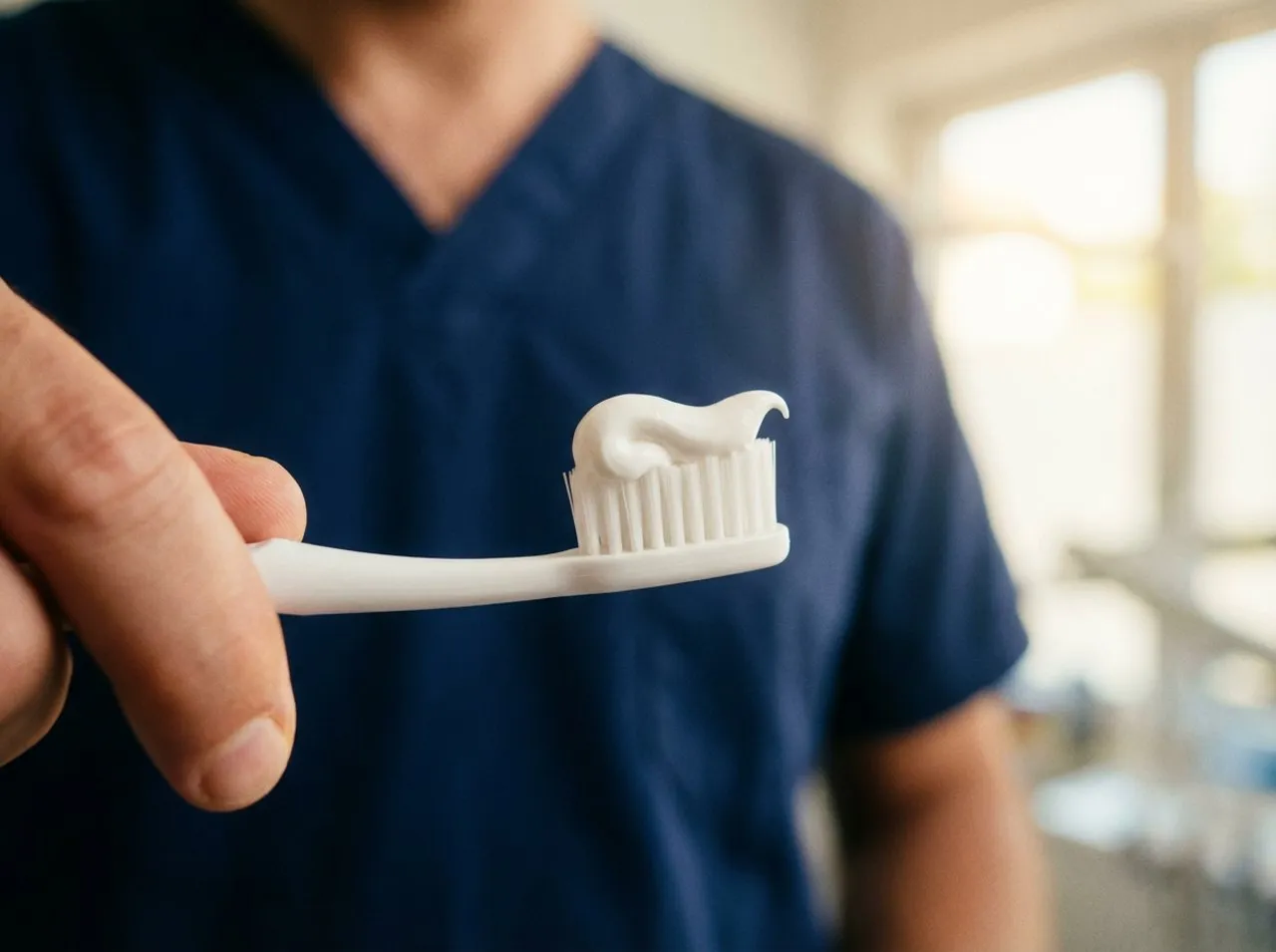
Fixed solutions require good cleaning between the teeth. Interdental brushes are often useful. Preventive care appointments protect the gums. Dentures should be cleaned daily. Use a denture brush and mild soap. Hot water is unsuitable. If the restoration becomes loose, please come in early. Small adjustments help quickly. This helps you avoid inflammation.
Conclusion
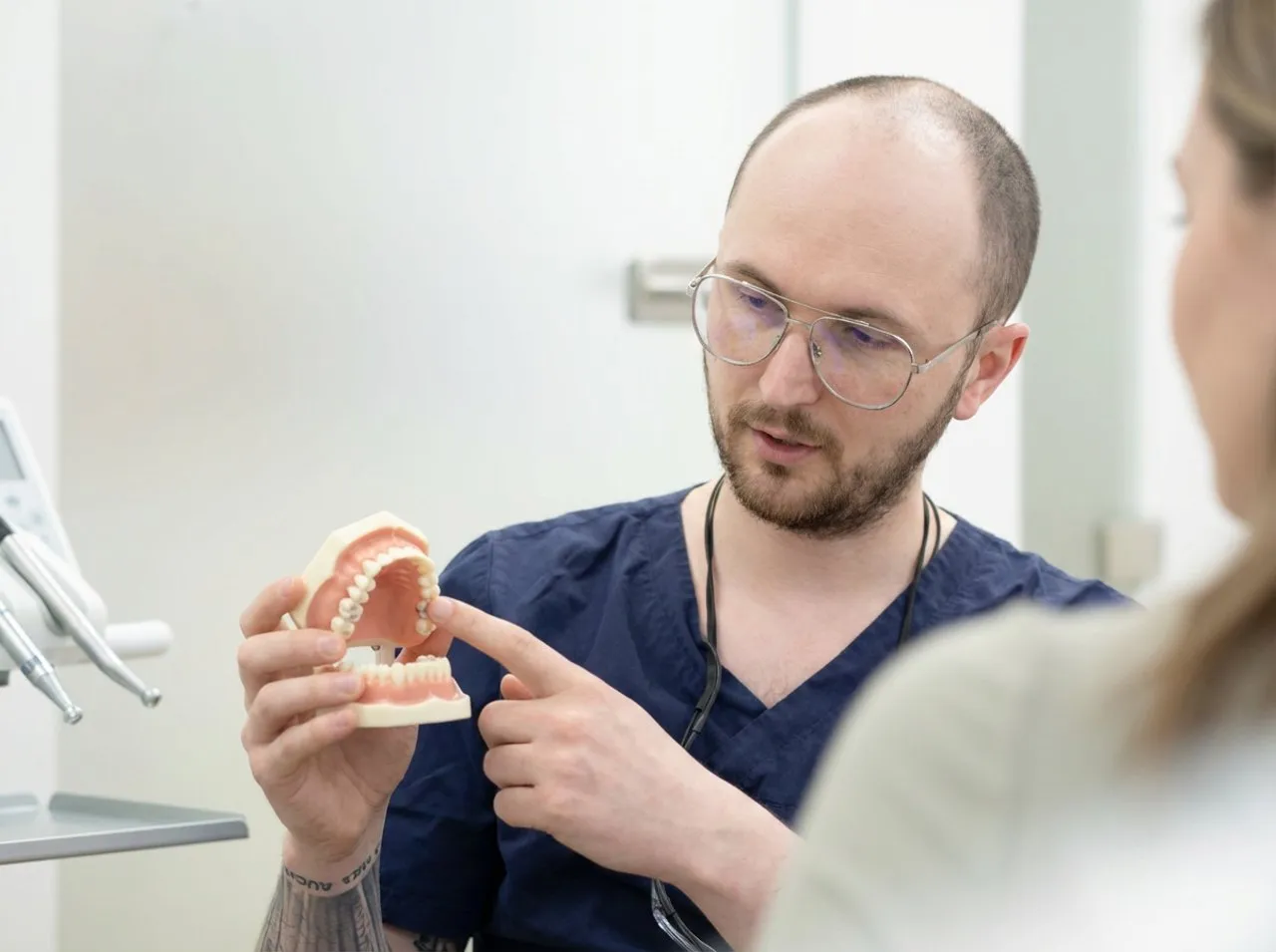
There are many options for tooth replacement in the lower jaw. The best choice depends on the findings and the goal. With planning, the treatment is reasonably predictable.
FAQ – Frequently asked questions
Typical options are a crown, bridge, partial denture and full denture. Many variants can be stabilised with implants. We assess what suits you.
The supporting surface is smaller than in the upper jaw. The tongue constantly acts on the denture. This means it can tip more easily.
It is often a very good solution for a single-tooth gap. It can also significantly stabilise dentures. Sufficient bone and good hygiene are required.
A partial denture is often retained with clasps or attachments. A telescopic denture uses double crowns for guidance. It usually feels more secure.
Two implants are often enough to improve retention. Four are frequently used for very stable solutions. The number depends on the bone and budget.
A bar connects several implants. The denture slides onto the bar. This provides very good retention.
There is a fixed subsidy based on the diagnosis. It also applies to lower-jaw restorations. Higher-quality options usually mean additional costs.
It lists the diagnosis, treatment and costs. You can see the subsidy and the amount you must pay yourself. This allows you to make a well-informed decision.
Clean thoroughly between your teeth every day. Use interdental brushes and suitable dental floss. Regular check-ups are important.
Come to the practice promptly. We adjust the affected areas precisely. Waiting usually makes the mucous membrane more sensitive.