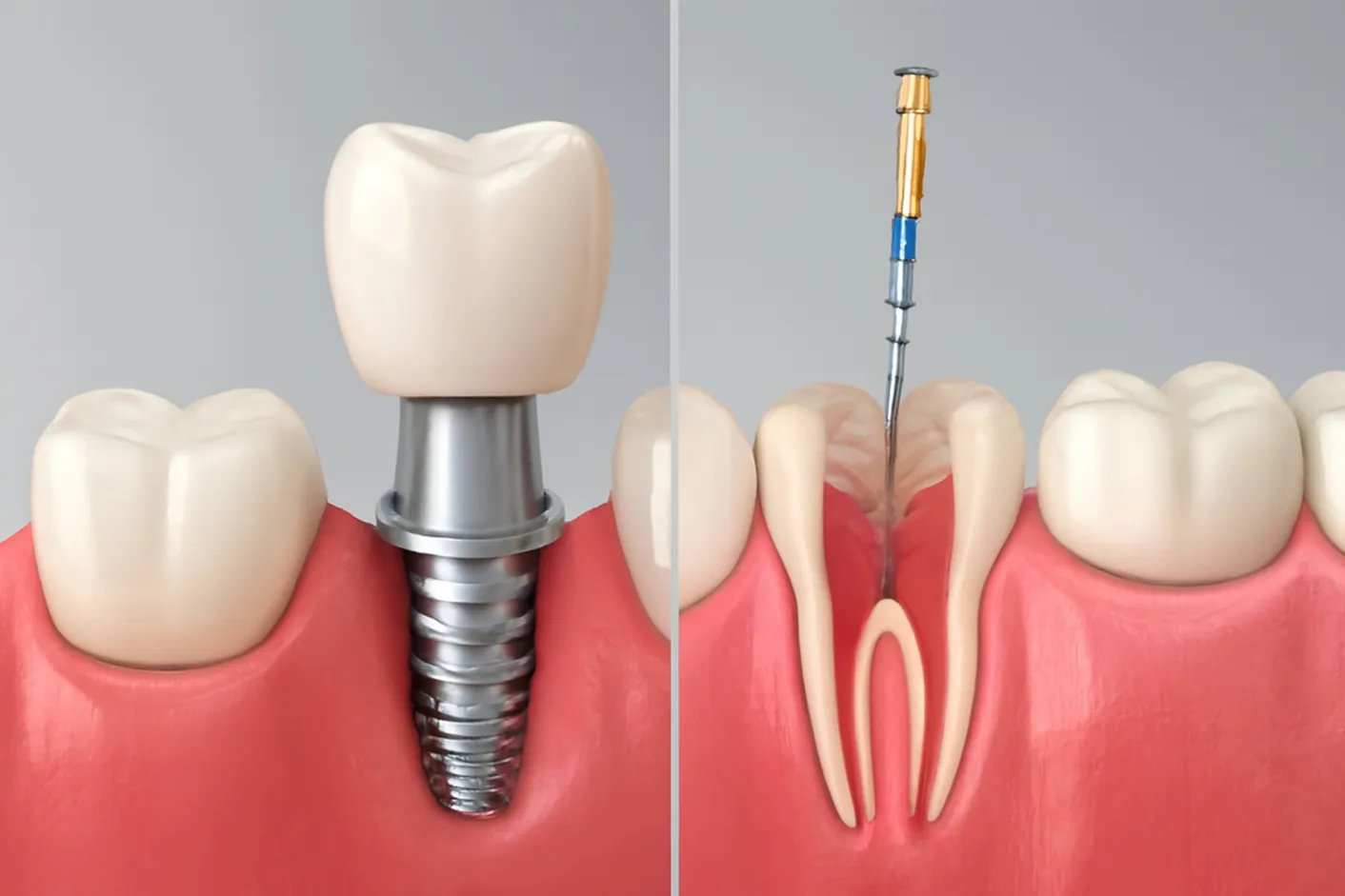
Root Canal Treatment or Implant – What Is the Best Option?
Choosing between root canal treatment and a dental implant is a challenge for many patients. Each option offers specific benefits, but also has its own risks and requirements. In this article, we take a detailed look at both treatment methods...
Über 350 Google-Bewertungen
Root canal treatment or an implant – which is better?
Root canal treatment preserves your natural tooth, is less invasive and usually less expensive – it is suitable if the tooth is still largely intact and well anchored. An implant replaces an irreparably damaged tooth with an artificial root, stimulates the jawbone and can last for many years with good care, but requires surgery and a healing period of several months. The choice depends on the individual clinical findings.
- Root canal treatment
- Preserves your natural tooth, less invasive, shorter healing time – advisable if the remaining tooth structure is still largely intact and well anchored.
- Implant
- Replacement for an irreparably damaged tooth; a stable, long-lasting solution that stimulates the bone, but surgery is required and the healing phase lasts several months.
- Costs
- Implants are generally more expensive than root canal treatment; an individual treatment and cost plan is provided before treatment begins.
Which option is suitable depends on the individual clinical findings following dental diagnosis; this does not replace a personal consultation.
Video laden
Mit Klick wird eine Verbindung zu TikTok hergestellt.
Root canal treatment: trying to save your natural tooth
Root canal treatment is a tried-and-tested method of saving a diseased tooth. It is generally carried out when the inside of the tooth, known as the dental pulp, is inflamed or infected.
This infection can be caused by tooth decay, repeated dental procedures or trauma. The aim of root canal treatment is to preserve the tooth by removing the inflamed or dead tissue. The cavity is cleaned and sealed. A significant advantage of root canal treatment is that the natural tooth is retained. This means that the tooth's natural functions, such as chewing, can largely be maintained. Compared with other treatment options, such as a dental implant, this is often the more cost-effective option. In addition, the jawbone is not affected in the way it is during dental implant placement. However, root canal treatment is not always a lasting solution. If inflammation persists or recurs, or if the damage is too severe, further assessment is needed and it may no longer be possible to save the tooth. Depending on the tooth's restorability and prognosis, options include endodontic reassessment and, where appropriate, retreatment or, if the tooth cannot be saved, extraction. If extraction is necessary, an implant is one of several replacement options. Root canal treatment also requires careful aftercare, as complications can otherwise occur.
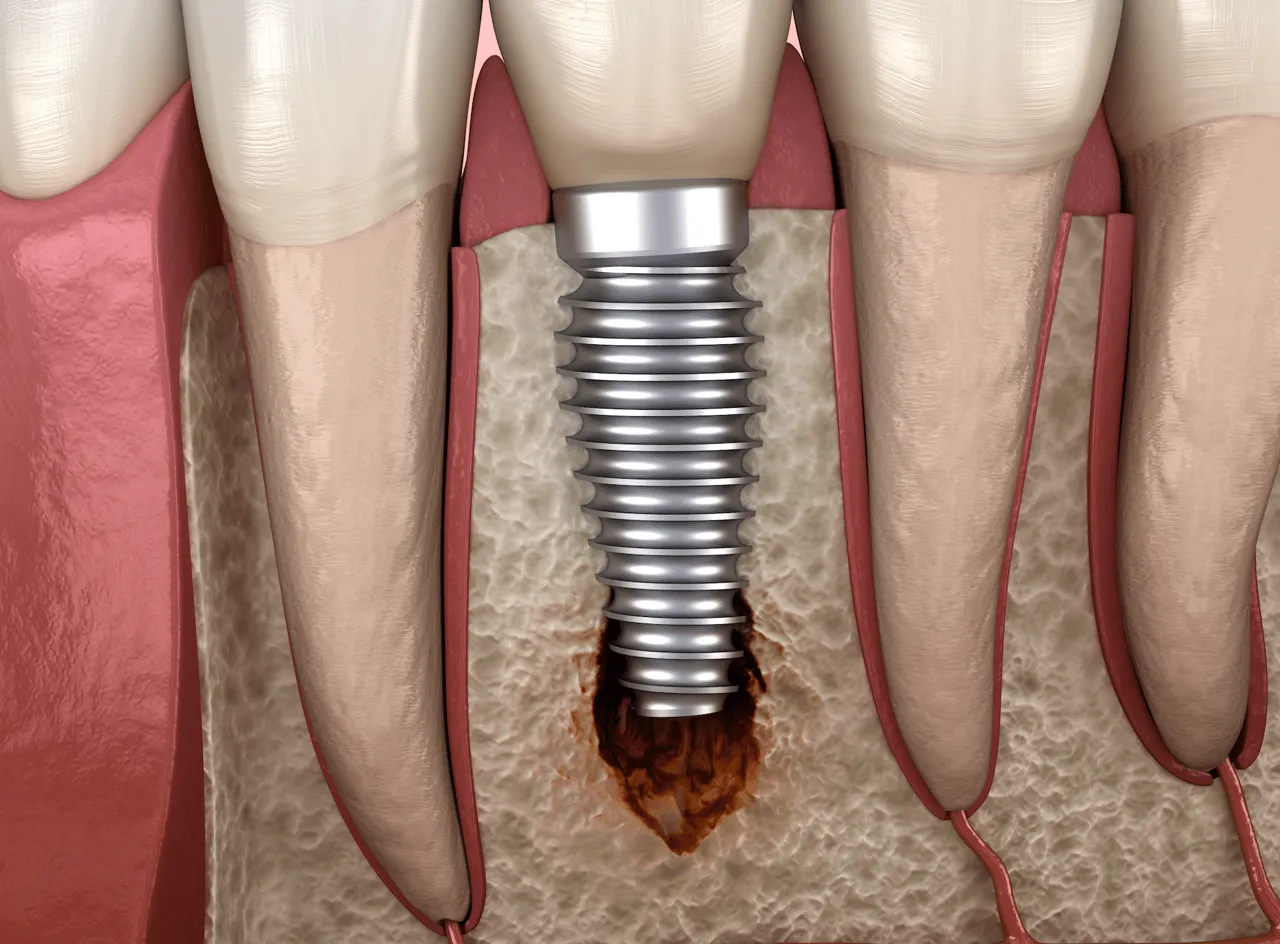
Dental implant: the long-term replacement
A dental implant is an artificial tooth root that is inserted into the jawbone. A crown, which looks and functions like a natural tooth, is placed on this implant. Implants can offer a durable solution for the loss of a tooth, although their longevity depends on individual anatomy, health and maintenance. They can be a particularly good option when the patient's own tooth is damaged beyond repair. One advantage of a dental implant is that it provides an extremely stable and durable solution. With proper care, an implant can last for many years or even decades. This is where an implant differs from conventional tooth replacement options, such as a bridge or a crown. In addition, a dental implant stimulates the jawbone. Depending on individual anatomy, health and maintenance, this may help preserve local bone and reduce the bone loss that can occur in a gap where no implant has been placed. However, one disadvantage of dental implants is the invasive procedure. An operation is required to insert the implant into the jawbone. This can lead to complications such as infections or nerve damage, although such cases are rare. In addition, the process of placing an implant is time-consuming. It can take several months for the jawbone to fully fuse with the implant. Furthermore, dental implants are generally more expensive than root canal treatment. This makes them a less attractive option for some patients.

When is root canal treatment the better choice?
Root canal treatment is generally the preferred treatment when the tooth is still largely intact. It is particularly suitable for teeth that are still well anchored in the jaw. The pulp cavity may be infected, but without serious structural damage. For young patients with immature permanent teeth, a specific assessment of the pulp and root development is needed to determine whether root canal treatment or another approach is appropriate; suitability should not be based on youth or incomplete development alone.
Another advantage of root canal treatment is that it is less invasive than dental implant placement. The treatment is completed more quickly and the healing time is shorter. So if you would prefer to avoid a more extensive procedure or have a less severely damaged tooth, root canal treatment may be worth considering.

When is a dental implant the better choice?
A dental implant may be a suitable option when a tooth is damaged beyond repair. It can also be an effective solution where a tooth has been completely destroyed by trauma or tooth decay. If a tooth is missing or needs to be extracted, an implant can replace it. Dental implants can be particularly advantageous when aesthetic considerations are a high priority. Implant-supported restorations can look very similar to natural teeth, and implants can provide a durable solution for tooth replacement, although outcomes depend on individual anatomy, health and maintenance. Depending on these factors, they may also help preserve local jawbone and limit bone loss.

Conclusion: implant or root canal treatment – which is the best choice?
The decision between root canal treatment and a dental implant depends on various factors. Root canal treatment is advisable when the tooth is still largely healthy. It offers a more cost-effective and less invasive solution for preserving the tooth.
A dental implant, on the other hand, may be the better choice when a tooth is too severely damaged to be saved. Implants can provide a durable solution and may help preserve local bone, depending on individual anatomy, health and maintenance, but involve higher costs and a more invasive procedure. If previous root canal treatment has not resolved the problem, endodontic reassessment and possible retreatment should be considered based on the tooth's restorability and prognosis; extraction is not automatically required. If extraction is necessary, there are replacement options other than an implant. Ultimately, you should make the decision in consultation with your dentist. Professional advice can help you choose the best option for your individual situation.
Frequently asked questions (FAQ)
Root canal treatment is performed to save a diseased tooth by removing the inflamed or dead tissue. A dental implant is an artificial tooth root that is placed in the jawbone to replace a missing tooth.
Healing after root canal treatment generally takes between one and two weeks. However, it can take several months for the tooth to become fully stable.
With proper care, a dental implant can last many years, often even decades. Its longevity depends on factors such as oral hygiene and bone structure.
Anaesthesia is generally used during the treatment itself, so the root canal treatment can be carried out painlessly. After the procedure, mild pain or a feeling of pressure may occur. This usually subsides within a few days.
Root canal treatment is generally less expensive than a dental implant. The price varies depending on the tooth and the amount of work involved, but dental implants are more expensive because of the surgery and materials.
A dental implant may be a suitable option when a tooth is damaged beyond repair or is already missing. If root canal treatment is unsuccessful, endodontic reassessment and possible retreatment should be considered according to the tooth's restorability and prognosis. Extraction is not automatically necessary; if the tooth does need to be extracted, an implant is one of several replacement options.
The entire dental implant process generally takes several months. First, the implant must be placed in the jawbone. The bone must then fully integrate with the implant before the crown can be fitted.
Yes, dental implants can also be placed without prior root canal treatment, for example if a tooth has been completely extracted or is irreparably damaged.
The risks of root canal treatment are generally low. However, infections, recurrent inflammation or complications during healing may occur.
Dental implants can offer a durable solution and may help preserve local jawbone, depending on individual anatomy, health and maintenance. Unlike bridges, which can affect neighbouring teeth, an implant replaces only the affected tooth.