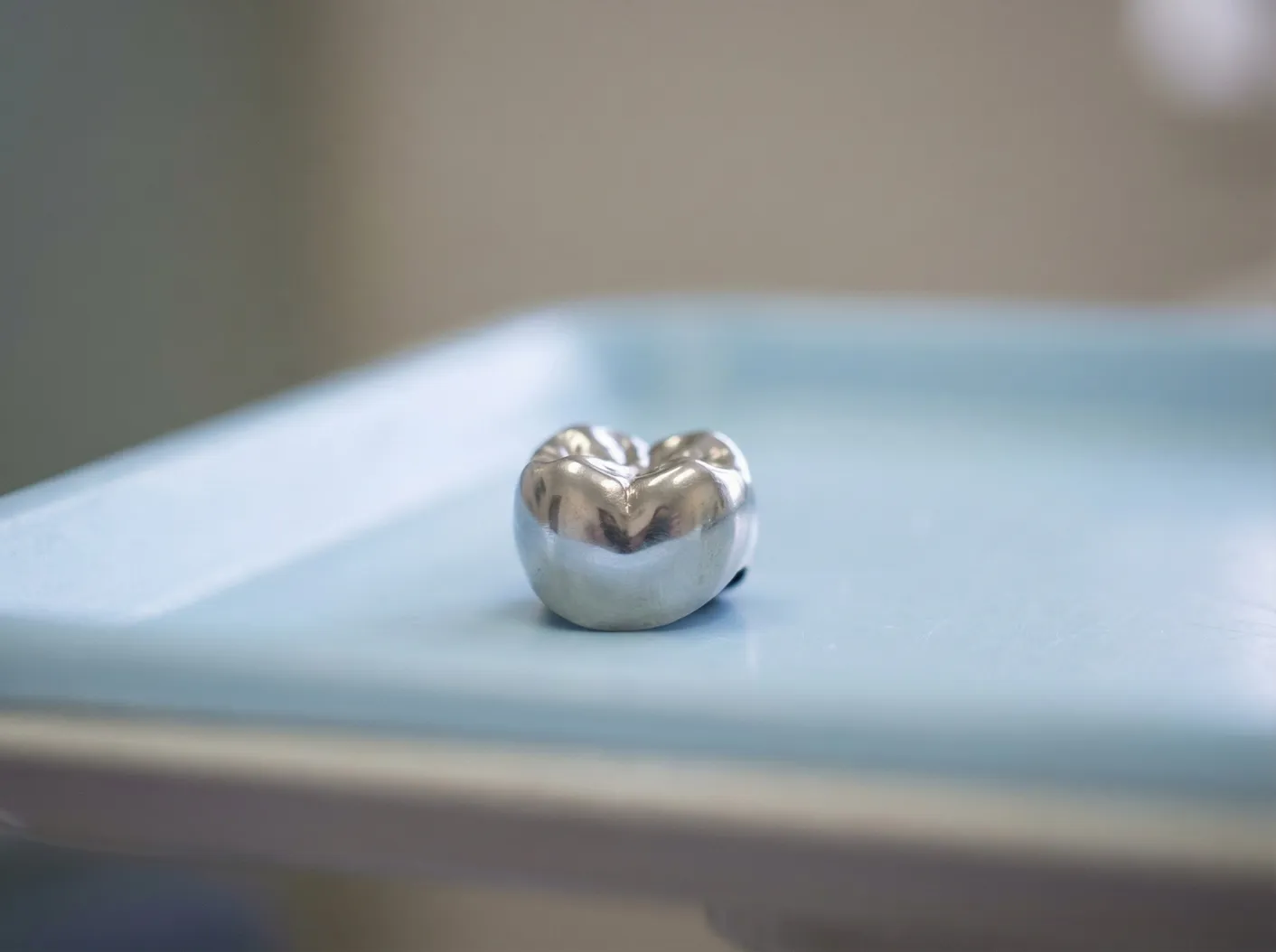
Silver dental crown: benefits, risks and costs
A silver-coloured dental crown is usually a metal crown made from non-precious metal. It protects severely damaged teeth, is robust and is often less expensive. We explain the material, durability, possible allergies, costs and the health insurance contribution.
Über 350 Google-Bewertungen
The short answer
A ‘silver’ dental crown is almost never made of real silver, but usually of a non-precious metal alloy (NEM), such as cobalt-chromium. It is highly resistant to pressure and fracture, which is why it is mainly used for back teeth, where appearance is less important. Statutory health insurance provides a fixed subsidy based on the dental findings; the costs are often in the mid three-figure range.
- Material
- Usually a non-precious metal alloy (e.g. cobalt-chromium); pure silver would be too soft in the mouth.
- Suitable for
- Mainly back teeth – high chewing loads, with stability more important than appearance; tooth-coloured alternatives are usually chosen for front teeth.
- Costs/insurance
- Often at the lower end of the cost range (mid three-figure range); fixed subsidy from the statutory health insurer, with a documented record of regular check-ups qualifying for a higher subsidy.
General information, not a promise of cure. Guide figures based on practice information; binding cost information is provided in a treatment and cost plan before treatment begins.
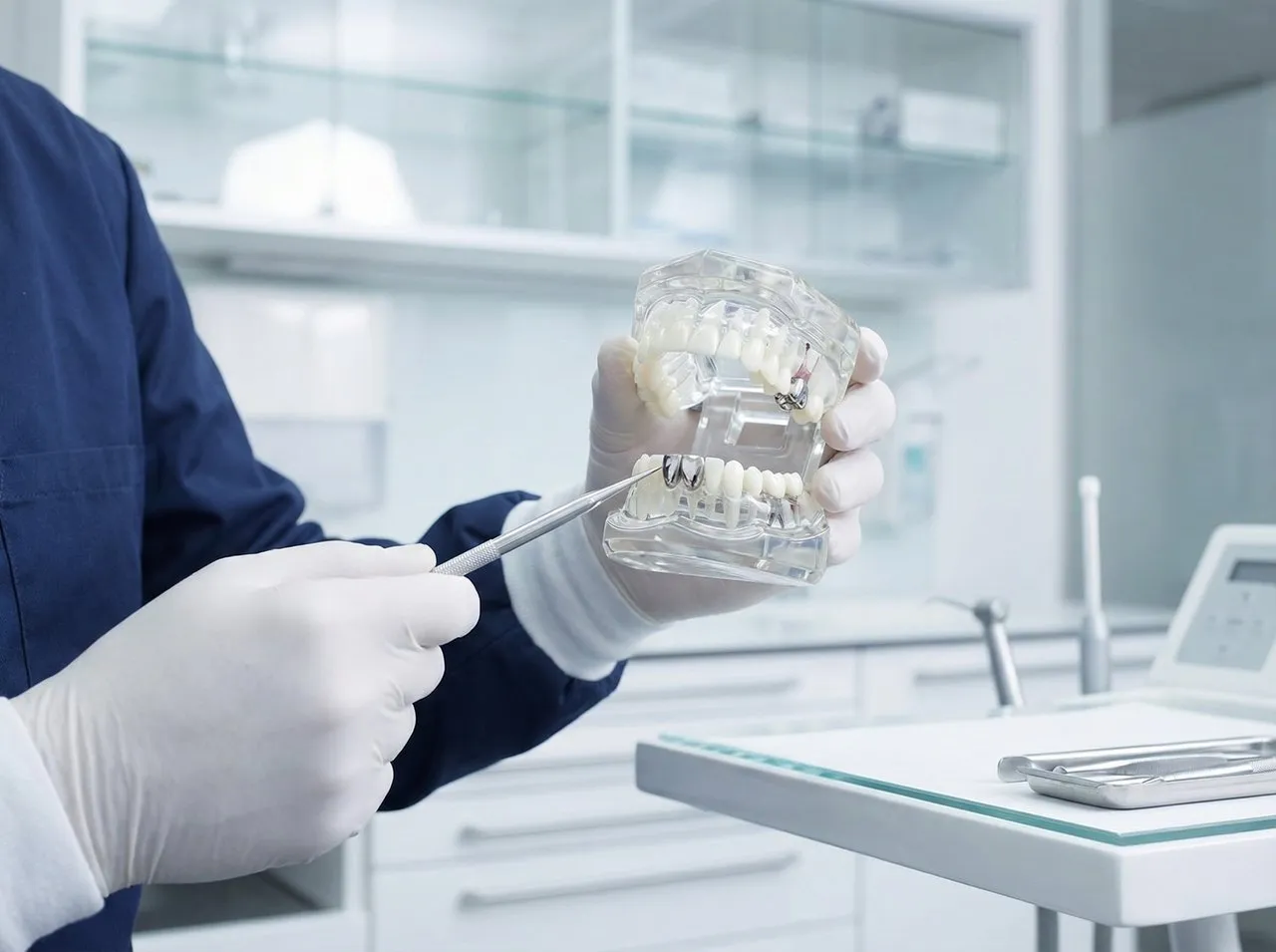
What exactly does “silver dental crown” mean?
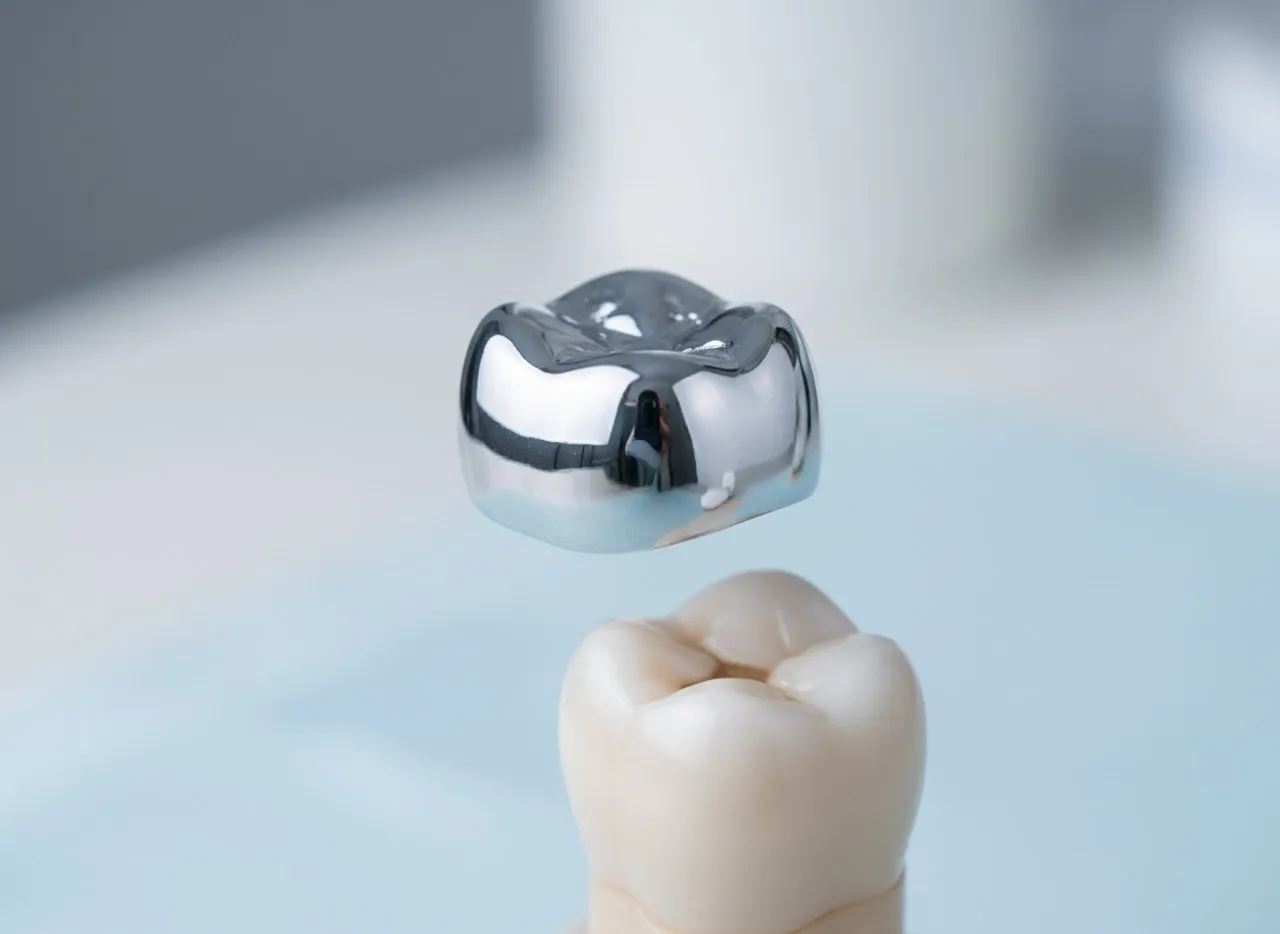
When a crown has a visible metallic appearance, people often think it is made of silver. It is almost never real silver. It is usually a non-precious metal crown, or NEM crown for short. The surface looks silvery grey and is usually inconspicuous in the posterior region. It is chosen less often for the front teeth. Many people prefer a tooth-coloured option there.
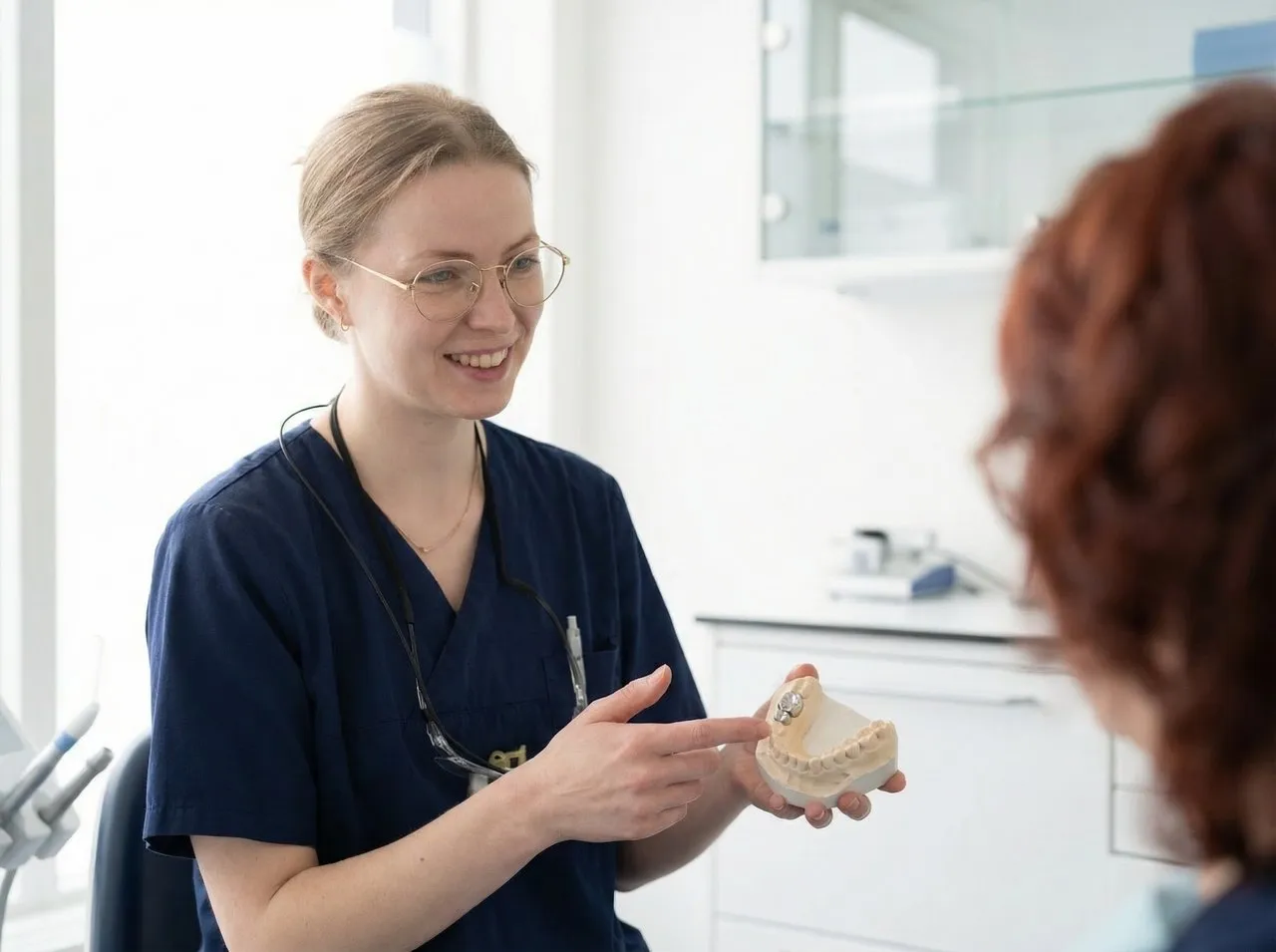
When is a silver-coloured metal crown a good option?
A crown becomes necessary when fillings no longer hold. This applies following extensive damage, tooth decay or root canal treatment. Cracks in the tooth can also require a crown. A metal crown is particularly suitable for back teeth. There, stability when chewing is what matters most. Aesthetics are usually of secondary importance.
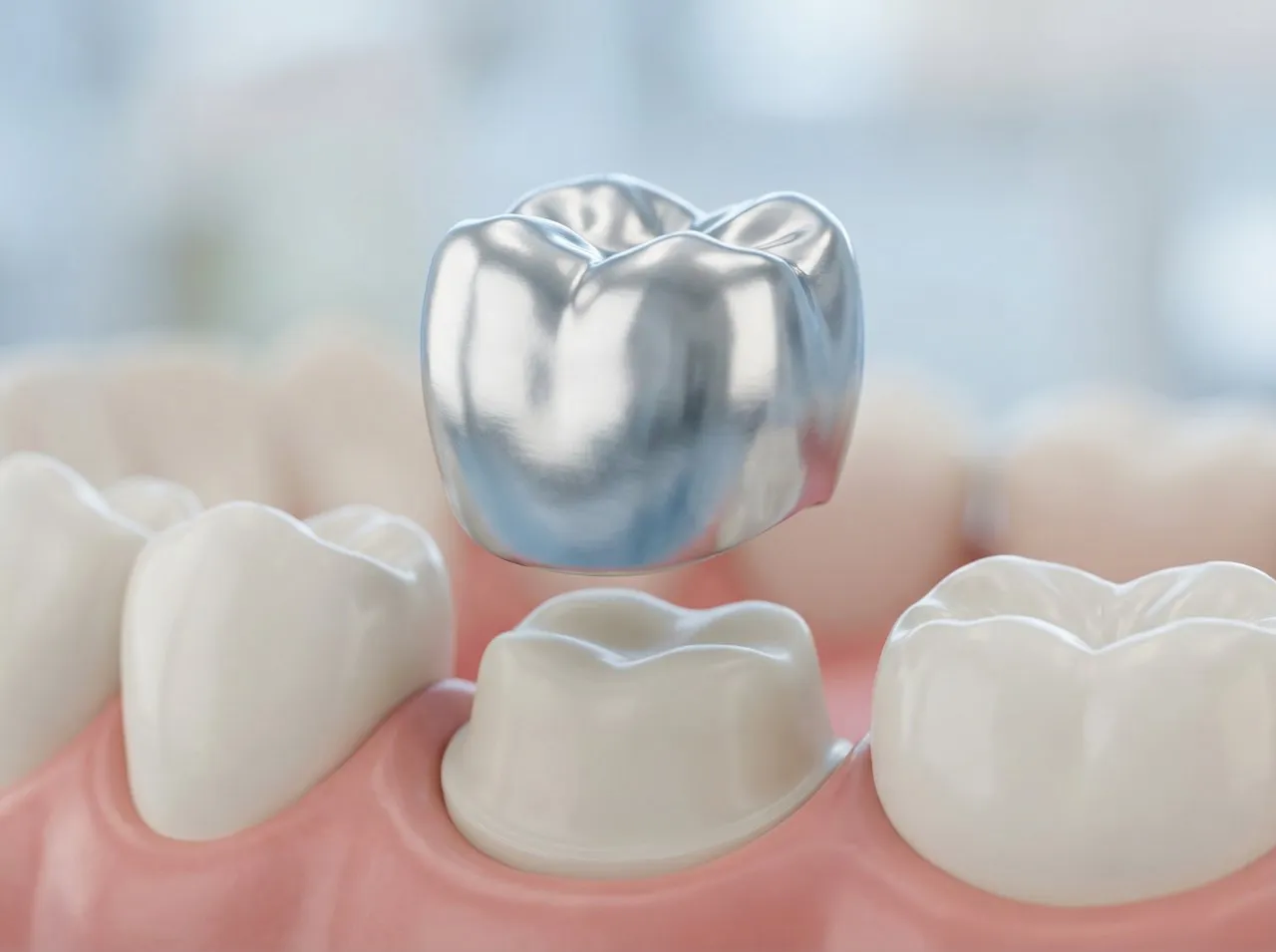
Which materials create the silver appearance?
So-called silver crowns are often made from a non-precious metal alloy. Typical examples are cobalt-chromium and nickel-chromium. Some alloys are nickel-free and better tolerated. Alternatively, there are precious metal crowns, for example made from gold alloys. These look more yellowish and are more expensive. All-ceramic and zirconia, on the other hand, are tooth-coloured.

Benefits of an NEM crown in everyday life
Metal crowns withstand pressure very well. They rarely fracture and can withstand heavy chewing forces. This is a clear advantage in the posterior region. The margins can be shaped precisely. This makes it possible to achieve a good fit. A good fit protects the gums. Many patients appreciate the comparatively low laboratory costs. This can reduce their out-of-pocket expenses. Nevertheless, individual planning remains important.
Possible disadvantages and risks
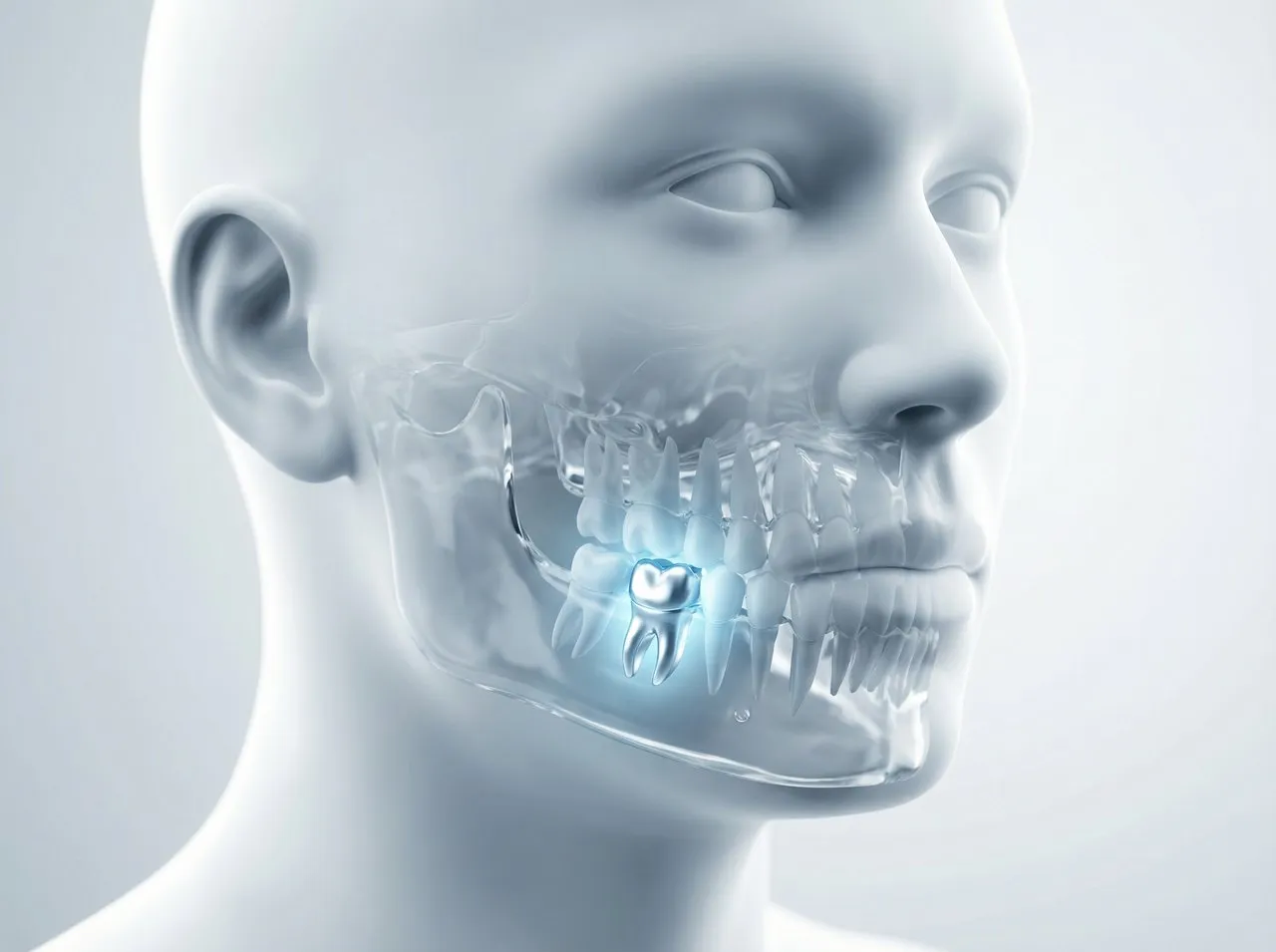
Metal can conduct heat and cold more readily. Some people therefore feel temperature stimuli more strongly. This is usually temporary. Intolerances are possible with certain alloys. Typical symptoms are local irritation or a metallic taste. If an allergy is suspected, we carry out targeted testing. The gums can also recede over time. The crown margin then becomes more visible. This can be an aesthetic concern, especially in the upper jaw.
Silver crown or veneered crown?
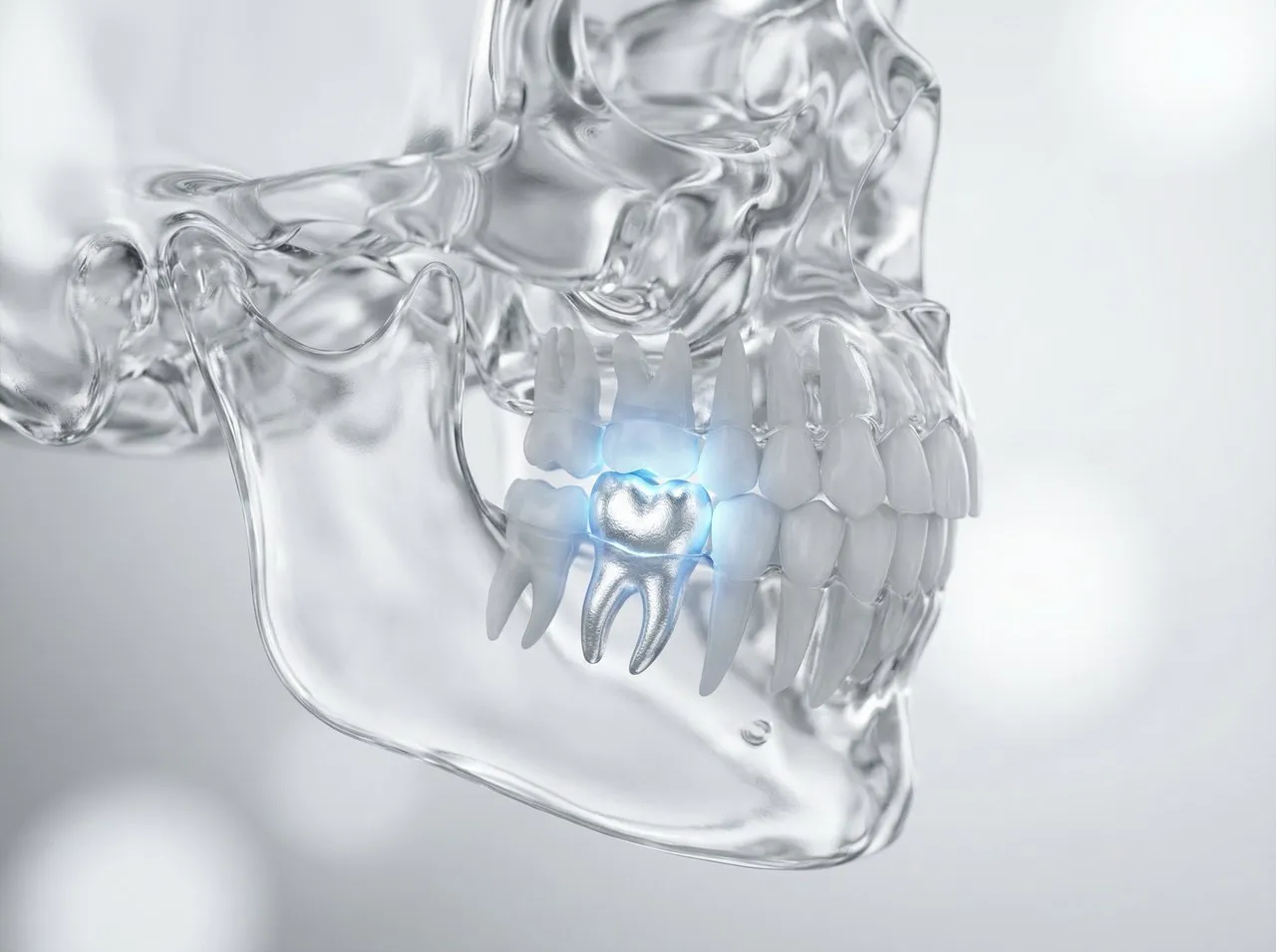
A veneered crown combines metal with a ceramic layer. It is tooth-coloured on the outside, while the inside remains metal. This option is often a good choice in visible areas. For a back tooth, an all-metal crown may be sufficient. It is thinner and stable. It also requires less space when little dental hard tissue remains. All-ceramic is the most aesthetic option. It looks very natural and translucent. However, it is often more expensive.
Treatment process at Wunschlachen in Berlin
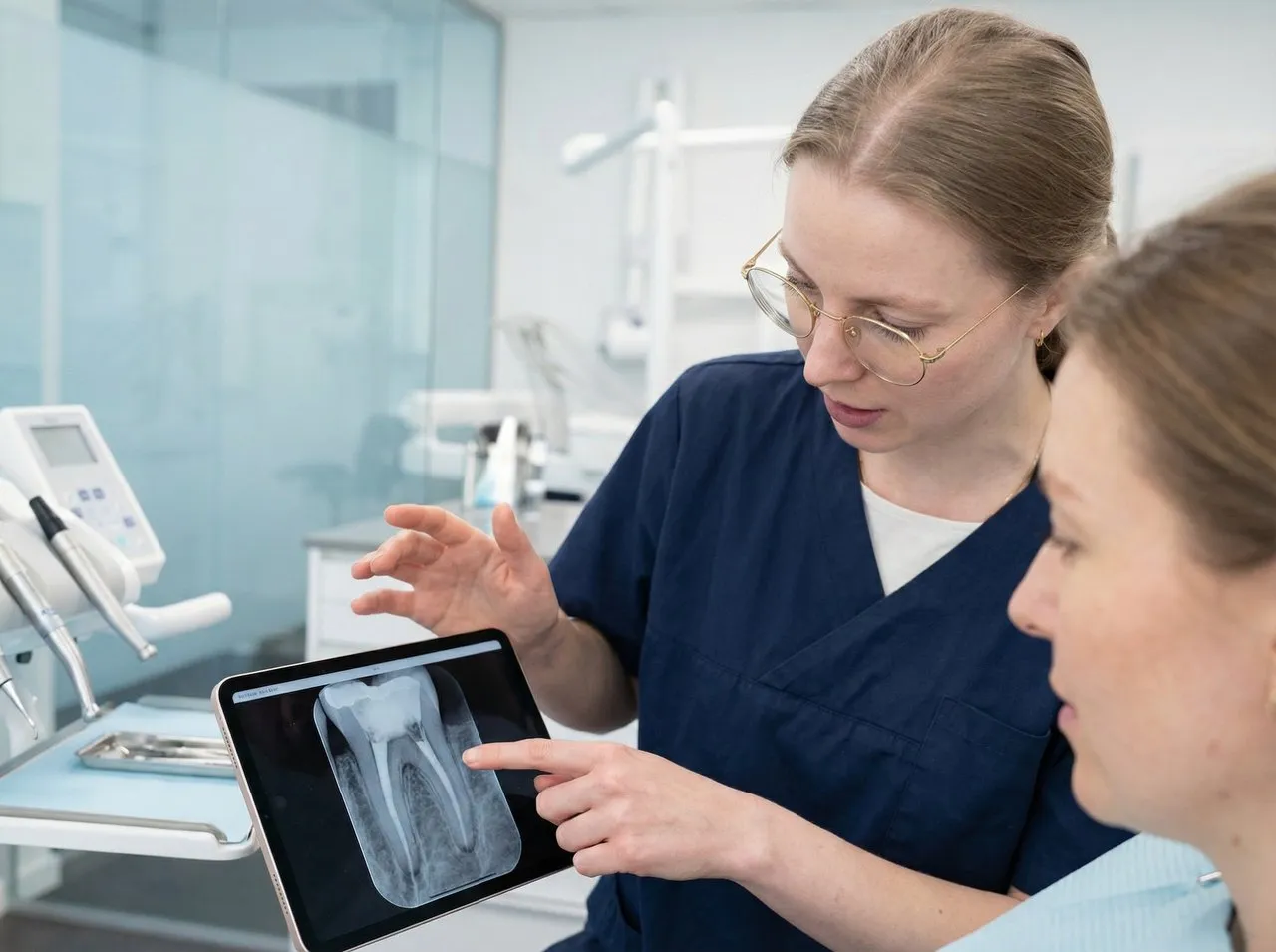
First, we examine the tooth, gums and bite. X-rays help us assess the root. We then discuss the appropriate material. The tooth is gently prepared and rebuilt. We then take an impression or an intraoral scan. You will then usually receive a temporary restoration. The crown is made in the laboratory to precise specifications. At the second appointment, it is adjusted and fixed in place. Finally, we check the contact points and occlusion.
Durability and care
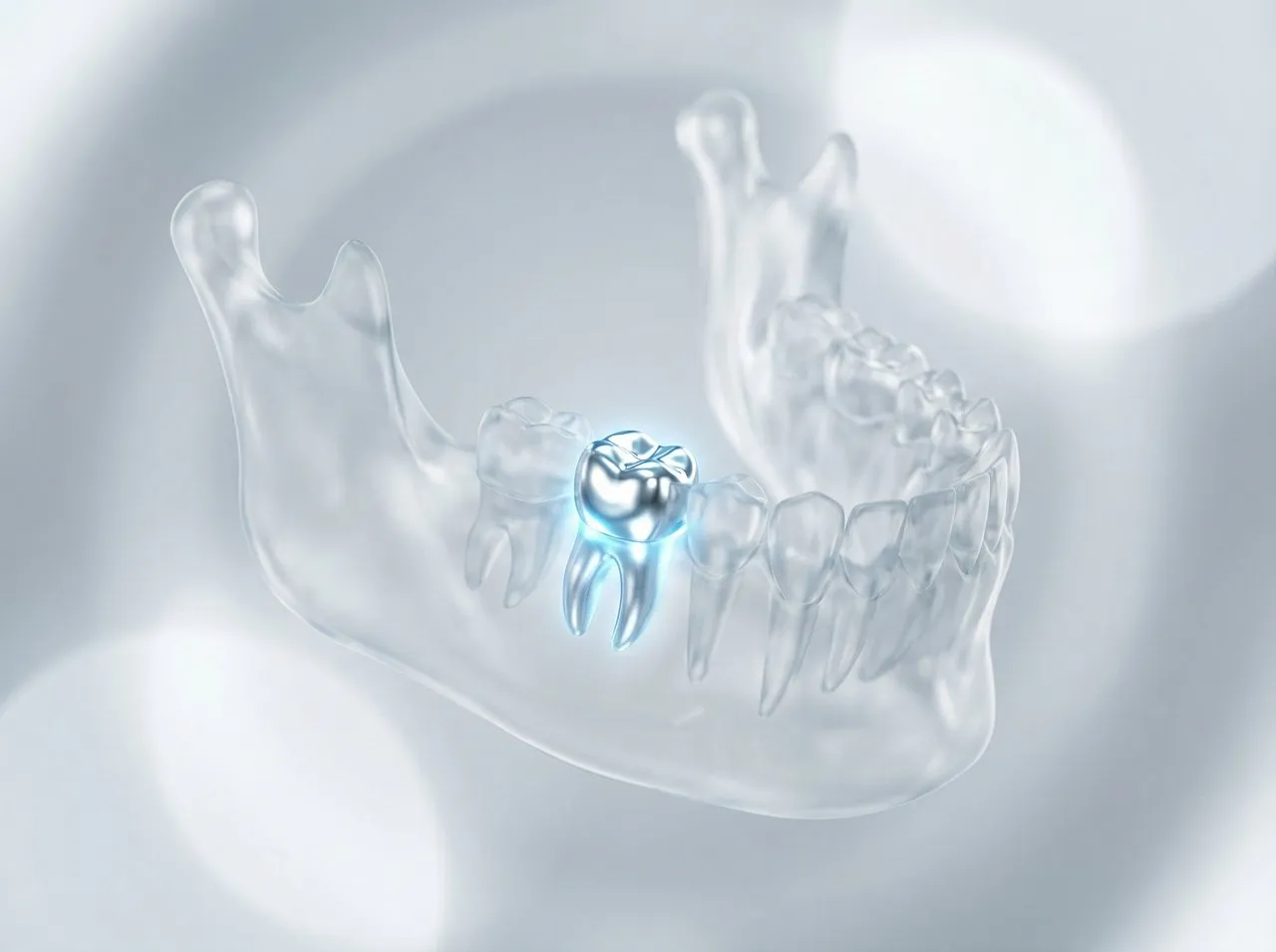
A metal crown can last for many years. Oral hygiene and regular check-ups are crucial. Teeth grinding also affects its lifespan. Brush twice a day with fluoride toothpaste. Use interdental brushes or dental floss around the crown margin. This reduces the risk of inflammation. Professional dental cleaning complements your home care routine. Deposits around the margin are removed during this treatment. This protects the gums and the remaining tooth structure.
Costs and health insurance explained clearly
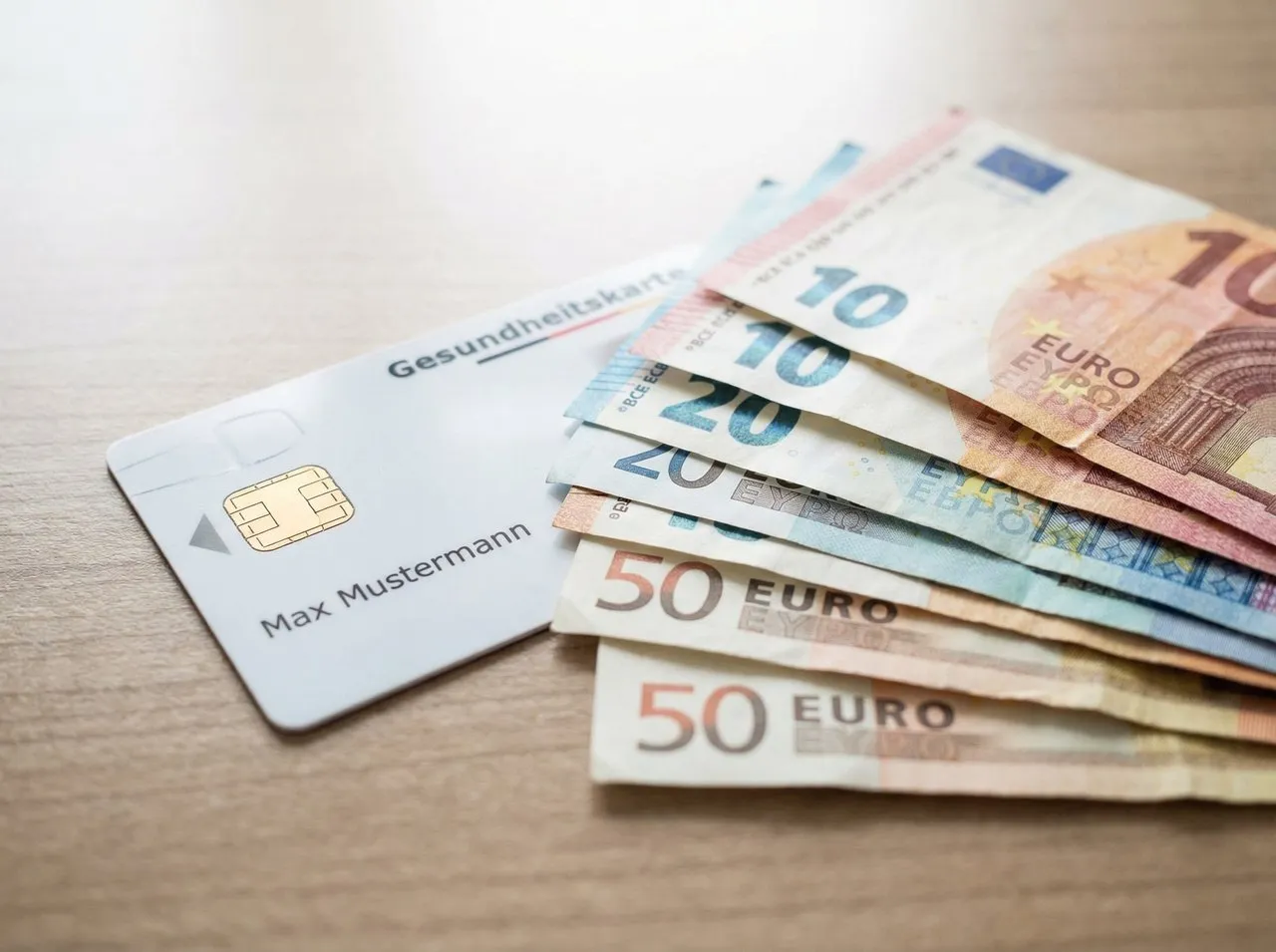
The costs depend on the material, the work involved and the condition of the tooth. A metal crown is often at the lower end of the cost range. Depending on the case, the amount is usually in the mid three figures. Statutory health insurance pays a fixed subsidy based on the clinical findings. A well-maintained bonus booklet increases this subsidy. You pay the remainder yourself. Private insurance may reimburse more, depending on your policy. It is important to have a treatment and cost plan before treatment begins. This means you will know your share of the costs in advance.
Common questions before making a decision
When several crowns are planned, the combination of materials and their appearance play an important role. We provide transparent advice on this. If you would like an inconspicuous option, we will assess veneering or ceramic. If you need maximum robustness, metal is often suitable. Ultimately, the decision depends on your clinical findings.
FAQ: Silver dental crown
Usually not. It is usually a non-precious metal crown with a silvery-grey surface. Pure silver would be too soft for use in the mouth.
Back teeth are subjected to heavy chewing forces. Metal is very stable and resistant to fracture here. The crown also often requires less space.
Yes, that is possible. Certain alloys contain nickel or other metals. If an allergy is suspected, we choose nickel-free alternatives.
Some patients initially report a metallic taste. This does not happen to everyone. People often get used to it quickly.
Durability depends on care and the strain placed on the crown. With good oral hygiene, a lifespan of many years is realistic. Regular check-ups are important.
Usually not. The colour is often a problem in the front teeth. Ceramic or veneered crowns are usually the better choice there.
Health insurance contributes a fixed subsidy. This depends on the clinical findings. You pay the remainder out of pocket.
Yes, particularly when there are deposits around the margin. Thorough cleaning and professional preventive care help. A good fit reduces the risk.
Both are metal crowns, but they use different alloys. Gold is a precious metal and is often more resistant to corrosion. NEM is usually less expensive.
Possible options are veneered crowns, all-ceramic or zirconia. The choice depends on your bite, the available space and aesthetics. We plan this individually.