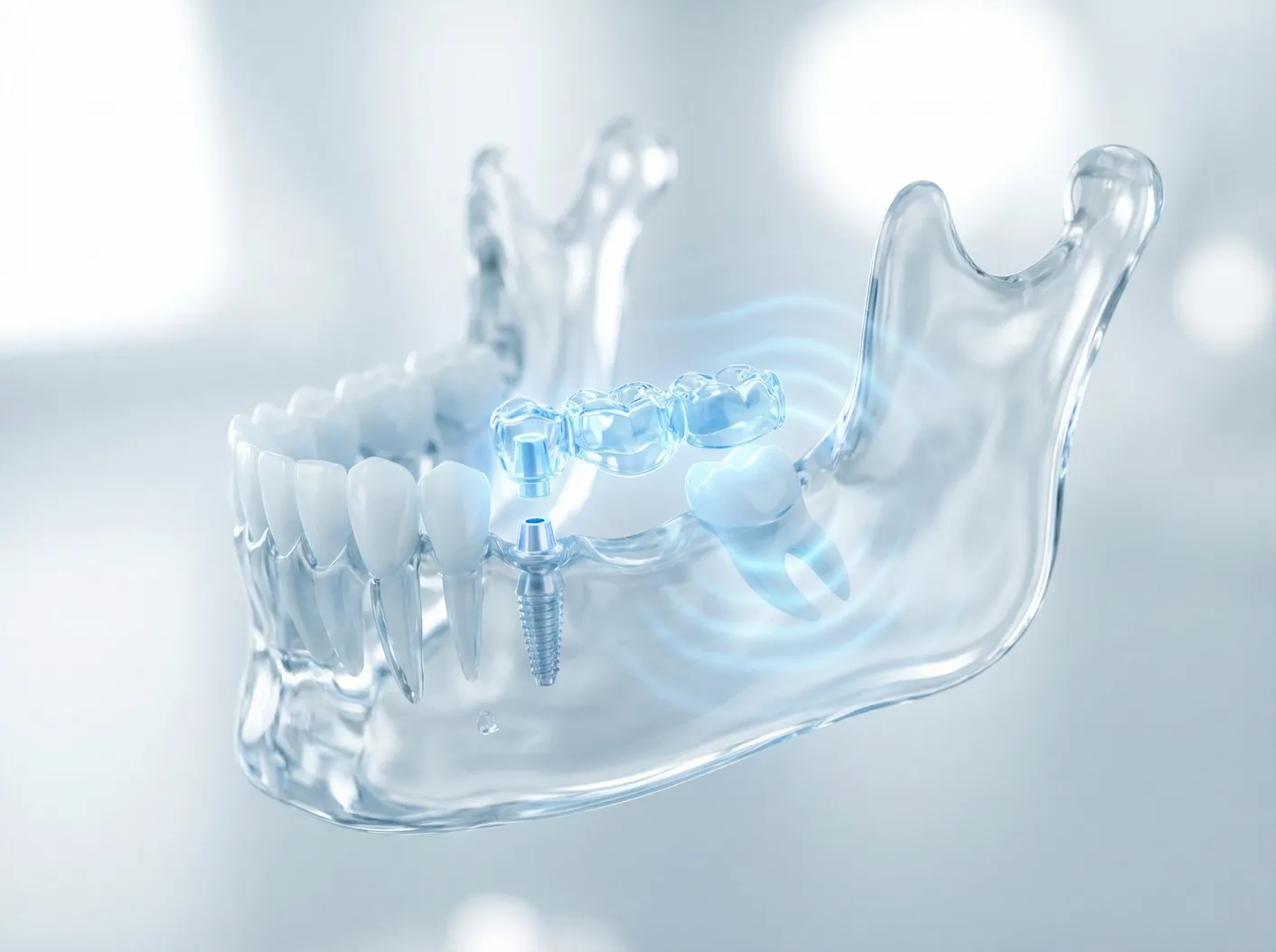
Tooth replacement with a telescopic bridge: advantages and procedure
A secure bite means quality of life. When several teeth are missing, eating often becomes difficult. A telescopic bridge can be very helpful here. It combines stability with flexibility. The restoration fits securely yet remains removable. This makes cleaning and check-ups easier.
Über 350 Google-Bewertungen
When is it worthwhile?
A telescopic bridge is a tooth replacement with double crowns: primary crowns are fixed to the abutment teeth, while matching secondary crowns in the bridge fit over them like a telescope. This creates a secure hold through friction and a precise fit – the restoration sits firmly but can still be removed for cleaning. It is suitable for several gaps between teeth where there are strong enough abutment teeth, often without the need for implants or bone augmentation.
- Principle
- Double-crown system: a fixed primary crown on the abutment tooth and a secondary crown in the bridge – a stable hold, yet still removable.
- Suitable when
- There are several gaps between teeth and the remaining abutment teeth are strong enough, with good oral hygiene; also an option after periodontitis or when bone volume is reduced.
- Advantage
- A secure fit without implants – bone augmentation is often unnecessary, saving effort and healing time.
This overview does not replace dental advice. Suitability and costs are determined through individual planning with a treatment and cost plan.
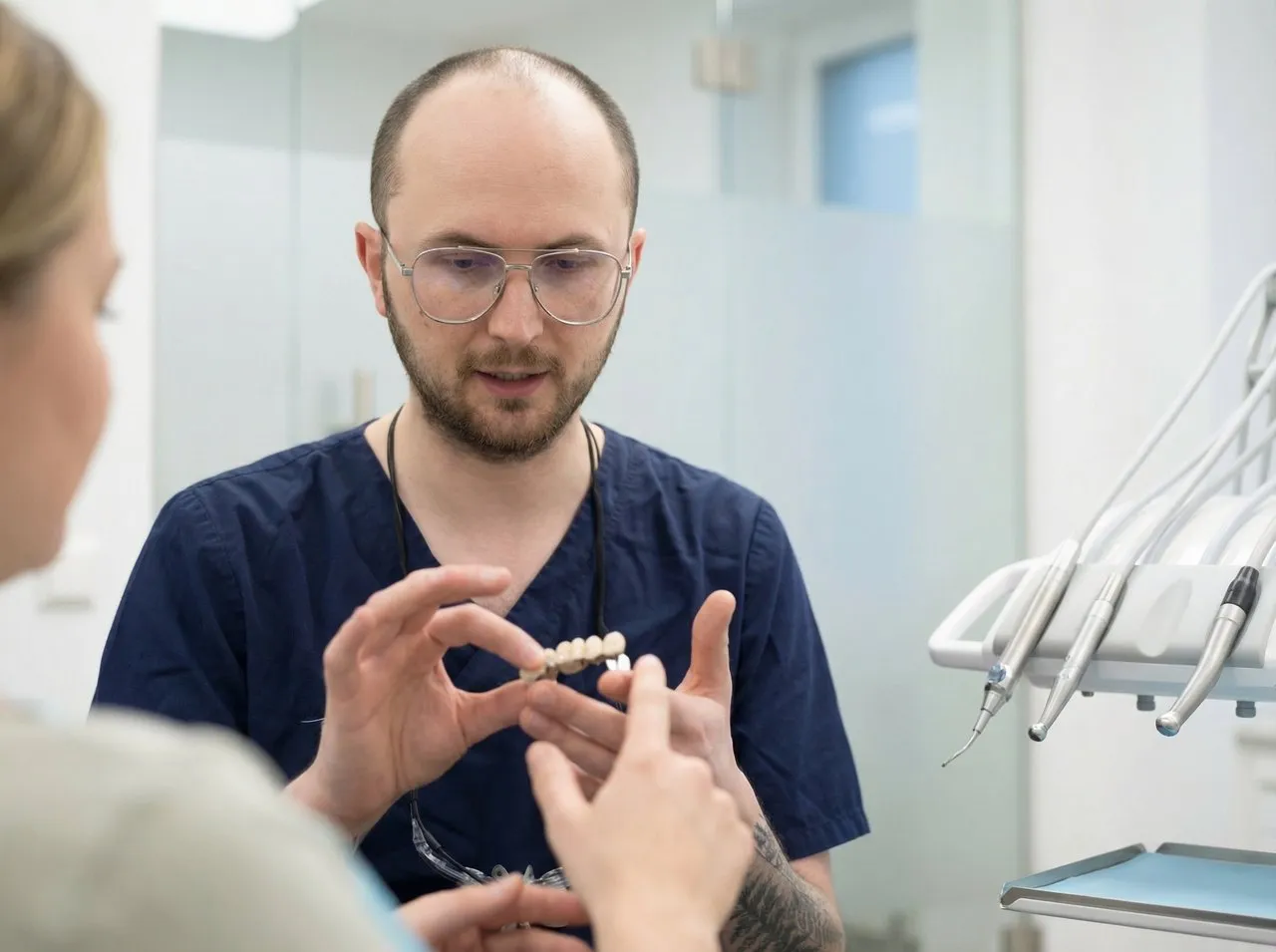
What is a telescopic bridge?
A telescopic bridge is a tooth replacement with double crowns. It consists of primary crowns and matching secondary crowns. The two parts fit together like a telescope. The primary crown is fixed to an abutment tooth. The secondary crown is incorporated into the bridge. This creates a hold through friction and a precise fit. The terms telescopic crowns or double-crown denture are also often used. In everyday life, the solution feels very stable. At the same time, it can be removed for cleaning.
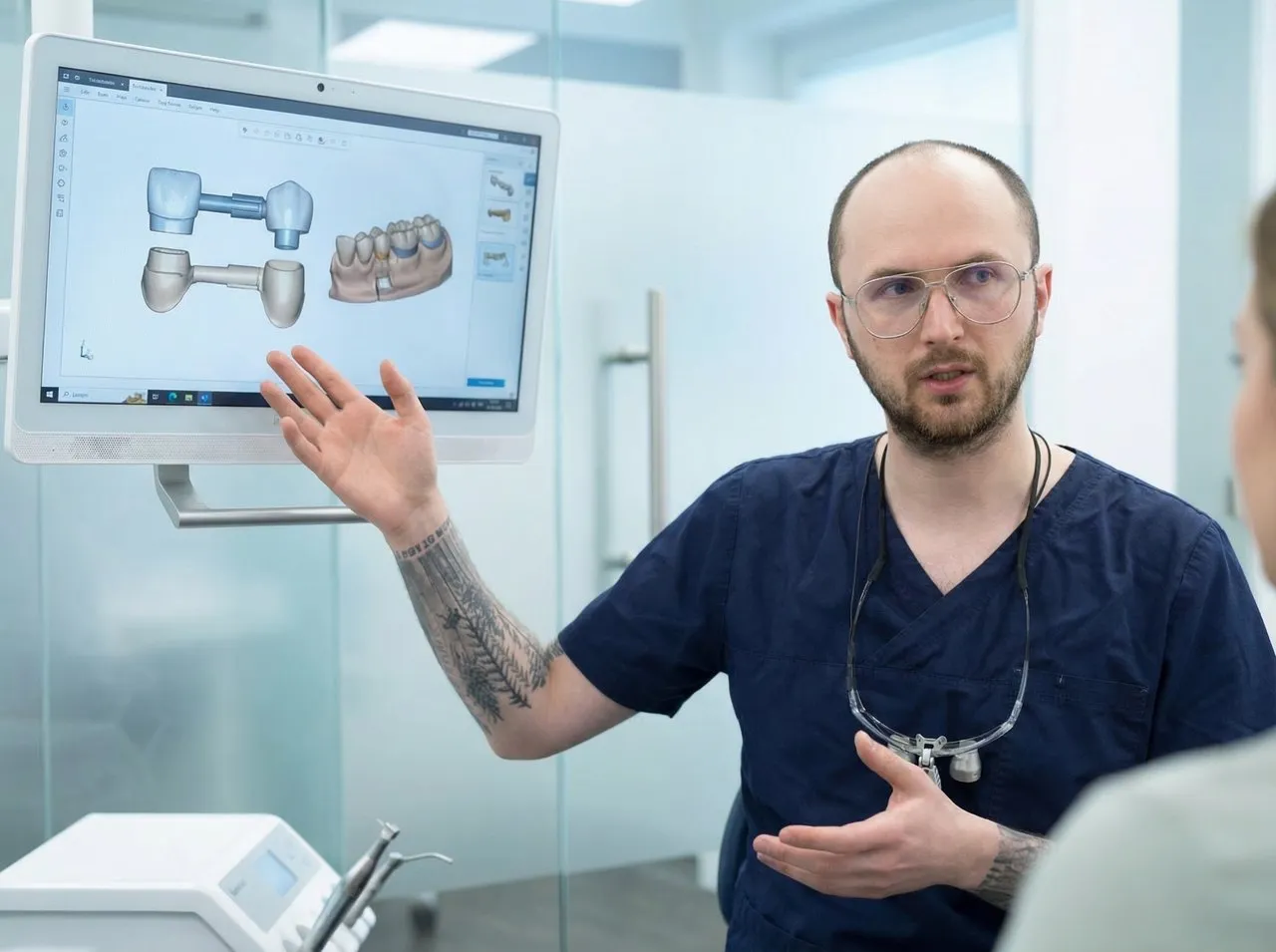
Who is suitable for telescopic tooth replacement?
Telescopic treatment is suitable when there are several gaps between teeth. It is a good option if strong enough abutment teeth remain. It can also be an option after periodontitis. Many patients want a secure fit without implants. A double-crown bridge is often suitable in such cases. Good oral hygiene is essential. It is also an attractive option when bone volume is reduced. Bone augmentation is then often unnecessary. This saves effort and healing time.
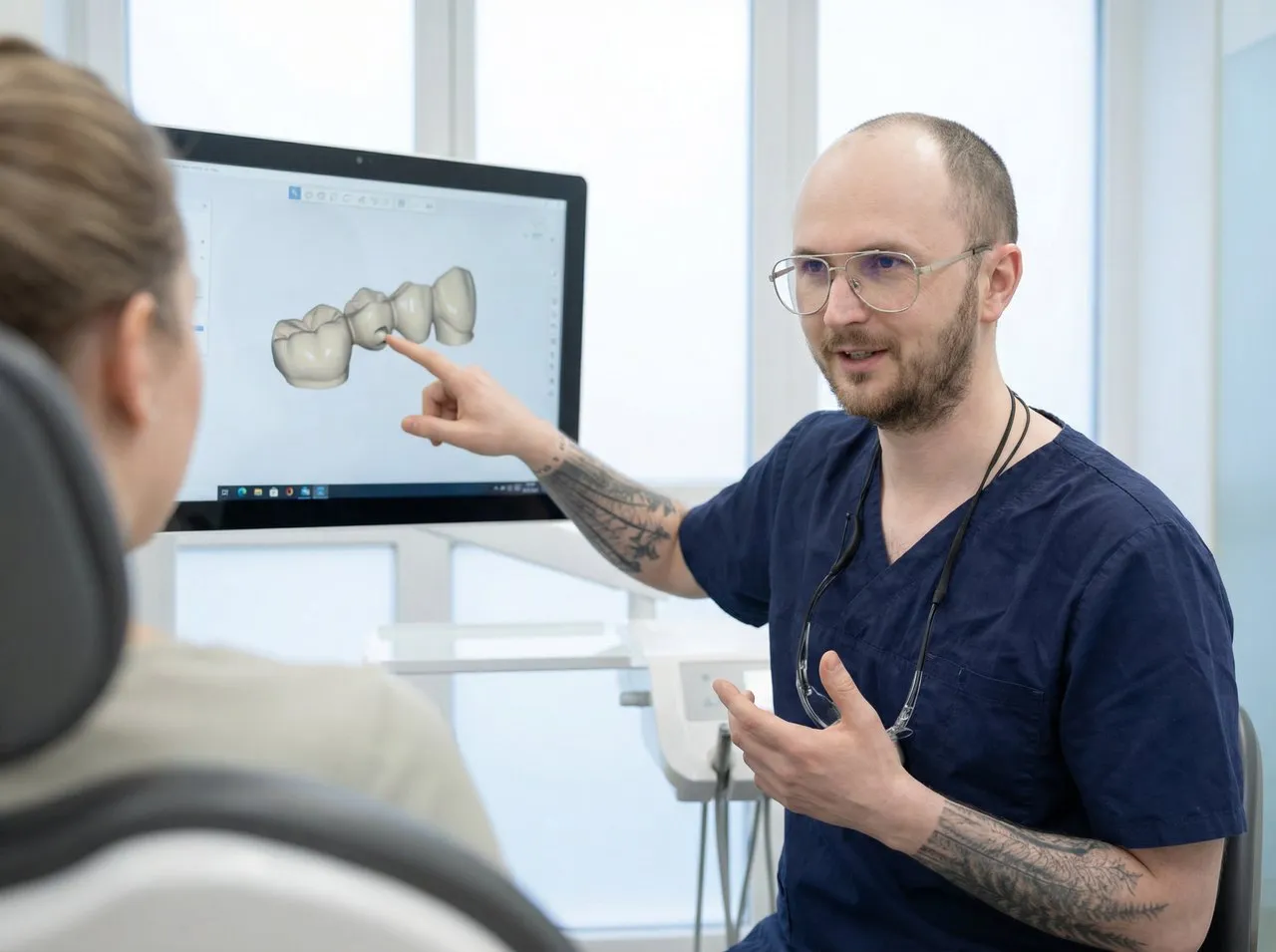
Advantages of telescopic treatment
The most important advantage is the secure hold. The structure remains steady when speaking and chewing. This increases confidence in everyday life. The load is distributed evenly across several abutment teeth. This can relieve strain on individual teeth. The bite often remains stable. Another advantage is that it can be extended. If a tooth is lost later, the bridge can often be adapted. This means the tooth replacement remains manageable in the long term. It is also easy to care for. You remove the restoration and clean all surfaces. This reduces the risk of inflammation.
Materials and fit
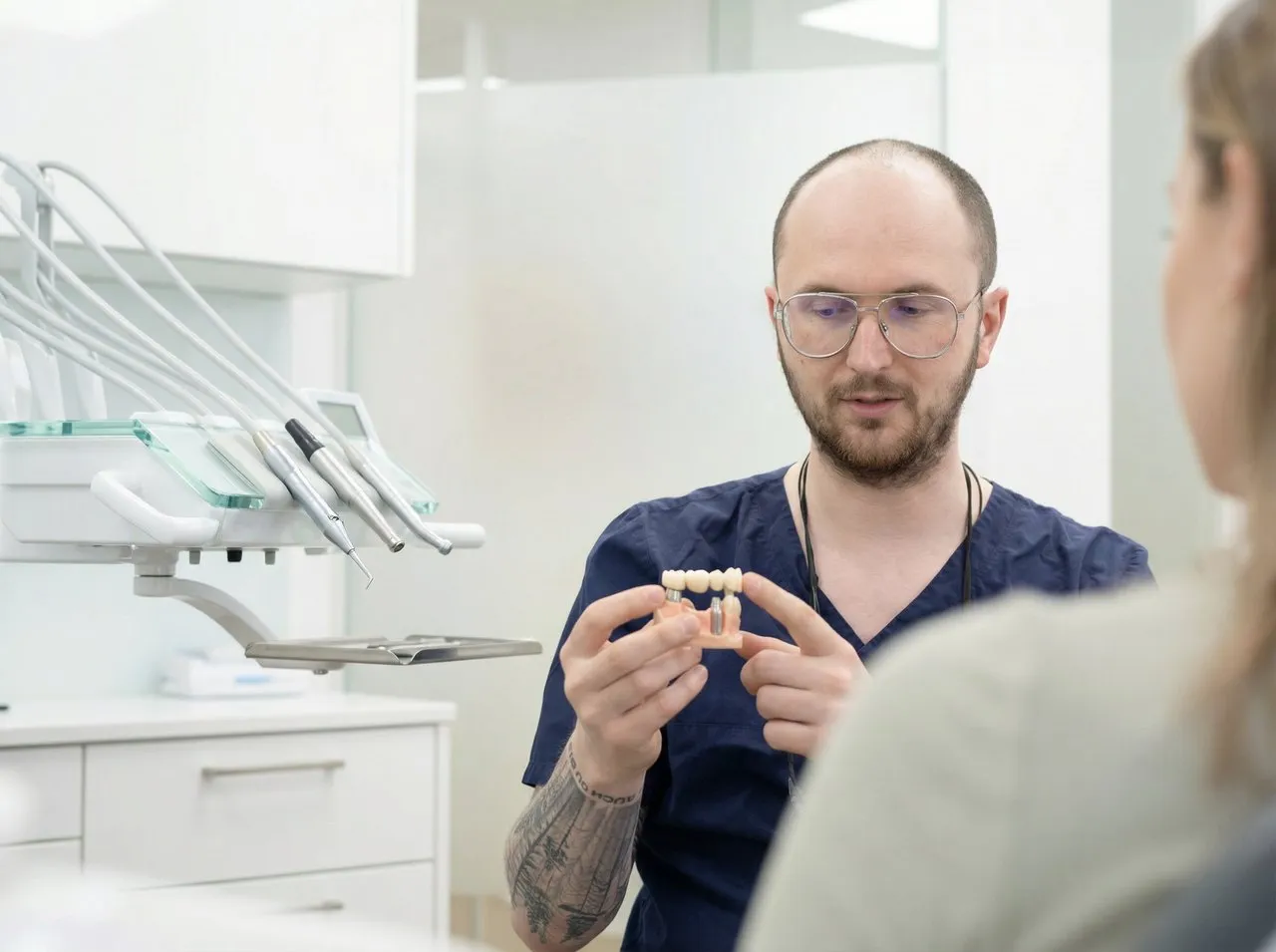
Metal alloys or zirconium oxide are often used for primary crowns. Metal or ceramic is frequently used for secondary components. The choice of material affects aesthetics and price. The friction between the two crowns is crucial. It determines how easily the bridge clicks into place. Too much pressure would be uncomfortable. The fit is precisely adjusted in the laboratory. This ensures a stable hold without jamming. If necessary, the friction can be readjusted later.
What disadvantages or limitations are there?
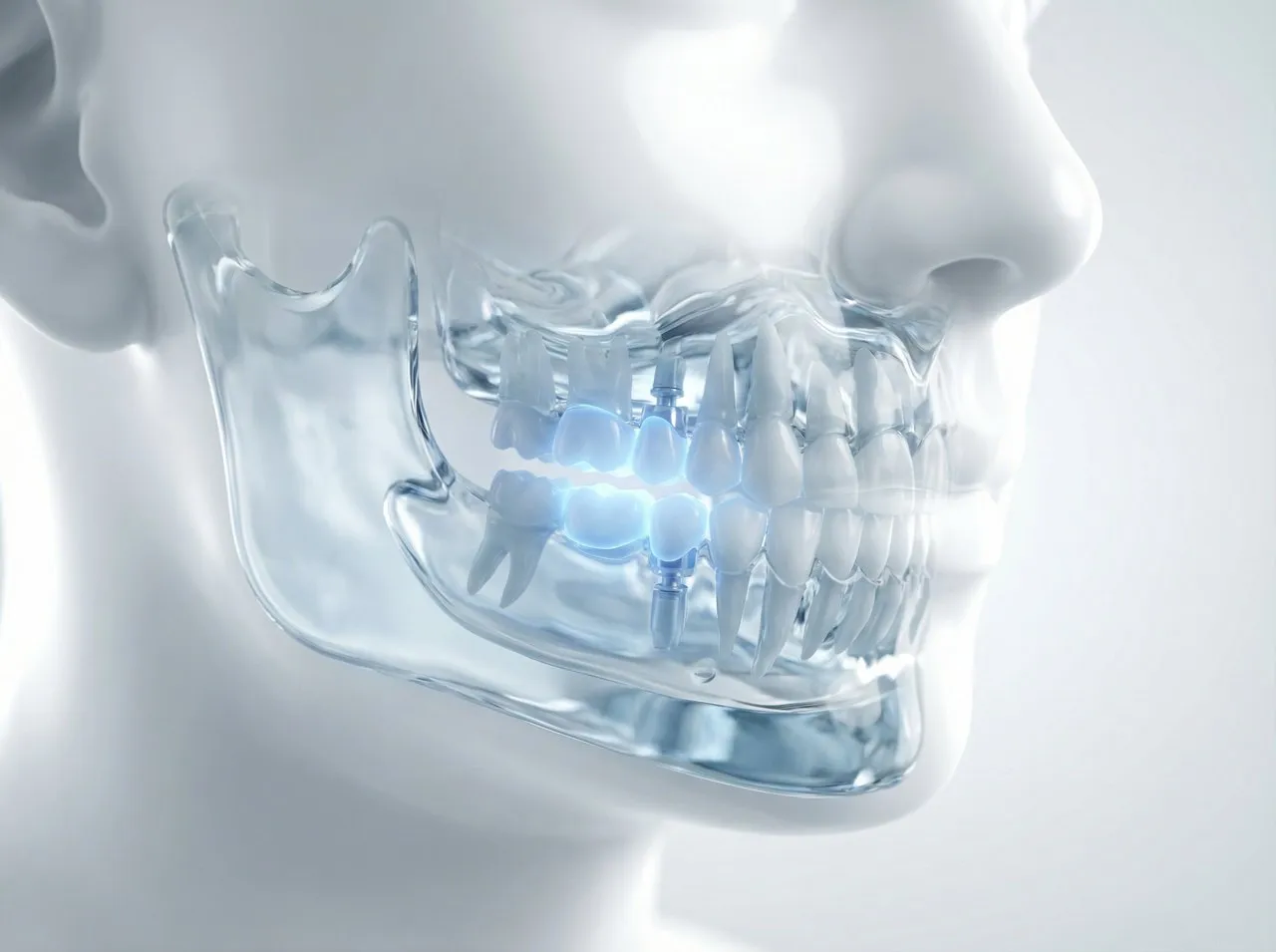
A telescopic bridge requires healthy abutment teeth. These teeth are crowned and ground down for this purpose. This involves removing some tooth substance. Production is technically demanding. Laboratory costs are therefore usually higher. However, a good fit is crucial. This solution is unsuitable for very loose teeth. The underlying cause must then be treated first. Sometimes another type of tooth replacement is better.
Procedure at the Wunschlachen practice in Berlin
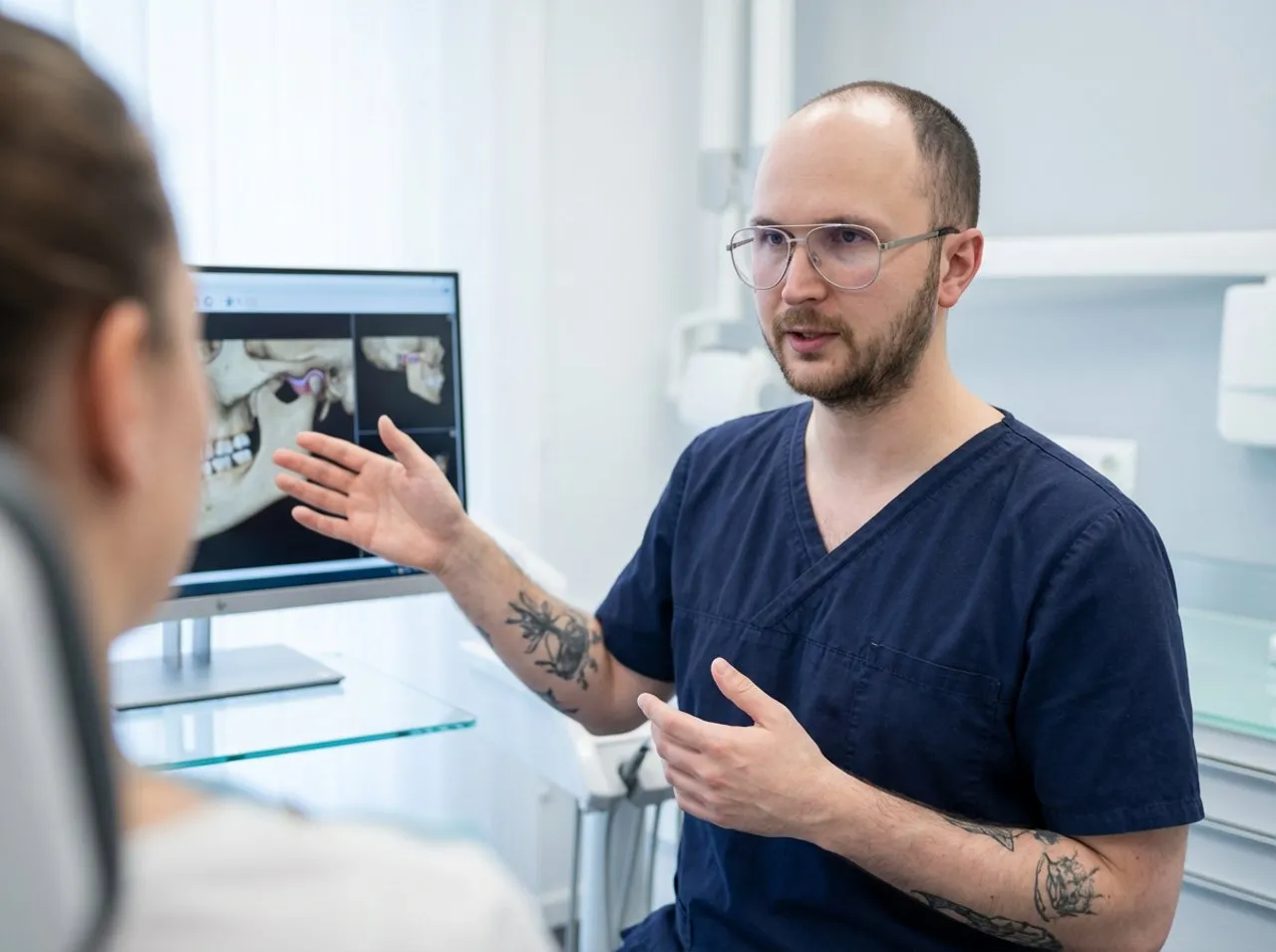
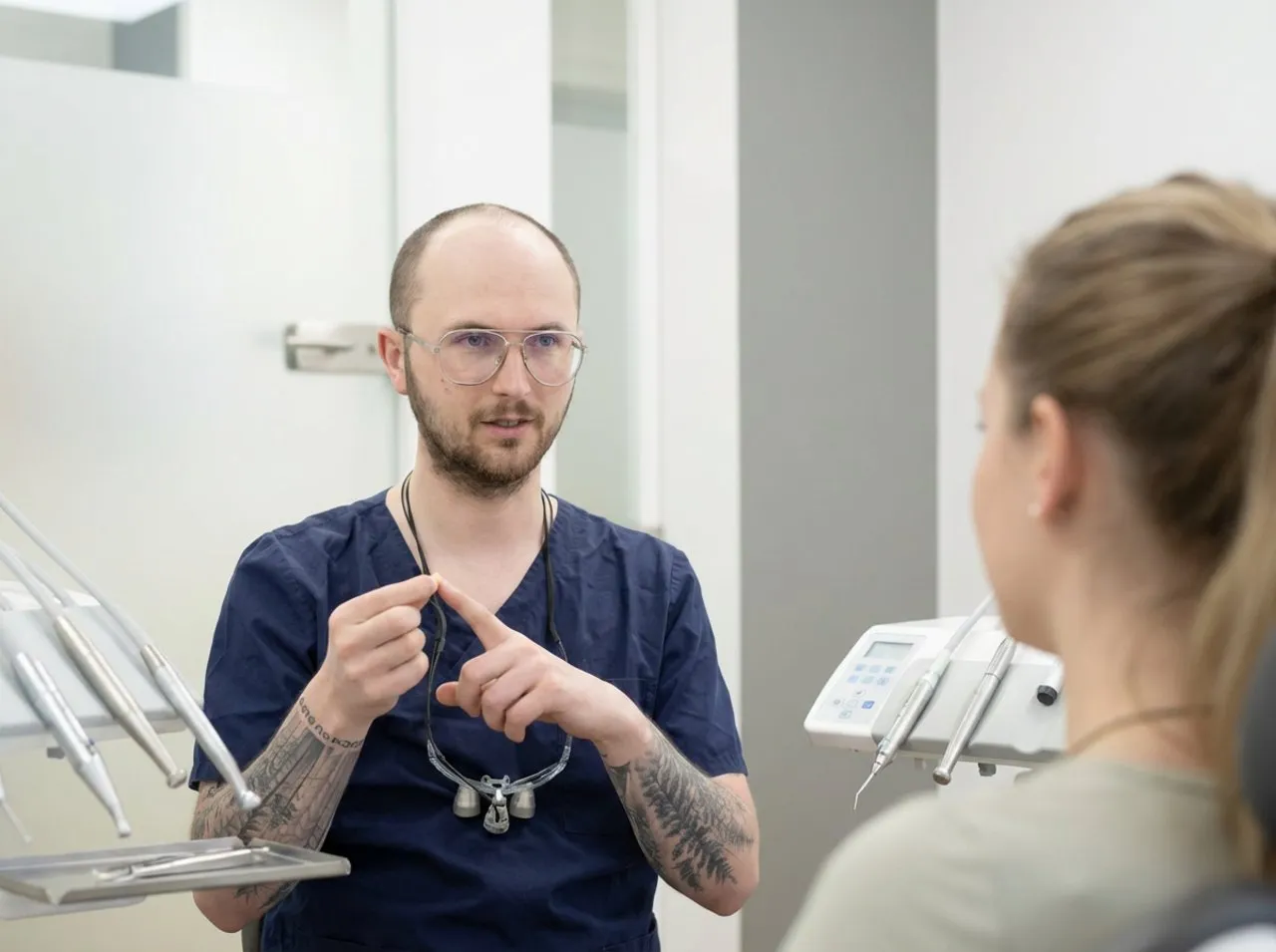
At the start, we carry out a thorough examination. We examine your teeth, gums and bite. X-rays help us plan the treatment. We then discuss your goals. We clarify aesthetics, comfort and possible alternatives. You receive a transparent treatment and cost plan. Next, impressions or digital scans are taken. The primary and secondary crowns are made in the laboratory. Precision on the micrometre scale is essential here. At the next appointment, the primary crowns are fitted. We then check the fit of the bridge structure. Fine adjustments ensure a comfortable fit. Finally, you receive care instructions. We schedule follow-up appointments to ensure long-term success. This ensures that the telescopic restoration remains reliable.
Everyday care and durability
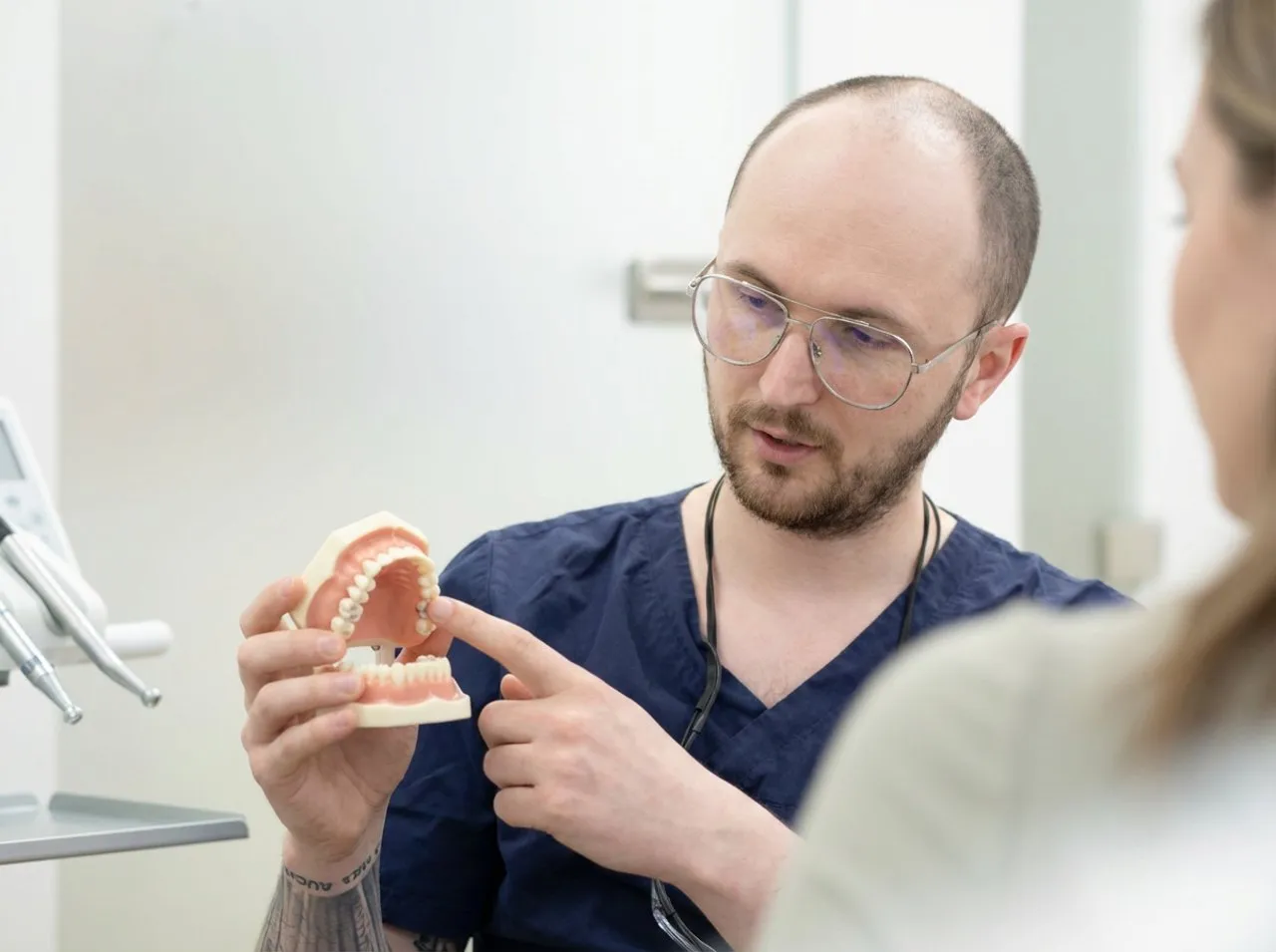
Clean the telescopic crowns daily. Use soft brushes and suitable interdental cleaning aids. The abutment teeth also need special attention. Rinse briefly with water after eating. This removes coarse food particles. It protects the gums and crown margins. Regular professional teeth cleaning is recommended. It reduces deposits in hard-to-reach areas. This extends durability. With good care, a double-crown solution can last for many years. Check-ups and minor adjustments are important. This ensures that the fit remains stable over time.
Costs, health insurance and instalment payments
The costs depend on the extent of treatment and the materials used. The number of abutment teeth also plays a role. Laboratory work has a significant impact on the price. Statutory health insurance funds pay a fixed subsidy based on the diagnosis. The amount is based on standard care. A bonus booklet can increase the subsidy. Private insurance plans often reimburse more, depending on the policy. We explain the items in the cost plan to you. This gives you financial certainty when planning. Instalment payments are available on request. This allows tooth replacement to be financed flexibly. Feel free to discuss this openly with our team.
Conclusion: a stable hold with a flexible solution
A telescopic bridge offers a secure fit and good cleaning options. It is particularly suitable when several teeth are missing. With good planning, it remains functional for a long time. At the Wunschlachen practice, we provide structured advice. We assess whether double crowns are suitable for you. We then draw up a clear treatment plan.
FAQ – Frequently asked questions about telescopic bridges
A telescopic solution fits over double crowns and is usually more stable. It can still be removed for cleaning.
Many patients report a very secure biting sensation. The friction between the crowns ensures a secure hold.
Several appointments are usually required. The laboratory phase depends on the complexity and the material.
Usually yes, if further teeth are lost. The laboratory can often adapt the structure.
The preparation is carried out under local anaesthetic. Mild sensitivity may occur after the appointment.
We then assess whether an extension or a new treatment plan is needed. Sometimes implants or another solution may be an option.
Clean all surfaces and gaps daily. Interdental brushes and special brushes are helpful.
Intolerances are rare but possible. We select materials based on the clinical findings and medical history.
Yes, through the fixed subsidy from the statutory health insurance fund. Your own contribution depends on the material and complexity.
Severely loose teeth or poor oral hygiene can be problematic. Preliminary treatment or alternatives are then advisable.