Caries prevention in children – Healthy smiles with Wunschlachen
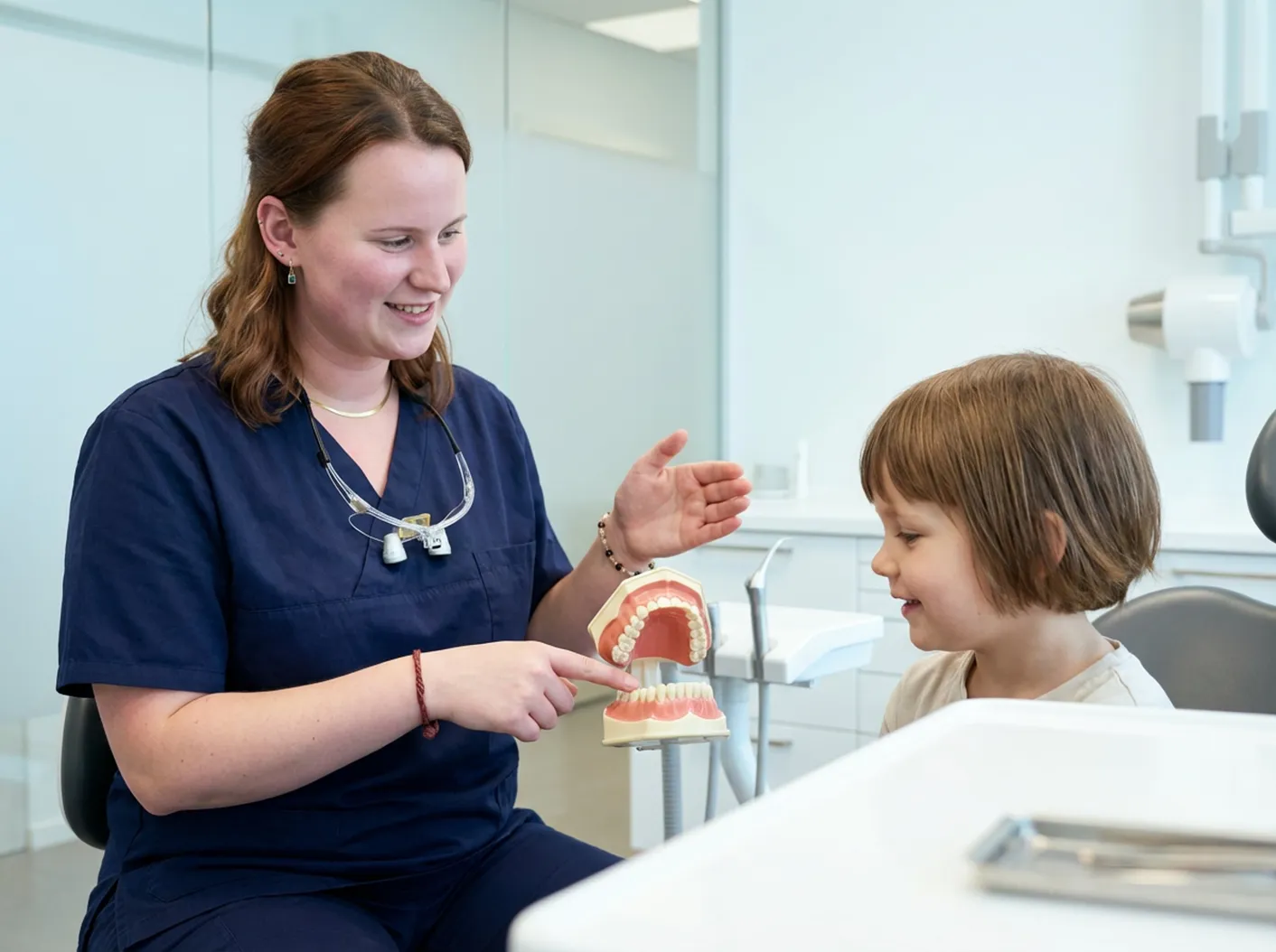
At Wunschlachen dental practice in Berlin, the dental health of our youngest patients is particularly close to our hearts. Consistent caries prevention in childhood is the best way to avoid dental problems later in life. At the same time, this helps children develop good... from the outset.
Über 350 Google-Bewertungen
The short answer
Tooth decay prevention for children combines daily oral hygiene, a low-sugar diet and age-appropriate fluoride intake. Parents help with brushing from the first baby tooth; from school age, children increasingly brush themselves using the KAI principle. In addition, professional preventive dental appointments with cleaning, fluoride treatment and personalised advice strengthen protection against tooth decay from the outset.
- Components of preventive dental care
- Daily oral hygiene, a low-sugar diet and age-appropriate use of fluoride
- Fluoride recommendation
- 0 to 6 years, starting with the first tooth: 1,000 ppm fluoride toothpaste — a grain-of-rice-sized amount up to the 2nd birthday, then a pea-sized amount; fluoride tablets are an alternative for infants; at least 1,000 ppm once permanent teeth emerge, with 1,450 ppm commonly available
- Good to know
- Brushing technique using the KAI principle (chewing surfaces, outer surfaces, inner surfaces) — parents should brush again until children are around the age of six
General information only; not personalised dental advice. The appropriate preventive care is determined during a personal examination.
Why is caries prevention so important?
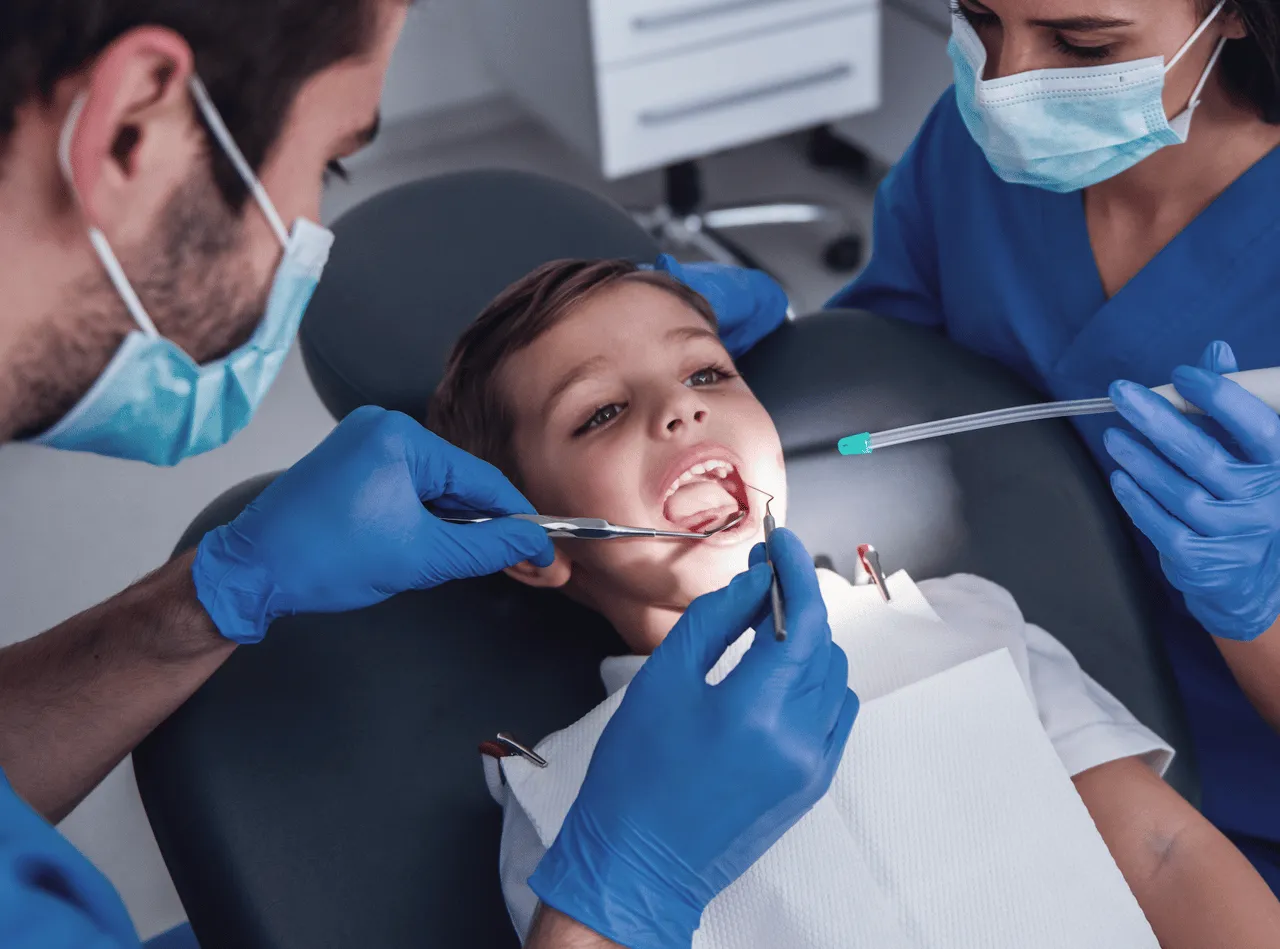
Caries remains one of the most common chronic diseases in children. However, it can be prevented early on with simple measures.
The basis of all caries prevention consists of:
• regular oral hygiene
• a low-sugar diet
• and the targeted use of fluorides.
Healthy diet – the first step towards healthy teeth
A tooth-healthy diet begins as early as toddlerhood. Fresh fruit, vegetables, wholegrain products and dairy products provide important nutrients and stimulate saliva production. This is a natural defence mechanism of the body against caries.
By contrast, sugar is particularly problematic. It is not only found in sweets, but is also hidden in yoghurts, cornflakes, fruit juices, ketchup and baby teas.
It is not only the amount of sugar consumed that matters, but also how often it is consumed. Every sugary snack or drink lowers the pH level in the mouth. The more often this happens, the greater the risk of caries. Our recommendations:
• Sweet foods only once a day, ideally immediately after a meal
• Drinks such as water or unsweetened tea instead of juice or lemonade
• No bottle containing sweet drinks, especially not at night
This actively supports a healthy diet for children and helps to prevent caries.
Proper oral hygiene for children – from the very beginning
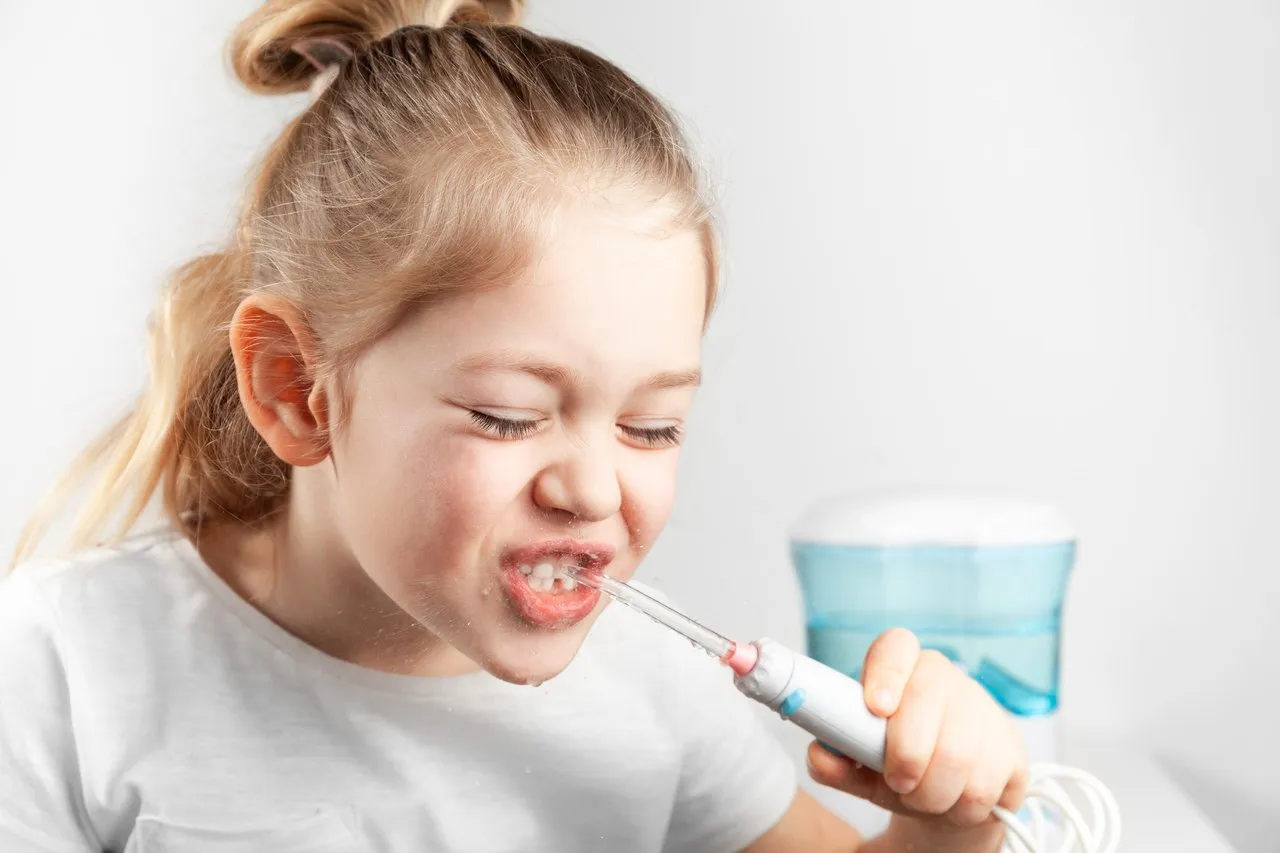
Responsibility for dental care begins with the first milk tooth. Once the first tooth has erupted, brush up to twice a day with a soft children's toothbrush.
In the first year of life, there are two equally valid approaches to fluoride, and parents choose exactly one of them: either a daily tablet containing fluoride and vitamin D together with a fluoride-free toothpaste, or a tablet containing vitamin D alone plus twice-daily use of a grain-of-rice-sized amount of toothpaste containing 1,000 ppm fluoride. Fluoride tablets and fluoride-containing toothpaste should not be used together.
From the first birthday, brush in the morning after breakfast and in the evening before bedtime, still using a grain-of-rice-sized amount of toothpaste containing 1,000 ppm fluoride. From the second birthday, this becomes a pea-sized amount.
Between the ages of two and three, children playfully take their first steps in dental care. However, children cannot brush properly on their own until the age of six. Until then, your support is essential.
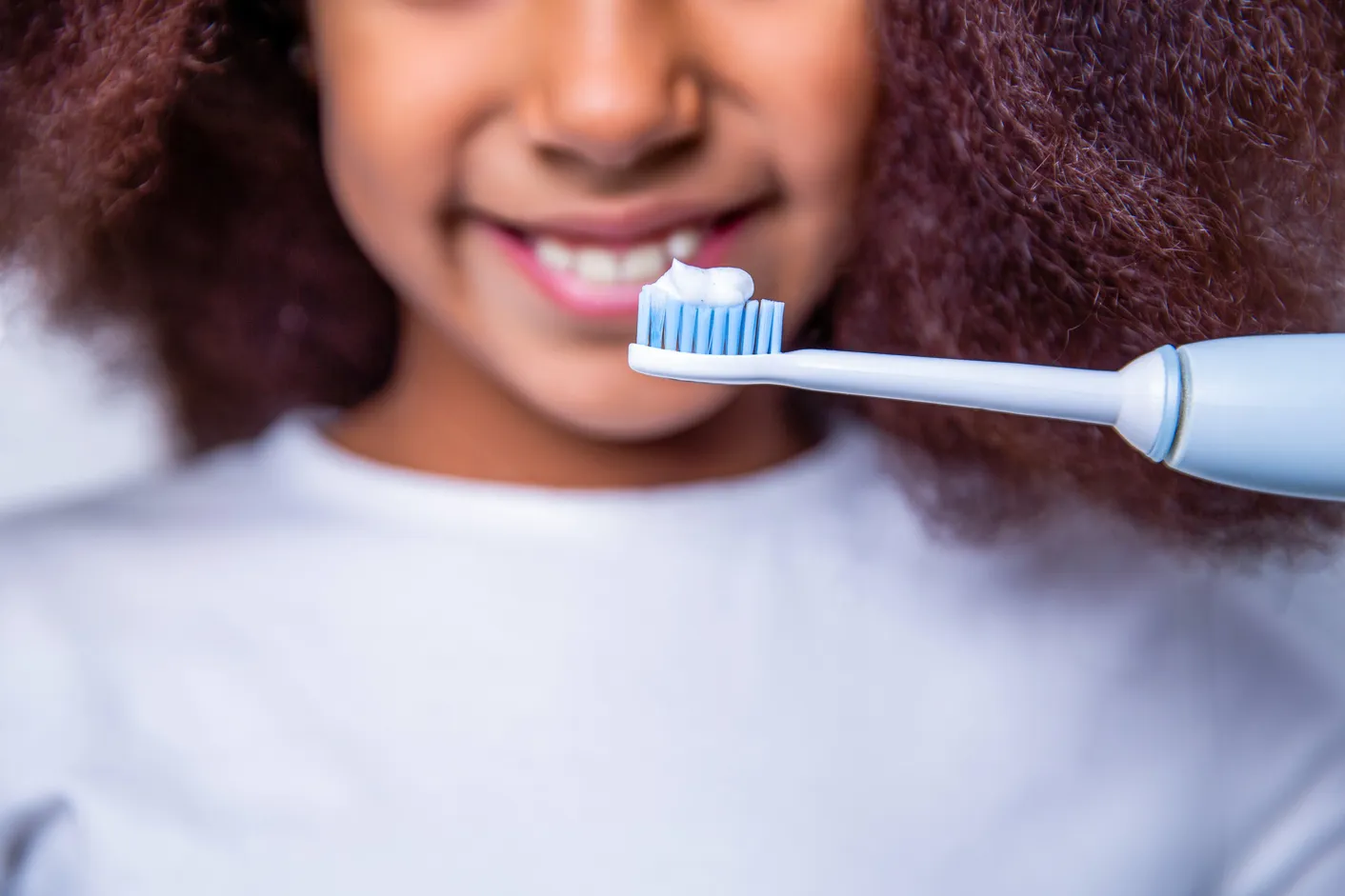
Toothbrushing technique following the KAI principle:
Chewing surfaces: Back-and-forth movements
Outer surfaces: With circular movements
Inner surfaces: ‘Wipe’ from the gums towards the tooth
This technique ensures thorough cleaning of all areas and is easy to understand. Ideal for children.
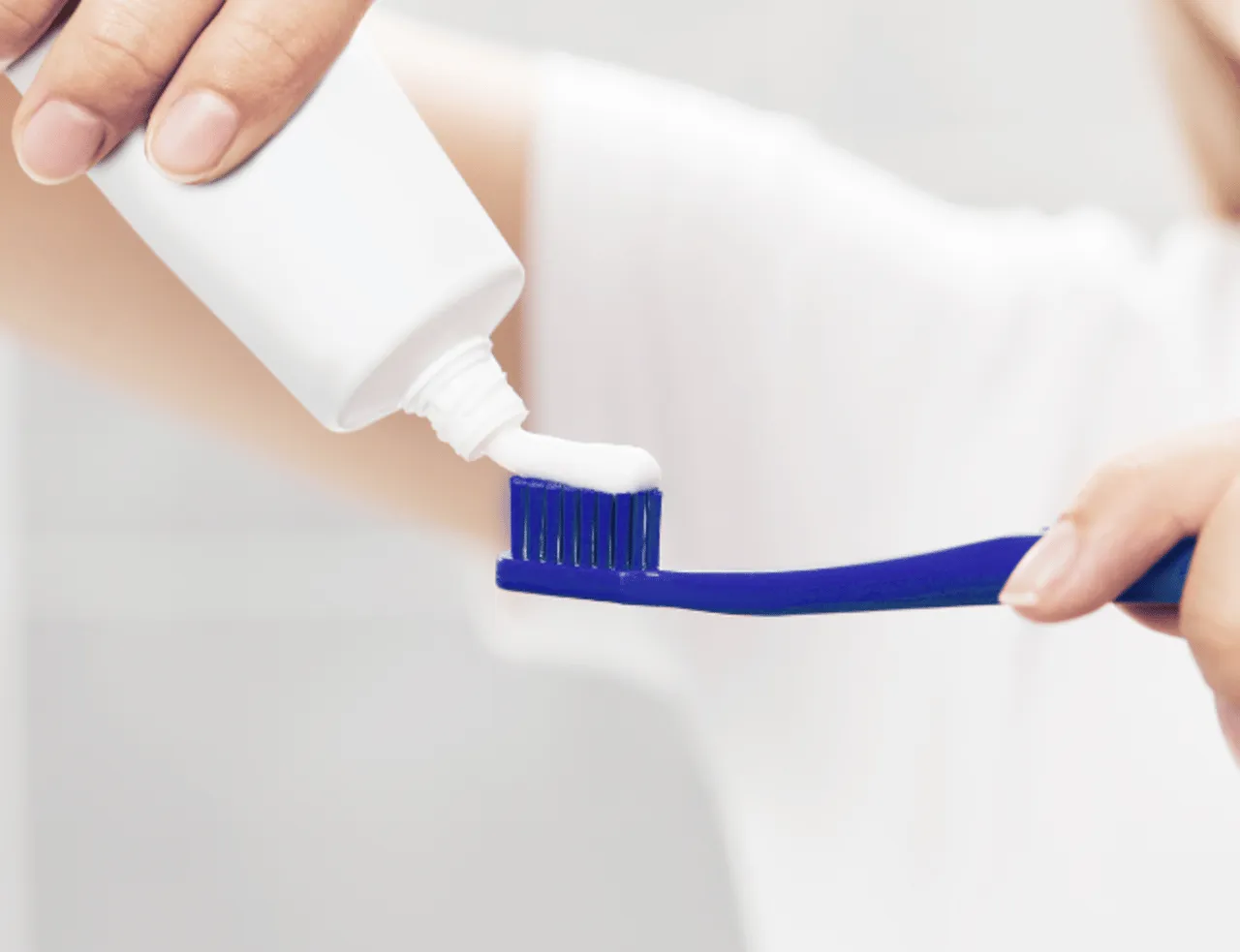
Fluorides – effective protection against caries
Fluoride hardens tooth enamel and makes it more resistant to acids. It is therefore a central component of caries prevention. The dosage depends on age:
• Until the first birthday: either fluoride tablets and fluoride-free toothpaste, or a grain-of-rice-sized amount of toothpaste containing 1,000 ppm fluoride twice a day — not both together
• From the first to the second birthday: a grain-of-rice-sized amount containing 1,000 ppm fluoride twice a day
• From the second to the sixth birthday: a pea-sized amount containing 1,000 ppm fluoride twice a day
• From the eruption of the permanent teeth: toothpaste containing at least 1,000 ppm fluoride twice a day; standard adult toothpastes usually contain 1,450 ppm
These values follow the joint recommendation from dentistry and paediatrics issued in 2021. It superseded the previous recommendation that children up to the age of six should use toothpaste containing only 500 ppm fluoride.
We have produced a separate information sheet for parents on “Fluoride prophylaxis for children”. Please feel free to contact us – we will be happy to provide individual advice.
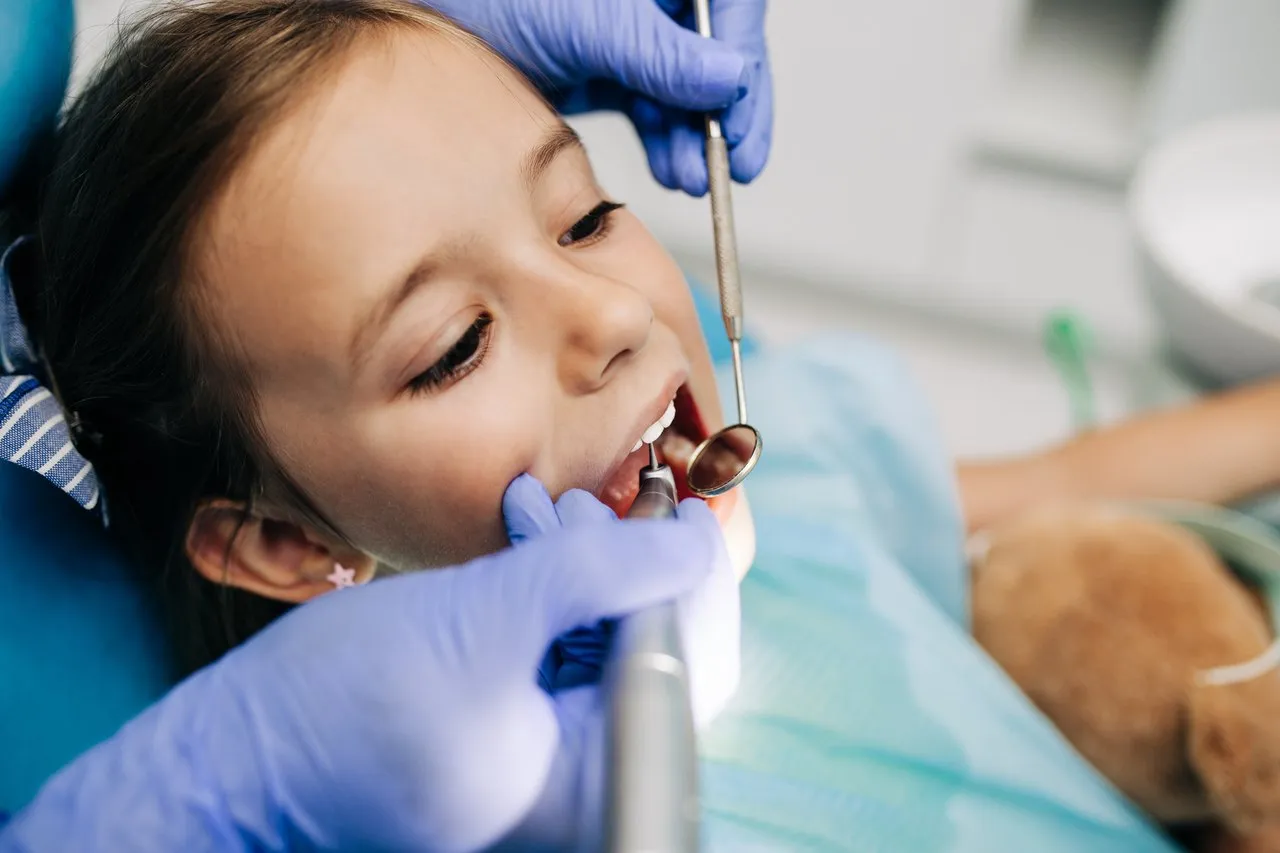
Which aids are useful?
• Toothbrushes with a small brush head, soft synthetic bristles and a non-slip handle
• Replace toothbrushes every 2–3 months, or sooner if the bristles show signs of wear
• Toothbrushing timers or songs to ensure the correct brushing time
• Fluoride toothpaste tailored to your child's age
• Dental floss sticks for children as soon as their teeth are close together
These little aids make daily oral care easier and more effective for children.
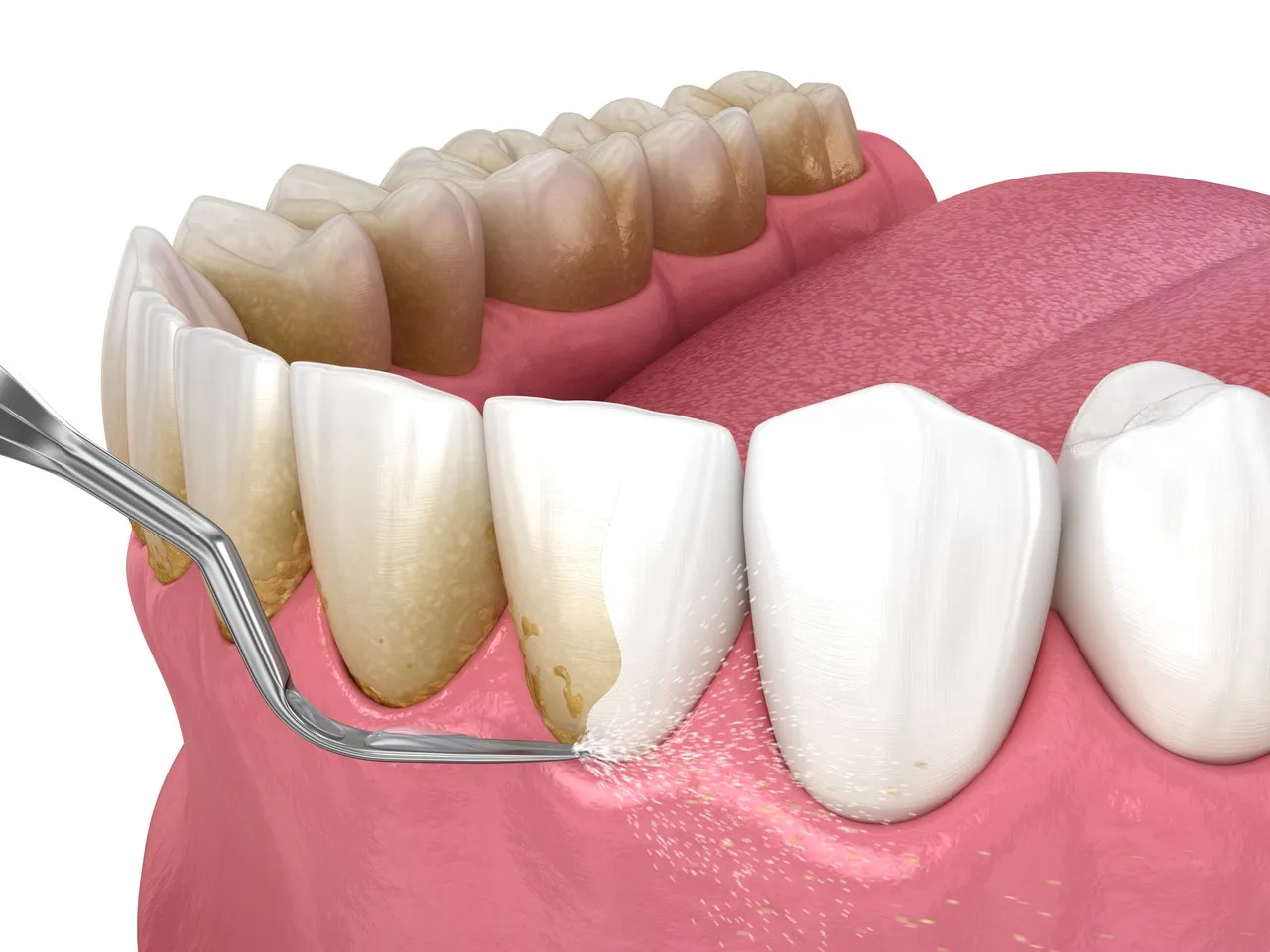
Individual caries prevention at Wunschlachen
We regularly hold professional prophylaxis sessions at our practice. During these sessions:
• we clean teeth gently but thoroughly
• check tooth alignment and brushing habits
• strengthen teeth through fluoridation
• provide age-appropriate advice on healthy eating and oral hygiene
Together with you, this enables us to lay the foundations for healthy children's teeth.

Conclusion: prevention is better than treatment
Caries prevention in children is an investment in your child's health and well-being. With regular visits, good oral hygiene, fluoride toothpaste and a tooth-friendly diet, you can significantly improve your child's dental health.
Let our Wunschlachen team advise you. We take the time, explain things in a child-friendly way and support you with heart and mind.
Frequently asked questions about caries prevention in children
As soon as the first milk tooth erupts. In other words, from around the sixth month of life.
From the eruption of the first tooth, the appropriate fluoride dose and method depend on the child's age and fluoride intake from other sources and should be selected in consultation with the treating doctor or dentist. Up to the age of 12 months, either use a daily fluoride tablet and brush without toothpaste or with a small amount of fluoride-free toothpaste, or brush with a grain-of-rice-sized amount of toothpaste containing 1,000 ppm fluoride instead; fluoride toothpaste and fluoride tablets should not be used together. From 12 months until their second birthday, use a grain-of-rice-sized amount of toothpaste containing 1,000 ppm fluoride, then a pea-sized amount until their sixth birthday. Once the permanent teeth erupt, use a toothpaste containing at least 1,000 ppm; standard adult toothpastes usually contain 1,450 ppm.
Twice a day: in the morning after breakfast and in the evening before going to bed. This keeps teeth healthy.
From the age of six. However, parents should continue to check and finish off the brushing if necessary.
Very dangerous. Especially when consumed frequently throughout the day. Sugar promotes the growth of caries-causing bacteria.
Read the list of ingredients. Terms such as glucose syrup, maltodextrin or fructose indicate the presence of sugar. Make sure you eat a balanced diet.
Yes, when used in the correct dosage, fluoride protects tooth enamel and effectively prevents caries.
Use playful elements such as toothbrushing songs, sand timers or colourful toothbrushes. Be patient.
Every six months. More often if there is an increased risk of caries.
It removes plaque, checks tooth development and strengthens the teeth. A useful component of caries prevention.